
A nurse is reviewing the ECG rhythm strip of a client who is experiencing a cardiac dysrhythmia. Which of the following areas of the rhythm strip should the nurse identify as showing when atrial depolarization occurs? (You will find hot spots to select in the artwork below in the form of arrows. Select only the hot spot that corresponds to your answer.)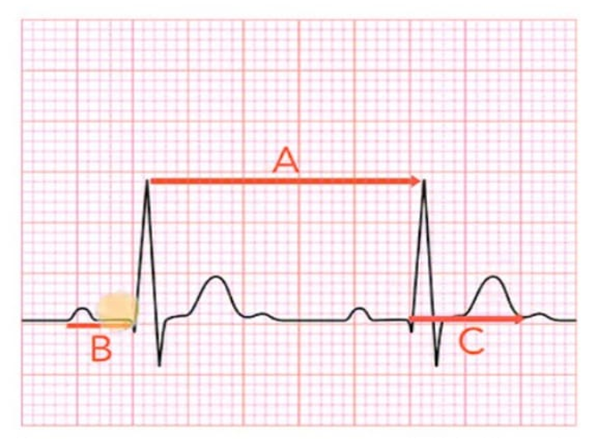
A
B
C
The Correct Answer is B
Rationale:
A. R-R interval: This interval represents the time between two successive R waves, indicating the ventricular rate and regularity. It does not show atrial depolarization.
B. P wave: The P wave represents atrial depolarization, which is the electrical activation of the atria, leading to atrial contraction. Atrial depolarization occurs when the electrical impulse spreads from the sinoatrial (SA) node through the atria, triggering atrial contraction. On an ECG rhythm strip, this is shown as the P wave, which is the first small upward deflection before the QRS complex.
C. T wave: The T wave represents ventricular repolarization, which is the electrical recovery of the ventricles. It does not show atrial depolarization.
Nursing Test Bank
Naxlex Comprehensive Predictor Exams
Related Questions
Correct Answer is A
Explanation
Rationale:
A. "Administer a daily multivitamin to your child along with this medication.": Children with cystic fibrosis often have malabsorption of fat-soluble vitamins (A, D, E, and K) due to pancreatic insufficiency. A multivitamin supplement helps prevent deficiencies, and it's commonly recommended alongside pancreatic enzyme therapy.
B. "Give the medication immediately after giving an antacid to your child.": Antacids can interfere with the effectiveness of pancrelipase by altering the pH needed for the enzymes to function properly in the duodenum.
C. "Monitor your child's weight every 6 months while taking this medication.": Weight in children with cystic fibrosis should be monitored more frequently due to the high risk of malnutrition and poor growth. Waiting six months could delay detection of nutritional issues.
D. "Ensure that this medication is taken 1 hour after meals.": Pancrelipase must be taken with meals and snacks to ensure that digestive enzymes are available when food is present in the small intestine. Delaying the dose reduces its effectiveness in nutrient absorption.
Correct Answer is D
Explanation
Rationale:
Image 1, Likely Stage II: This image shows partial-thickness skin loss with a shallow open ulcer and a red-pink wound bed without slough. Stage II pressure injuries involve the epidermis and possibly the dermis, presenting as open or fluid-filled blisters. There is no exposure of fat, muscle, or bone.
Image 2, Unstageable: This wound is obscured by necrotic black eschar or thick slough, making it impossible to determine the true depth. Unstageable pressure injuries are full-thickness wounds, but the base is covered, so you cannot assess if structures like muscle or bone are exposed.
Image 3, Stage I: This photo shows intact skin with a localized area of non-blanchable erythema, typically over a bony prominence. Stage I pressure injuries are superficial and do not involve skin loss, but indicate potential underlying tissue damage.
Image 4, Stage IV: This wound shows full-thickness tissue loss with visible bone, tendon, or muscle, and may have undermining or tunneling. Stage IV pressure injuries are the most severe, extending deep into tissues and possibly involving supporting structures like fascia or bone.
Whether you are a student looking to ace your exams or a practicing nurse seeking to enhance your expertise , our nursing education contents will empower you with the confidence and competence to make a difference in the lives of patients and become a respected leader in the healthcare field.
Visit Naxlex, invest in your future and unlock endless possibilities with our unparalleled nursing education contents today