
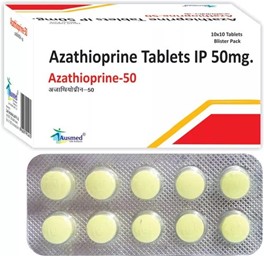
A nurse is teaching a client who has Crohn's disease and is prescribed azathioprine, an antimetabolite. What should the nurse include in the teaching?
The drug may cause bone marrow suppression and increase the risk of infection and bleeding.
The drug may cause nephrotoxicity and increase the risk of renal impairment and electrolyte imbalances.
The drug may cause neurotoxicity and increase the risk of tremor, headache, and seizures.
The drug may cause hepatotoxicity and increase the risk of liver impairment and jaundice.
The Correct Answer is A
This is because azathioprine can affect the production of blood cells in your bone marrow, which are essential for fighting infections and clotting blood². Therefore, you may have a higher chance of getting infections or bleeding more easily while taking this drug. You should monitor your blood counts regularly and report any signs of infection (such as fever, sore throat, cough) or bleeding (such as bruising, nosebleeds, blood in urine or stool) to your doctor².
The other options are incorrect because:
B. The drug may cause nephrotoxicity and increase the risk of renal impairment and electrolyte imbalances.
This is incorrect because azathioprine is not known to cause nephrotoxicity or damage to the kidneys². However, some other drugs that are used to treat IBD, such as mesalazine or sulfasalazine, may have this effect³. Therefore, you should have your kidney function checked before starting these drugs and periodically during treatment³.
C. The drug may cause neurotoxicity and increase the risk of tremor, headache, and seizures.
This is incorrect because azathioprine is not known to cause neurotoxicity or damage to the nervous system². However, some other drugs that are used to treat IBD, such as metronidazole or ciprofloxacin, may have this effect³. Therefore, you should report any signs of neurological problems (such as numbness, tingling, weakness, vision changes, confusion) to your doctor³.
D. The drug may cause hepatotoxicity and increase the risk of liver impairment and jaundice.
This is incorrect because azathioprine is not known to cause hepatotoxicity or damage to the liver². However, some other drugs that are used to treat IBD, such as methotrexate or 6-mercaptopurine, may have this effect³. Therefore, you should have your liver function checked before starting these drugs and periodically during treatment³.
Nursing Test Bank
Naxlex Comprehensive Predictor Exams
Related Questions
Correct Answer is D
Explanation
Infliximab is a monoclonal antibody that is used to treat ulcerative colitis and other inflammatory conditions by blocking the action of tumor necrosis factor-alpha (TNF-α), a cytokine that causes inflammation and tissue damage in the gut¹. It can be given intravenously every 8 weeks as a maintenance therapy for moderate to severe ulcerative colitis¹. However, it can also have some potential benefits and risks that the nurse should monitor.
The correct answer to your question is:
D. All of the above
This is because infliximab can improve the clinical outcomes of ulcerative colitis in several ways, such as:
A. Decreased frequency and severity of diarrhea, abdominal pain, and rectal bleeding:
These are the main symptoms of ulcerative colitis that affect the quality of life of patients. Infliximab can reduce these symptoms by healing the inflammation and ulcers in the colon and rectum. Several studies have shown that infliximab can induce and maintain clinical remission, response, and mucosal healing in patients with moderate to severe ulcerative colitis who are refractory to conventional therapies²³⁴.
B. Increased appetite, weight gain, energy level, and quality of life:
These are the secondary outcomes of ulcerative colitis that reflect the nutritional status and well-being of patients. Infliximab can improve these outcomes by reducing the systemic effects of inflammation, such as malabsorption, anemia, fatigue, and fever. Several studies have shown that infliximab can improve the health-related quality of life, nutritional status, and functional status of patients with moderate to severe ulcerative colitis²³⁴.
C. Normalized stool culture, blood count, electrolytes, and liver function tests:
These are the laboratory tests that indicate the severity and complications of ulcerative colitis. Infliximab can normalize these tests by reducing the bacterial translocation, blood loss, dehydration, and liver involvement that may occur in ulcerative colitis. Several studies have shown that infliximab can improve the stool culture, hemoglobin, albumin, C-reactive protein, and liver enzymes of patients with moderate to severe ulcerative colitis²³⁴.
Correct Answer is A
Explanation
A. It inhibits the synthesis of inflammatory mediators and suppresses the activation and proliferation of immune cells.
Prednisone is a synthetic glucocorticoid that mimics the natural hormone cortisol, which is produced by the adrenal cortex. Cortisol has potent anti-inflammatory and immunosuppressive effects by inhibiting the synthesis of inflammatory mediators such as prostaglandins, leukotrienes, histamine, cytokines, and adhesion molecules, and by suppressing the activation and proliferation of lymphocytes, macrophages, eosinophils, and mast cells. These effects reduce the immune-mediated damage to the self-tissues in autoimmune diseases such as rheumatoid arthritis.
The other options are wrong because:
B. It blocks the activation of T cells by inhibiting the enzyme calcineurin, which is required for the transcription of interleukin-2.
This option is wrong because it describes the mechanism of action of calcineurin inhibitors, not glucocorticoids. Calcineurin inhibitors are a type of immunosuppressant that target T cells specifically, while glucocorticoids have a broader effect on various immune cells and inflammatory mediators.
C. It interferes with the synthesis of nucleic acids, which are essential for the replication and function of immune cells.
This option is wrong because it describes the mechanism of action of antimetabolites, not glucocorticoids. Antimetabolites are a type of immunosuppressant that interfere with the synthesis of nucleic acids, which are the building blocks of DNA and RNA. This affects the replication and function of immune cells, as well as other rapidly dividing cells such as cancer cells.
D. It binds to specific antigens or receptors on the surface of immune cells and either neutralizes them or induces their destruction.
This option is wrong because it describes the mechanism of action of monoclonal antibodies, not glucocorticoids. Monoclonal antibodies are a type of immunosuppressant that bind to specific antigens or receptors on the surface of immune cells and either neutralize them or induce their destruction. This can prevent the activation or function of immune cells that are involved in transplant rejection or autoimmune diseases.

Whether you are a student looking to ace your exams or a practicing nurse seeking to enhance your expertise , our nursing education contents will empower you with the confidence and competence to make a difference in the lives of patients and become a respected leader in the healthcare field.
Visit Naxlex, invest in your future and unlock endless possibilities with our unparalleled nursing education contents today