
A nurse is teaching a client with gestational hypertension about dietary modifications.
Which of the following instructions would be appropriate?
Increase calcium intake to prevent bone loss
Limit fluid intake to 1 liter per day to reduce edema
Avoid foods high in sodium such as canned soups and processed meats
Eat foods rich in iron such as red meat and green leafy vegetables
The Correct Answer is C
The correct answer is choice C. Avoid foods high in sodium such as canned soups and processed meats. This is because sodium can increase blood pressure and fluid retention, which are complications of gestational hypertension.
Choice A is wrong because increasing calcium intake does not prevent bone loss in gestational hypertension. Calcium supplementation may be beneficial for preventing preeclampsia, which is a more severe form of gestational hypertension.
Choice B is wrong because limiting fluid intake to 1 liter per day can cause dehydration and electrolyte imbalance, which can harm both the mother and the fetus. Fluid intake should be adequate to maintain hydration and urine output.
Choice D is wrong because eating foods rich in iron is not related to gestational hypertension.
Iron intake may be important for preventing anemia, which can occur in pregnancy due to increased blood volume and fetal demands.
Nursing Test Bank
Naxlex Comprehensive Predictor Exams
Related Questions
Correct Answer is D
Explanation
The correct answer is choice D. All of the above.
All of these factors would indicate that the client is ready for delivery because they pose a risk to the mother or the fetus or both.
Choice A is wrong because blood pressure that is uncontrollable despite medication can lead to complications such as preeclampsia, eclampsia, or HELLP syndrome.
Choice B is wrong because fetal distress detected by nonstress test or biophysical profile can indicate hypoxia, acidosis, or cord compression.
Choice C is wrong because term is reached (37 weeks or more) does not necessarily mean that the client is ready for delivery.Other factors such as cervical dilation, effacement, and station also need to be considered.
Normal ranges for blood pressure are 120/80 mmHg or lower for systolic and 80/60 mmHg or lower for diastolic.Normal ranges for nonstress test are two or more fetal heart rate accelerations of at least 15 beats per minute above baseline lasting at least 15 seconds in a 20-minute period.Normal ranges for biophysical profile are a score of 8 to 10 out of 10 based on five parameters: fetal breathing movements, fetal movements, fetal tone, amniotic fluid volume, and nonstress test.
Correct Answer is A
Explanation
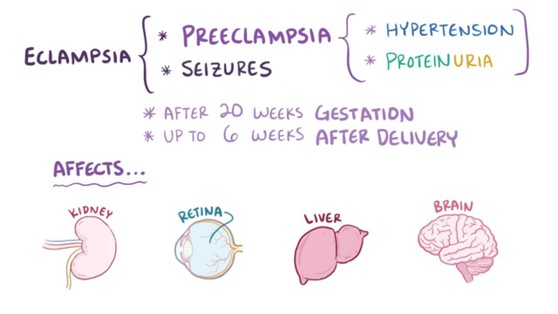
The correct answer is choice A. Headache and blurred vision.These are signs ofcerebral edemaor swelling of the brain, which can lead toeclampsia, a life-threatening complication of preeclampsia that causes seizures.
Choice B is wrong because nausea and vomiting are common symptoms of pregnancy and do not indicate a risk for eclampsia.
Choice C is wrong because edema and weight gain are also common in pregnancy and may be due to fluid retention or increased blood volume.
They are not specific signs of preeclampsia or eclampsia.
Choice D is wrong because proteinuria and oliguria are signs ofkidney damagedue to preeclampsia, but they do not directly increase the risk of eclampsia.However, they may indicate severe preeclampsia that requires close monitoring and treatment.
Normal ranges for blood pressure, proteinuria, platelet count, and liver enzymes are as follows:
• Blood pressure: less than 140/90 mm Hg
• Proteinuria: less than 300 mg per 24 hours
• Platelet count: 150,000 to 400,000 per microliter
• Liver enzymes: AST less than 40 U/L, ALT less than 45 U/L
Whether you are a student looking to ace your exams or a practicing nurse seeking to enhance your expertise , our nursing education contents will empower you with the confidence and competence to make a difference in the lives of patients and become a respected leader in the healthcare field.
Visit Naxlex, invest in your future and unlock endless possibilities with our unparalleled nursing education contents today