
A staff education nurse is evaluating a group of nurses during a new employee orientation on the use of proper body mechanics when lifting. Which of the following images indicates the appropriate use of ergonomic principles?
A.
B.
C.
D.
A
B
C
D
None
None
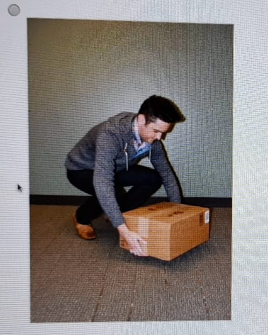
The Correct Answer is C
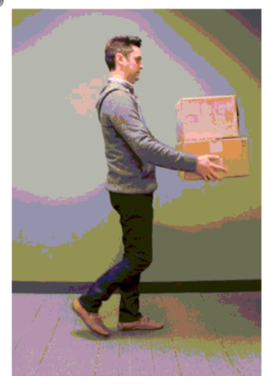
A. This is incorrect since the load should be held as close to the nurse's center of gravity (the pelvis) as possible.
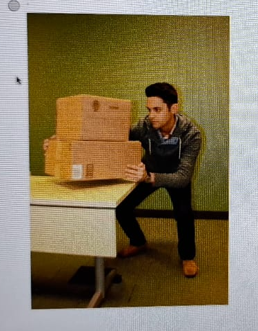
B. This is incorrect since the back should remain straight or in its natural "S" curve throughout the lift. The power for the lift should come from the gluteal and femoral muscles, not the back.
C. This is correct since the nurse is squatting and bending at the knees, keeping the back straight. Bending at the knees and hips to engage stronger leg muscles rather than the lower back. The object should also be kept close to the torso, not held at arm’s length, shoulders aligned, no twisting of the trunk, and the eyes forward, head aligned with the spine.
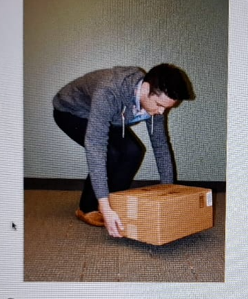
D. This is incorrect since the feet placement should be a wide base of support, one foot slightly ahead of the other. The back alignment includes the spine kept straight, no twisting or bending at the waist. Knees should be bent to lower the body, rather than bending forward.
Nursing Test Bank
Naxlex Comprehensive Predictor Exams
Related Questions
Correct Answer is B
Explanation
A. Carbamazepine: This medication is primarily used for long-term seizure control but is not effective in stopping an active status epilepticus episode due to its slower onset of action.
B. Lorazepam: Lorazepam is a benzodiazepine with rapid onset that is the first-line treatment to quickly stop seizures during status epilepticus, providing immediate central nervous system depression to control convulsions.
C. Clonazepam: Although clonazepam is a benzodiazepine used for seizure management, it is less commonly used in acute status epilepticus due to slower onset and availability of more effective alternatives like lorazepam.
D. Lamotrigine: Lamotrigine is an anticonvulsant used for maintenance therapy in seizure disorders, but it does not act quickly enough to manage status epilepticus emergencies.
Correct Answer is D
Explanation
A. Instruct the client to flex the right knee every 30 min: Flexing the knee can increase the risk of bleeding or hematoma formation at the femoral access site and is generally avoided immediately after the procedure.
B. Elevate the head of the client's bed to 45°: Elevating the head more than 30 degrees can put pressure on the femoral site and increase bleeding risk; typically, the head of the bed is kept flat or slightly elevated.
C. Change the client’s dressing 4 hr following the procedure: The initial dressing is usually kept intact for at least 24 hours unless it becomes saturated, as frequent dressing changes can disrupt the site and increase infection risk.
D. Assess the client’s peripheral pulses every 15 min: Frequent monitoring of peripheral pulses is critical to detect early signs of impaired circulation or complications such as arterial occlusion or hematoma at the catheter insertion site.
Whether you are a student looking to ace your exams or a practicing nurse seeking to enhance your expertise , our nursing education contents will empower you with the confidence and competence to make a difference in the lives of patients and become a respected leader in the healthcare field.
Visit Naxlex, invest in your future and unlock endless possibilities with our unparalleled nursing education contents today