
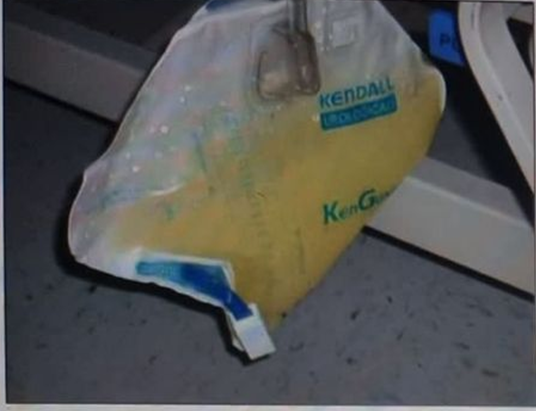
At the end of a 12-hour shift, the practical nurse (PN) observes the urine in a client's drainage bag as seen in the picture. Which action should the PN take next?
Obtain a fingerstick capillary glucose level.
Note the most recent white blood cell count.
Offer to administer a prescribed PRN analgesic.
Determine if the client's bladder feels distended.
The Correct Answer is B
A. Obtain a fingerstick capillary glucose level: Glucose testing is not related to the color of the urine in the image, which appears cloudy and dark—signs suggestive of infection, not hyperglycemia.
B. Note the most recent white blood cell count: Cloudy urine, as shown in the picture, indicates a possible urinary tract infection (UTI). Reviewing the WBC count helps the nurse determine whether there is systemic infection or inflammation.
C. Offer to administer a prescribed PRN analgesic: Pain management is not the priority when the primary concern is infection; further assessment is required first.
D. Determine if the client's bladder feels distended: Bladder distention would cause low urine output, not discolored or cloudy urine, so palpation is not the next appropriate step
Nursing Test Bank
Naxlex Comprehensive Predictor Exams
Related Questions
Correct Answer is A
Explanation
A. A team ring-toss competition: This activity allows residents in wheelchairs to actively participate in a physical game while promoting social interaction and teamwork. It meets both physical engagement and socialization needs in an inclusive and accessible manner.
B. An open air concert: While enjoyable and socially stimulating, this activity is primarily passive and does not provide physical engagement. Residents remain seated and may have limited interaction, so it partially meets their needs.
C. A tea party in the courtyard: A tea party encourages social interaction but provides minimal physical activity. It addresses social needs but does not adequately promote physical engagement for the residents.
D. A picnic in the park: A picnic offers a change of environment and some socialization, but it may not actively involve wheelchair-bound residents in physical activity. Accessibility and participation could also be limited depending on terrain.
Correct Answer is C
Explanation
A. Pain perception in the cerebral cortex is dulled by the unit's discharge of an electrical stimulus: The TENS unit does not directly alter cerebral cortical processing. Its primary effect is at the spinal cord level, modulating pain signals before they reach higher brain centers.
B. An infusion of medication in the spinal canal will block pain perception: This describes epidural or intrathecal analgesia. Medication infusion is an invasive method, whereas TENS is noninvasive and works through electrical stimulation of peripheral nerves.
C. A mild electrical stimulus on the skin surface closes the gates of nerve conduction for severe pain: TENS works based on the gate control theory of pain. The electrical impulses stimulate sensory nerves, which inhibit the transmission of pain signals to the brain, effectively “closing the gate” and reducing perceived pain intensity.
D. The discharge of electricity will distract the client's focus on the pain: While some clients may perceive relief due to distraction, the primary mechanism is physiologic modulation of nerve conduction, not cognitive distraction.
Whether you are a student looking to ace your exams or a practicing nurse seeking to enhance your expertise , our nursing education contents will empower you with the confidence and competence to make a difference in the lives of patients and become a respected leader in the healthcare field.
Visit Naxlex, invest in your future and unlock endless possibilities with our unparalleled nursing education contents today