
Between which two bones is the Acromioclavicular joint?
Ulna and Scapula.
Scapula and Clavicle.
None.
Humerus and Scapula.
The Correct Answer is B
The acromioclavicular joint is the articulation between the acromion of the scapula and the acromial end of the clavicle.
It is a plane synovial joint that allows movements of the shoulder girdle. Choice A is incorrect because the ulna and scapula do not form a joint.
The ulna is a bone of the forearm that articulates with the humerus and radius. Choice C is incorrect because none is not a valid option.
There is a specific joint between two bones that is called the acromioclavicular joint.
Choice D is incorrect because the humerus and scapula form a different joint, called the glenohumeral joint.
This is a ball-and-socket synovial joint that allows movements of the shoulder.
Nursing Test Bank
Naxlex Comprehensive Predictor Exams
Related Questions
Correct Answer is B
Explanation
The acromioclavicular joint is the articulation between the acromion of the scapula and the acromial end of the clavicle.
It is a plane synovial joint that allows movements of the shoulder girdle. Choice A is incorrect because the ulna and scapula do not form a joint.
The ulna is a bone of the forearm that articulates with the humerus and radius. Choice C is incorrect because none is not a valid option.
There is a specific joint between two bones that is called the acromioclavicular joint.
Choice D is incorrect because the humerus and scapula form a different joint, called the glenohumeral joint.
This is a ball-and-socket synovial joint that allows movements of the shoulder.
Correct Answer is D
Explanation
Bone marrow is the soft, spongy tissue that fills the medullary cavity of long bones.
Bone marrow contains hematopoietic stem cells that produce blood cells, as well as fat cells and other supportive cells.
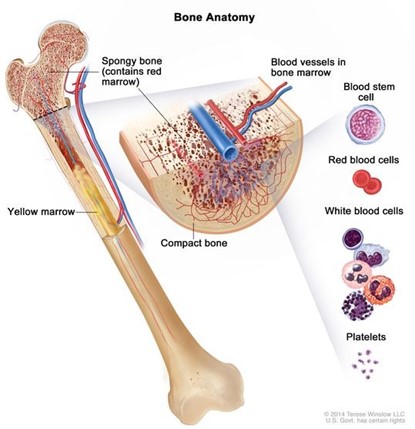
Choice A is incorrect because spongy bone is not the tissue that fills the medullary cavity, but the type of bone tissue that surrounds it.
Spongy bone has a porous structure that provides strength and flexibility to the bone.
Choice B is incorrect because compact bone is not the tissue that fills the medullary cavity, but the type of bone tissue that forms the outer wall of the diaphysis.
Compact bone has a dense and hard structure that provides protection and support to the bone.
Choice C is incorrect because none of these is not a valid answer.
The medullary cavity of long bones does contain a specific type of tissue, which is bone marrow.
Whether you are a student looking to ace your exams or a practicing nurse seeking to enhance your expertise , our nursing education contents will empower you with the confidence and competence to make a difference in the lives of patients and become a respected leader in the healthcare field.
Visit Naxlex, invest in your future and unlock endless possibilities with our unparalleled nursing education contents today