
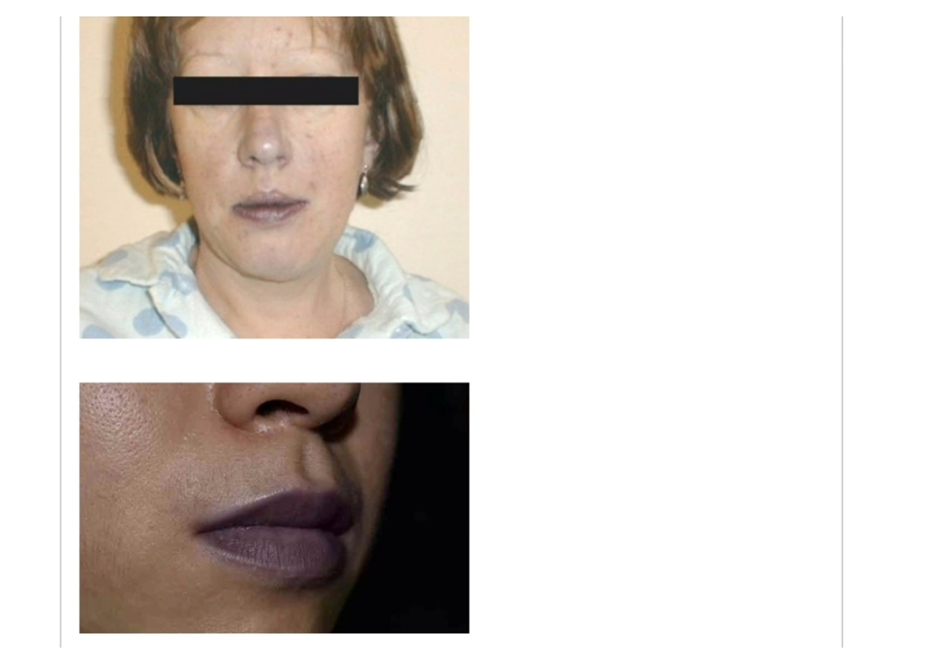
During a focused respiratory assessment of two clients, the nurse notes the following:
What skin color variation should the nurse document this as:
Pallor
Jaundice
Cyanosis
Erythema
The Correct Answer is C
A. Pallor: Pallor means paleness of the skin due to decreased blood flow or hemoglobin (e.g., anemia, shock); it appears pale, not bluish.
B. Jaundice: Jaundice is yellow discoloration caused by elevated bilirubin (liver disease/hemolysis); it is yellow, not blue.
C. Cyanosis: Cyanosis is a bluish or purplish discoloration of the skin and mucous membranes from increased deoxygenated hemoglobin or poor perfusion and is the appropriate term to document when skin appears blue.
D. Erythema: Erythema is redness of the skin from increased blood flow, inflammation, or fever; it does not describe a bluish discoloration.
Nursing Test Bank
Naxlex Comprehensive Predictor Exams
Related Questions
Correct Answer is A
Explanation
A. Stage I pressure injury is characterized by intact skin with a localized area of nonblanchable erythema (redness). The area may be painful, firm, soft, warmer, or cooler compared to adjacent tissue. The patient in the prompt has intact skin on their heel with a nonblanchable reddish area, which fits this description perfectly.
B. STAGE II: A Stage II pressure injury involves partial-thickness loss of the dermis. It presents as a shallow open ulcer with a red or pink wound bed, without slough or bruising. It may also present as an intact or ruptured serum-filled blister. Since the patient's skin is intact, Stage II is incorrect.
C. STAGE III: A Stage III pressure injury involves full-thickness skin loss, where subcutaneous fat may be visible, but bone, tendon, or muscle are not exposed. Slough and/or eschar may be present. This is a much more severe injury than what is described.
D. STAGE IV: A Stage IV pressure injury involves full-thickness skin and tissue loss with exposed bone, tendon, or muscle. Slough or eschar may be present on some parts of the wound bed. This is the most severe stage and is clearly not what is pictured or described.
Correct Answer is B
Explanation
A. Prevention of wound infection: Pneumatic compression devices do not actively prevent surgical wound infection; infection prevention relies on aseptic technique, antibiotics as indicated, and wound care.
B. Promote circulation of venous blood: These devices intermittently compress the limbs to enhance venous return, reduce venous stasis, and lower the risk of deep vein thrombosis (DVT).
C. Improve mobility: While used when mobility is limited, the devices themselves do not restore or improve the patient’s ability to ambulate.
D. Encourage lung expansion: Lung expansion is promoted by deep-breathing exercises, incentive spirometry, and positioning; pneumatic compression devices target limb circulation rather than pulmonary mechanics.
Whether you are a student looking to ace your exams or a practicing nurse seeking to enhance your expertise , our nursing education contents will empower you with the confidence and competence to make a difference in the lives of patients and become a respected leader in the healthcare field.
Visit Naxlex, invest in your future and unlock endless possibilities with our unparalleled nursing education contents today