
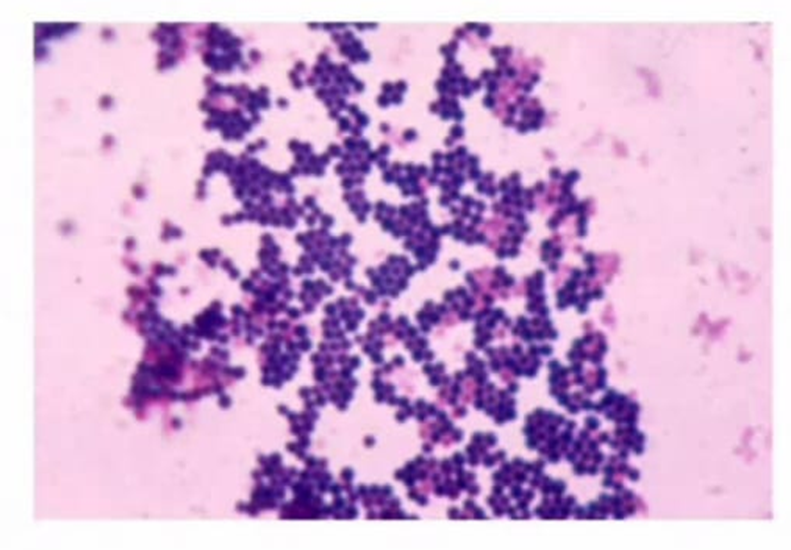
The bacteria in this image would be considered
streptobacilli
streptococci
staphylococci
palisades
The Correct Answer is C
A. streptobacilli: Streptobacilli are rod-shaped bacteria arranged in chains. The image shows spherical bacteria.
B. streptococci: Streptococci are spherical bacteria that form chains. The bacteria in the image appear in clusters rather than chains.
C. staphylococci: Staphylococci are spherical bacteria that form grape-like clusters, which matches the arrangement seen in the image. This clustering pattern is a key characteristic of staphylococcal species.
D. palisades: Palisade arrangements refer to rod-shaped bacteria lined up side by side like a fence. The bacteria in the image are spherical and clustered.
Nursing Test Bank
Naxlex Comprehensive Predictor Exams
Related Questions
Correct Answer is A
Explanation
True: Fungi have versatile reproductive strategies. They can reproduce asexually through methods such as budding, fragmentation, and spore formation, which allows rapid population increase. They can also reproduce sexually through the fusion of specialized cells, promoting genetic diversity and adaptation to changing environments.
Correct Answer is B
Explanation
A. cell culture: Viruses can be grown in cell cultures, where living host cells provide the machinery necessary for viral replication. This is a common laboratory method.
B. nutrient media: Viruses cannot grow on nutrient media alone because they require living host cells for replication. Nutrient media supports bacterial and fungal growth, not viruses.
C. lab animals: Some viruses require whole organisms for propagation, so laboratory animals can be used as hosts to study pathogenesis and replication.
D. embryonated eggs: Embryonated chicken eggs provide a supportive environment for viral growth and are widely used for vaccine production, such as influenza vaccines.
Whether you are a student looking to ace your exams or a practicing nurse seeking to enhance your expertise , our nursing education contents will empower you with the confidence and competence to make a difference in the lives of patients and become a respected leader in the healthcare field.
Visit Naxlex, invest in your future and unlock endless possibilities with our unparalleled nursing education contents today