
The nurse cares for a group of clients. After assessing each client, which client(s) require follow-up action from the nurse? (Select all that apply)
A client with a blood pressure of 168/91 mmHg and a headache.
A client with a blood pressure of 96/63 mmHg who says they "feel faint."
A client with a capillary refill of 4 seconds in the right extremity fingers.
A client with a heart rate of 112 beats per minute and irregular rhythm.
A client with jugular vein distention and coarse crackles in the lungs.
Correct Answer : A,B,C,D,E
Choice A reason: A blood pressure of 168/91 mmHg combined with a headache may indicate a hypertensive urgency or emergency. This requires immediate follow-up to prevent potential target organ damage, such as a cerebrovascular accident or acute renal failure, and to initiate appropriate pharmacological interventions to lower the pressure safely.
Choice B reason: While 96/63 mmHg might be normal for some, the subjective report of "feeling faint" suggests symptomatic hypotension or orthostatic intolerance. This requires follow-up to assess for dehydration, cardiac output issues, or medication side effects to prevent falls and ensure adequate cerebral and systemic perfusion.
Choice C reason: Capillary refill should ideally be less than 2 seconds. A delay of 4 seconds indicates poor peripheral perfusion or compromised arterial flow to the extremity. This finding necessitates further neurovascular assessment to rule out conditions like peripheral artery disease or acute limb ischemia.
Choice D reason: A heart rate of 112 (tachycardia) paired with an irregular rhythm is a pathological finding that could indicate atrial fibrillation or another dysrhythmia. This requires an electrocardiogram (ECG) to identify the specific rhythm and assess the risk of thromboembolism or hemodynamic instability.
Choice E reason: The combination of jugular vein distention and coarse crackles strongly suggests biventricular heart failure with pulmonary edema. This is a critical state of fluid volume overload that requires urgent nursing action, including high-Fowler’s positioning, oxygen therapy, and the administration of diuretics to improve gas exchange.
Nursing Test Bank
Naxlex Comprehensive Predictor Exams
Related Questions
Correct Answer is C
Explanation
Choice A reason: Palpitations, or the sensation of a fluttering or racing heart, are more commonly associated with cardiac arrhythmias or anxiety rather than classic angina pectoris. While ischemia can trigger arrhythmias, asking about pain during exertion is the more specific and standard diagnostic inquiry for stable angina.
Choice B reason: Shortness of breath when lying flat is known as orthopnea, a clinical sign of pulmonary congestion and left-sided heart failure. While heart failure often coexists with coronary artery disease, orthopnea is not the primary symptom used to define or assess the presence of anginal chest pain.
Choice C reason: Angina pectoris is defined as chest pain or pressure that occurs when myocardial oxygen demand exceeds supply, most commonly during physical exertion or emotional stress. Asking about pain during exercise directly assesses for stable angina, which is a hallmark symptom of significant atherosclerotic narrowing in the coronary arteries.
Choice D reason: Dyspnea on exertion is a non-specific symptom that can indicate either cardiac or pulmonary dysfunction. While it can be an "anginal equivalent" in some populations, such as the elderly or women, asking specifically about chest pain remains the standard assessment for traditional angina in a client with CAD.
Correct Answer is B
Explanation
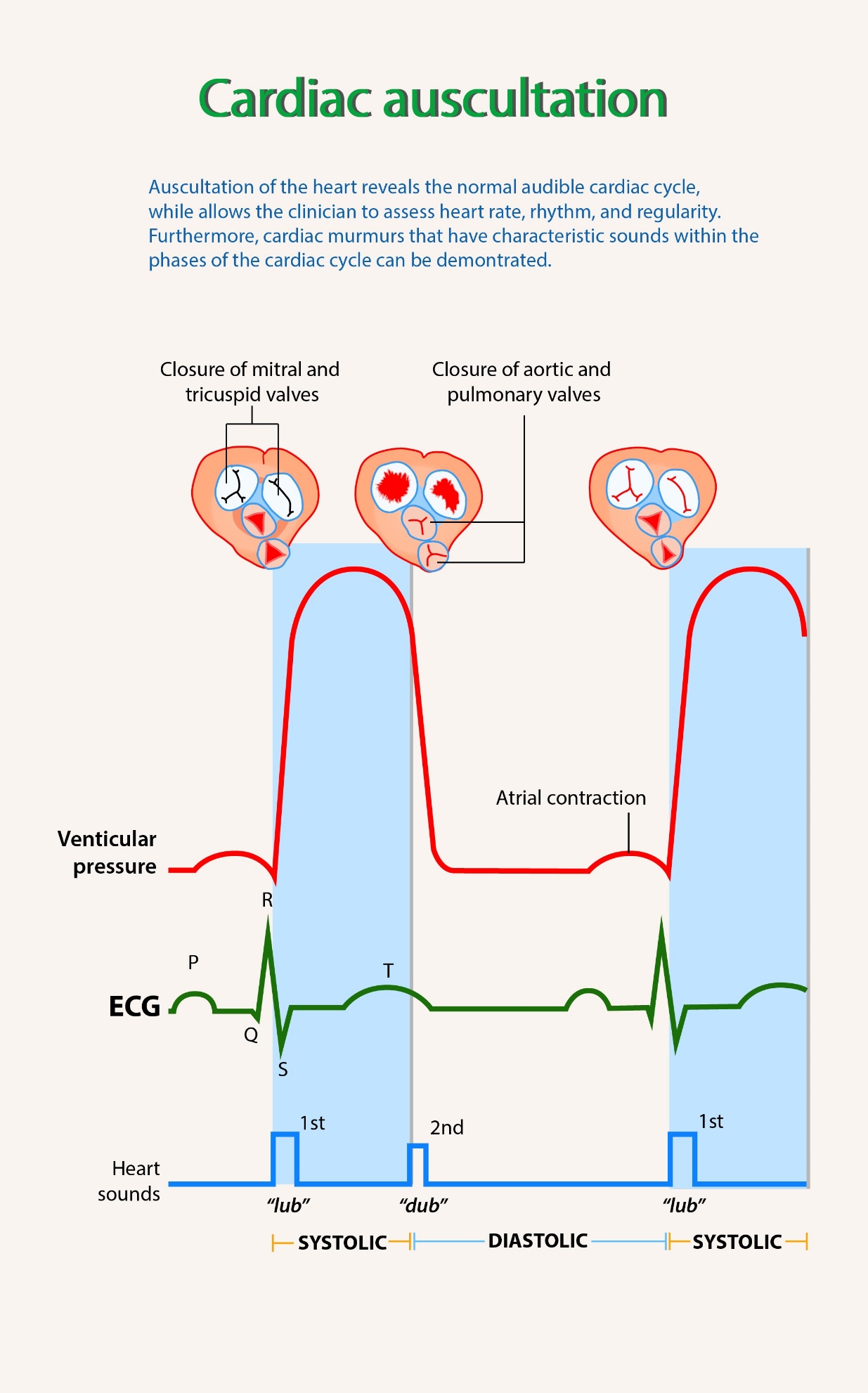
correct answer is: b) S1.
Shutterstock
Reasoning: Choice A reason: The S2 heart sound, often described as "dub," is produced by the closure of the semilunar valves (aortic and pulmonic) at the end of ventricular systole. It marks the beginning of diastole, which is the period when the ventricles relax and fill with blood before the next contraction. Choice B reason: The S1 heart sound, or "lub," is created by the simultaneous closure of the mitral and tricuspid valves. This occurs when ventricular pressure exceeds atrial pressure at the start of ventricular contraction, effectively signaling the onset of systole and the pumping of blood into the systemic and pulmonary circuits. Choice C reason: S4 is an abnormal diastolic sound, also known as an atrial gallop, that occurs just before S1. It is caused by the atria contracting and pushing blood into a stiff or non-compliant ventricle, which is often a sign of long-standing hypertension or left ventricular hypertrophy. Choice D reason: S3 is a diastolic sound, often called a ventricular gallop, that occurs early in the filling phase. It results from a large volume of blood hitting a compliant or dilated ventricle, which is a classic clinical finding in patients with fluid volume overload or congestive heart failure.
Whether you are a student looking to ace your exams or a practicing nurse seeking to enhance your expertise , our nursing education contents will empower you with the confidence and competence to make a difference in the lives of patients and become a respected leader in the healthcare field.
Visit Naxlex, invest in your future and unlock endless possibilities with our unparalleled nursing education contents today