
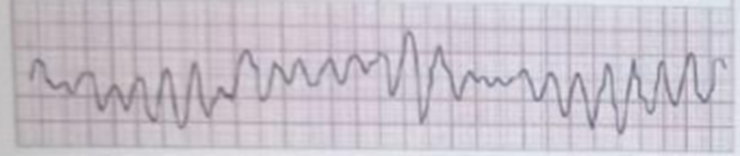
The nurse is caring for a patient in the critical care unit and notes the patient in the rhythm below. If the patient is unresponsive and pulseless, what should the nurse do?
ignore the rhythm because it is benign
provide immediate defibrillation
treat with intravenous amiodarone or lidocaine.
provide electrical cardioversion.
The Correct Answer is B
A. VF is not benign, it is uniformly fatal without immediate intervention. Ignoring VF = certain death.
B. Ventricular fibrillation (VF) is a cardiac arrest rhythm. Defibrillation is the most critical and time-sensitive intervention. It depolarizes the myocardium, allowing the SA node to regain control. The chance of survival decreases by 7–10% for every minute defibrillation is delayed. CPR should also be initiated immediately until the defibrillator is available, but defibrillation is the first definitive treatment.
C. Antiarrhythmics (amiodarone/lidocaine) are used after defibrillation attempts and CPR if VF persists. They are not the first step, because medications cannot restore a perfusing rhythm as fast as defibrillation.
D. Cardioversion delivers a synchronized shock. VF has no organized electrical activity to synchronize with, so cardioversion is ineffective and inappropriate. Only unsynchronized defibrillation is correct.
Nursing Test Bank
Naxlex Comprehensive Predictor Exams
Related Questions
Correct Answer is A
Explanation
A. In a COPD exacerbation, the primary concern is respiratory compromise. Monitoring respiratory rate, depth, pattern, and use of accessory muscles provides immediate information about the patient’s ventilatory status and oxygenation. Early recognition of worsening respiratory distress allows for prompt interventions such as supplemental oxygen, bronchodilators, or noninvasive ventilation.
B. While tachycardia may occur due to hypoxemia or stress, it is a secondary indicator and less directly reflective of acute respiratory status. Heart rate alone does not provide sufficient information about ventilation or gas exchange.
C. Fever may indicate infection, which can trigger or worsen an exacerbation, but it is not the most immediate indicator of respiratory compromise. Delaying attention to respiratory distress in favor of temperature assessment can lead to deterioration.
D. Blood pressure monitoring is important for overall hemodynamic status, but it does not directly assess the severity of a COPD exacerbation. It is a secondary consideration compared with respiratory assessment.
Correct Answer is A
Explanation
A. In pneumonia, alveoli become filled with fluid, pus, and inflammatory cells, which impairs ventilation while perfusion to the affected alveoli continues. This leads to a ventilation-perfusion (V/Q) mismatch, where blood flows through poorly ventilated areas, causing hypoxemia. The V/Q ratio is effectively decreased in affected lung segments, which is the primary mechanism for low oxygen levels in pneumonia.
B. In healthy lungs, ventilation and perfusion are well matched, resulting in efficient gas exchange. In pneumonia, alveolar consolidation disrupts this balance, so this scenario does not explain the patient’s hypoxemia.
C. This describes a situation of dead space ventilation, such as in pulmonary embolism, where alveoli are ventilated but not perfused. This does not apply to pneumonia, where the problem is primarily blocked or impaired ventilation in consolidated areas.
D. Decreased perfusion with normal ventilation also describes a form of dead space, not the hypoxemia seen in pneumonia. In pneumonia, perfusion generally continues while ventilation is impaired, causing the mismatch.
Whether you are a student looking to ace your exams or a practicing nurse seeking to enhance your expertise , our nursing education contents will empower you with the confidence and competence to make a difference in the lives of patients and become a respected leader in the healthcare field.
Visit Naxlex, invest in your future and unlock endless possibilities with our unparalleled nursing education contents today