
The nurse is preparing medications for a patient who is being intubated. The provider orders succinylcholine 60 mg IV and etomidate 15 mg IV. Using the images of the vials below (also in attachments), calculate the amount of succinylcholine that you will draw into the syringe in milliliters and write it in the first blank here
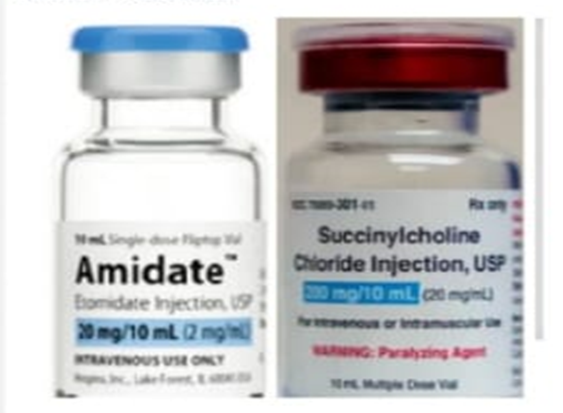
The Correct Answer is {"dropdown-group-1":"A","dropdown-group-2":"B","dropdown-group-3":"C"}
- Calculate the volume of succinylcholine to draw up
Ordered Dose: 60 mg
Available Concentration: 20 mg/mL
Volume = Ordered Dose ÷ Concentration
Volume = 60 ÷ 20
= 3 mL
- Calculate the volume of etomidate to draw up
Ordered Dose: 15 mg
Available Concentration: 2 mg/mL
Volume = Ordered Dose ÷ Concentration
Volume = 15 ÷ 2
= 7.5 mL
- Determine which medication is given first
Etomidate is given first as an induction agent, followed by succinylcholine for paralysis during intubation.
Nursing Test Bank
Naxlex Comprehensive Predictor Exams
Related Questions
Correct Answer is ["A","C","D"]
Explanation
A. Infection: Central venous catheters used for CVP monitoring provide direct access to the bloodstream, increasing the risk of catheter-related bloodstream infections. The nurse must monitor for signs of infection such as fever, redness, swelling, or purulent drainage at the insertion site and follow strict aseptic technique during care.
B. Hypervolemia: CVP monitoring measures central venous pressure to assess fluid status, but the presence of the catheter itself does not cause hypervolemia. Hypervolemia is a patient condition rather than a complication of the monitoring system, so it is not directly monitored as a catheter-related complication.
C. Air embolism: An air embolism can occur if air enters the central venous catheter during insertion, dressing changes, or disconnection. The nurse monitors for sudden respiratory distress, hypotension, and hypoxia, and ensures all connections are secure and the patient is positioned appropriately during procedures.
D. Pneumothorax: Pneumothorax is a potential complication during the insertion of a central venous catheter, especially with subclavian or jugular access. The nurse monitors for sudden chest pain, decreased breath sounds on the affected side, and respiratory distress, and prepares to intervene if a pneumothorax develops.
Correct Answer is C
Explanation
A. Administer sedatives: Sedation is important after intubation to ensure patient comfort and prevent agitation, but it is not the immediate priority. Confirming proper tube placement and ensuring effective ventilation must occur first to prevent hypoxia or accidental esophageal intubation.
B. Secure the tube: Securing the ETT prevents accidental displacement, which is essential for ongoing airway management. However, before securing, the nurse must first verify that the tube is correctly positioned in the trachea to ensure effective ventilation.
C. Auscultate lung sounds: The first action after ETT placement is to confirm correct placement by assessing bilateral breath sounds and observing for chest rise. This ensures that the tube is in the trachea and not the esophagus, preventing life-threatening hypoxia and guiding further interventions.
D. Draw an arterial blood gas (ABG): ABG analysis provides valuable information about oxygenation and ventilation status, but it is performed after confirming proper tube placement and establishing effective ventilation. Immediate verification of the airway takes priority over laboratory assessment.
Whether you are a student looking to ace your exams or a practicing nurse seeking to enhance your expertise , our nursing education contents will empower you with the confidence and competence to make a difference in the lives of patients and become a respected leader in the healthcare field.
Visit Naxlex, invest in your future and unlock endless possibilities with our unparalleled nursing education contents today