
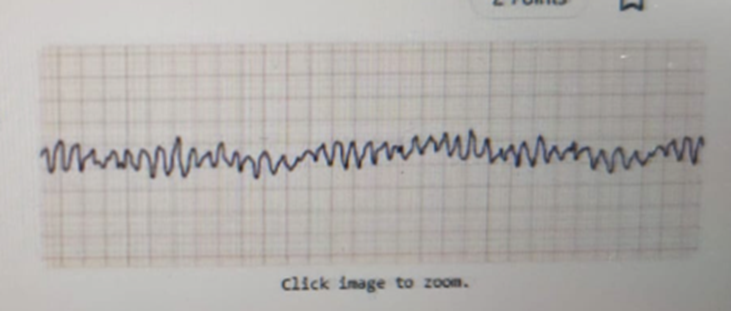
The telemetry monitor alarms for your client. The 6 second rhythm strip is seen here. Your first action is to:
Give 2 rescue breaths
Start chest compressions
Assess the client
Call a code blue/call 911
The Correct Answer is C
A. Give 2 rescue breaths: In cardiac arrest due to V.Fib, the priority is circulation. High-quality chest compressions are initiated immediately to maintain perfusion until defibrillation can be performed. Rescue breaths are not the first step.
B. Start chest compressions: V.Fib is a lethal rhythm with no effective cardiac output. Immediate chest compressions are essential to circulate oxygenated blood to vital organs while preparing for defibrillation. This is the first action in Basic Life Support (BLS) and Advanced Cardiac Life Support (ACLS).
C. Assess the client: While assessment is important, in the context of a witnessed rhythm strip showing V.Fib and an alarm, the nurse should assume cardiac arrest and act immediately. Delaying compressions to reassess wastes critical seconds.
D. Call a code blue/call 911: This is necessary, but it comes after starting chest compressions. The priority is to begin CPR without delay, then activate emergency response and prepare for defibrillation.
Nursing Test Bank
Naxlex Comprehensive Predictor Exams
Related Questions
Correct Answer is ["D","E"]
Explanation
A. Erectile dysfunction: This condition is not a direct physiological side effect of nitrate therapy. While phosphodiesterase inhibitors used for this condition are contraindicated with nitrates due to synergistic hypotension, the medication itself does not cause sexual dysfunction. It primarily affects vascular smooth muscle rather than autonomic pathways.
B. Backache: Nitroglycerin lacks a known mechanism for inducing musculoskeletal pain in the spinal region. Common adverse effects are typically related to systemic vasodilation and subsequent compensatory hemodynamic responses. This symptom is not documented as a frequent or characteristic complication of sublingual nitrate administration.
C. Diarrhea: This medication focuses on vascular smooth muscle relaxation rather than gastrointestinal motility. Nitrates do not typically irritate the enteric lining or accelerate peristalsis to cause frequent loose stools. Side effects usually manifest in the cardiovascular and neurological systems due to rapid vasodilation.
D. Dizziness: Rapid systemic vasodilation leads to a transient decrease in blood pressure and cerebral perfusion. This orthostatic effect often follows the administration of potent vasodilators as the body adjusts to decreased venous return. It remains a significant safety concern during acute anginal management.
E. Headache: The dilation of cerebral vessels increases intracranial pressure and activates pain receptors. This is the most common adverse reaction due to the drug's non-specific effect on all vascular beds. The intensity often correlates with the speed of onset of the medication.
Correct Answer is A
Explanation
A. Obtain manual blood pressure: Assessing the hemodynamic status is the priority when a client reports a racing heartbeat and shortness of breath. An irregular rhythm following conversion of atrial fibrillation requires immediate validation of perfusion and blood pressure stability. Manual measurement provides the most accurate clinical data for determining the severity of the cardiovascular change.
B. Measure airflow via incentive spirometry: Incentive spirometry is used to prevent atelectasis and is not a diagnostic tool for acute shortness of breath or cardiac arrhythmias. It does not provide information regarding the underlying cause of the "racing heartbeat" or the irregular rhythm. Priority must be placed on cardiovascular assessment rather than routine respiratory exercises.
C. Insert indwelling urinary catheter: There is no immediate clinical indication for an invasive urinary catheter based on the client's current symptoms of palpitations and dyspnea. While monitoring output is important in heart failure, it is secondary to stabilizing the client's heart rate and rhythm. Catheterization poses an unnecessary infection risk in this acute assessment phase.
D. Assist the patient to get dressed to work with physical therapy: Engaging in physical exertion while experiencing tachycardia and shortness of breath is dangerous and contraindicated. The client's reports of a "racing heartbeat" and irregular rhythm indicate a potential relapse into atrial fibrillation with rapid response. Physical activity should be deferred until the client is hemodynamically stable.
Whether you are a student looking to ace your exams or a practicing nurse seeking to enhance your expertise , our nursing education contents will empower you with the confidence and competence to make a difference in the lives of patients and become a respected leader in the healthcare field.
Visit Naxlex, invest in your future and unlock endless possibilities with our unparalleled nursing education contents today