
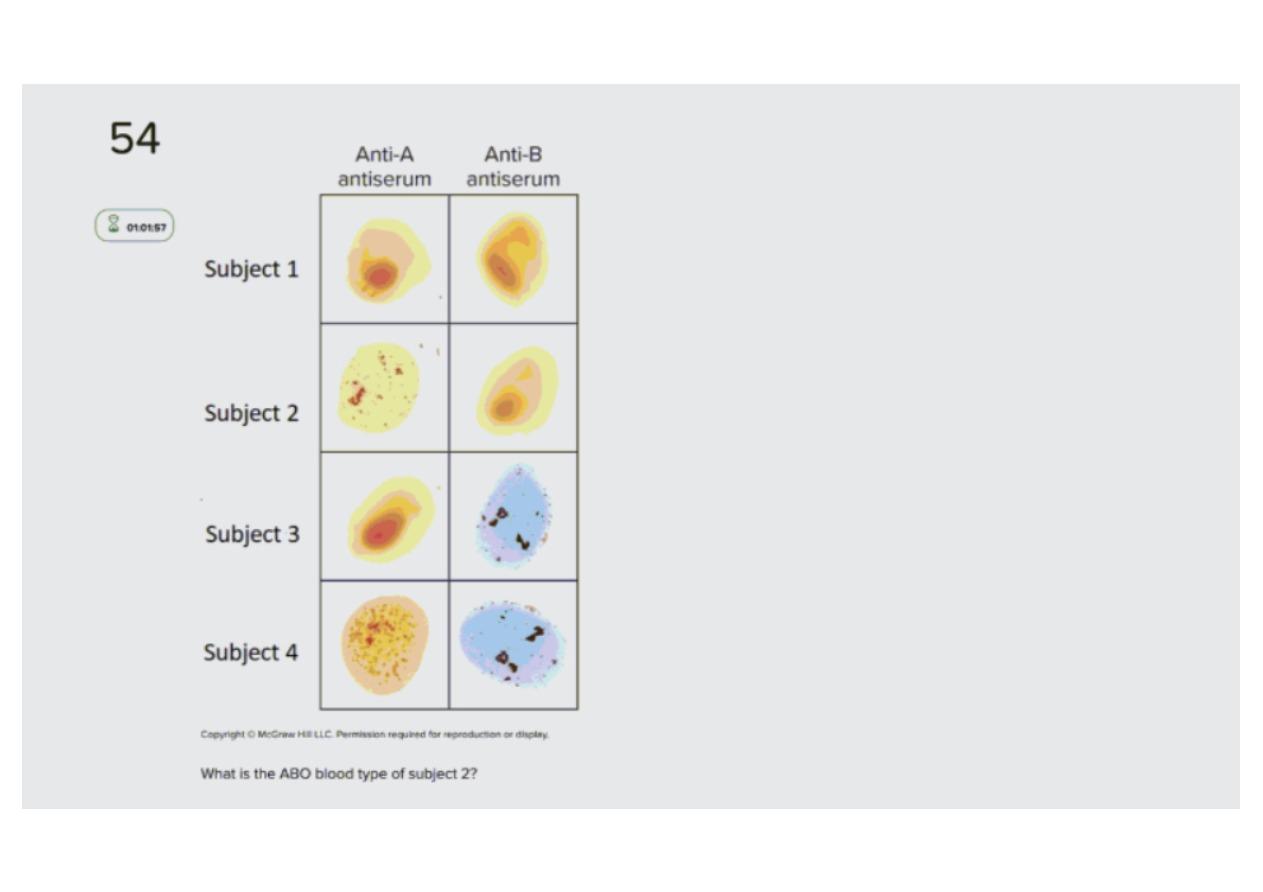
What is the ABO blood type of subject 2?
Subject 1
Subject 2
Subject 3
Subject 4
The Correct Answer is A
A. Subject 1: Because Subject 1 lacks both A and B surface antigens, the individual is classified as having blood type O. In the ABO system, type O is characterized by the absence of these specific glycoproteins. This phenotype results in the presence of both anti-A and anti-B antibodies in the plasma.
B. Subject 2: The sample demonstrates visible agglutination in the presence of Anti-A antiserum while remaining smooth in Anti-B antiserum. This indicates the presence of A antigens and the absence of B antigens on the erythrocyte membranes. Consequently, the ABO blood group for this individual is Type A.
C. Subject 3: There is a clear lack of agglutination in the Anti-A antiserum, but distinct clumping is present in the Anti-B antiserum. The reaction confirms that the red blood cells possess B antigens but lack A antigens. This specific reactivity pattern identifies the individual as having Type B blood.
D. Subject 4: Agglutination is prominently visible in both the Anti-A and Anti-B antiserum wells for this individual. This positive reaction in both tests proves the simultaneous presence of both A and B surface antigens. Therefore, Subject 4 is classified as having blood type AB.
Nursing Test Bank
Naxlex Comprehensive Predictor Exams
Related Questions
Correct Answer is B
Explanation
A. carbohydrates, proteins, and minerals: While minerals are essential micronutrients, they are required in much smaller quantities compared to the primary macronutrients. They do not constitute a major class of energy-yielding organic compounds. The physiological bulk of the diet consists of carbon-based macromolecules rather than inorganic elements.
B. fats, proteins, and carbohydrates: These three categories represent the fundamental macronutrients required for human energy production and structural maintenance. Carbohydrates provide immediate glucose, proteins supply amino acids for tissue repair, and fats offer concentrated energy storage. They comprise the largest mass of ingested nutritional matter.
C. proteins, nucleic acids, and carbohydrates: Nucleic acids are present in all cellular food sources but are not considered a primary nutritional class for energy. The body synthesizes most required nucleotides endogenously rather than relying on high-volume dietary intake. They do not provide significant caloric value compared to fats.
D. triglycerides, starches, and proteins: Triglycerides and starches are specific subcategories of lipids and carbohydrates, respectively. This choice is too narrow because it excludes other important forms such as phospholipids or simple sugars. A comprehensive classification requires the broader categorical terms for fats and carbohydrates.
E. proteins, fats, and minerals: This selection incorrectly elevates minerals to the status of a primary abundant class alongside macronutrients. Micronutrients like minerals are necessary for enzymatic function but are consumed in milligram or microgram amounts. Fats and proteins are consumed in much larger gram quantities daily.
Correct Answer is E
Explanation
A. R wave: The R wave is the prominent upward deflection of the QRS complex and represents the depolarization of the main mass of the ventricles. It marks the electrical signal for ventricular contraction, not the recovery phase. It is an electrical event related to the initiation of ventricular systole.
B. QRS wave: This complex represents the total electrical activity associated with ventricular depolarization. It consists of the Q, R, and S deflections and obscures the electrical signal of atrial repolarization. While it is a critical ECG landmark, it indicates the onset of ventricular activation rather than its recovery.
C. P wave: The P wave is the initial small deflection of the ECG cycle and represents atrial depolarization. This electrical event triggers the subsequent contraction of the atria to move blood into the ventricles. It occurs well before the ventricles are electrically activated or repolarized.
D. S wave: The S wave is the final downward deflection of the QRS complex, representing the depolarization of the base of the heart. Like the R wave, it is part of the electrical sequence that leads to ventricular contraction. It does not represent the return of the ventricular myocytes to their resting state.
E. T wave: The T wave is the deflection on the ECG that represents the electrical recovery, or repolarization, of the ventricular myocardium. This process allows the ventricular cells to return to their resting potential in preparation for the next cycle. It occurs during the middle and final stages of ventricular systole.
Whether you are a student looking to ace your exams or a practicing nurse seeking to enhance your expertise , our nursing education contents will empower you with the confidence and competence to make a difference in the lives of patients and become a respected leader in the healthcare field.
Visit Naxlex, invest in your future and unlock endless possibilities with our unparalleled nursing education contents today