
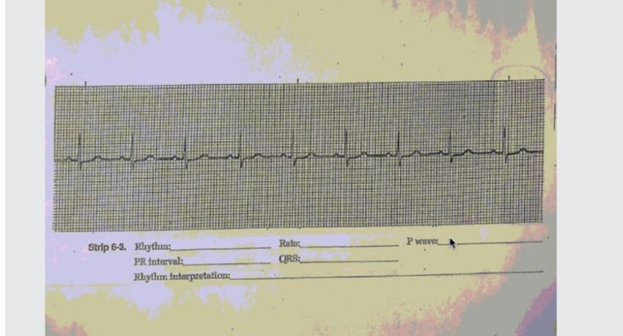
What is the correct rhythm interpretation?
Atrial Fibrillation
Ventricular Tachycardia
Normal Sinus Rhythm
Junctional Rhythm
The Correct Answer is C
Rhythm: Sinus, regular
Rate: 75 b/min
P wave: Present, normal
PR interval: Normal 0.16 seconds
QRS: Normal, 0.08 seconds
Rhythm interpretation: Normal Sinus rhythm
Nursing Test Bank
Naxlex Comprehensive Predictor Exams
Related Questions
Correct Answer is B
Explanation
A. Lidocaine: Lidocaine is a class IB antiarrhythmic used primarily for ventricular arrhythmias. While it can cause minor changes in conduction or suppress ectopic foci, it is unlikely to cause brief runs of asystole. Its mechanism stabilizes the ventricular myocardium rather than inducing transient pauses.
B. Adenosine: Adenosine is a rapid-acting antiarrhythmic used to terminate supraventricular tachycardia by transiently blocking AV nodal conduction. Its administration often causes a brief period of asystole or AV block lasting 3–6 seconds, which is expected and usually self-limiting. Patients may feel lightheaded or transiently unresponsive during this pause.
C. Atropine: Atropine is an anticholinergic agent used to treat symptomatic bradycardia by increasing heart rate through vagal inhibition. It does not cause asystolic episodes; rather, it accelerates sinus node firing, making it an unlikely cause of transient asystole.
D. Epinephrine: Epinephrine is a sympathomimetic that increases heart rate, contractility, and conduction. It is used in cardiac arrest and severe bradycardia, but it does not typically produce short runs of asystole; its effect is stimulatory, not suppressive, on cardiac conduction.
E. Amiodarone: Amiodarone is a broad-spectrum antiarrhythmic that slows conduction and prolongs repolarization. While it can cause bradycardia or AV block in some cases, brief runs of asystole lasting 3–6 seconds are not a common or expected effect of this drug.
Correct Answer is ["A","B","E"]
Explanation
A. Rapid saline flush following administration: Adenosine has an extremely short half-life (less than 10 seconds), so a rapid saline flush immediately after the IV push is essential to ensure the medication reaches the heart quickly. This enhances its effectiveness in terminating SVT by transiently blocking AV nodal conduction.
B. Rapid IV push administration: Adenosine must be administered as a rapid IV bolus, ideally through a proximal vein, to achieve immediate therapeutic effect. Slow administration can reduce its efficacy because the drug is metabolized almost immediately by the vascular endothelium and lungs.
C. Initial recommended dosage of 12 mg IV bolus: The initial recommended dose for adenosine is typically 6 mg IV push, not 12 mg. The dose may be increased to 12 mg if the first dose is ineffective. Administering 12 mg initially is higher than standard protocol and could increase the risk of transient adverse effects.
D. Long half-life of adenosine, which may prolong adverse medication effects: Adenosine actually has a very short half-life (less than 10 seconds), so adverse effects are brief and self-limiting. It does not have a prolonged effect, making this statement inaccurate.
E. Constant EKG monitoring: Continuous ECG monitoring is critical during adenosine administration because transient asystole or AV block may occur. Monitoring allows the nurse to immediately identify arrhythmia termination or adverse effects, ensuring patient safety throughout the intervention.
Whether you are a student looking to ace your exams or a practicing nurse seeking to enhance your expertise , our nursing education contents will empower you with the confidence and competence to make a difference in the lives of patients and become a respected leader in the healthcare field.
Visit Naxlex, invest in your future and unlock endless possibilities with our unparalleled nursing education contents today