
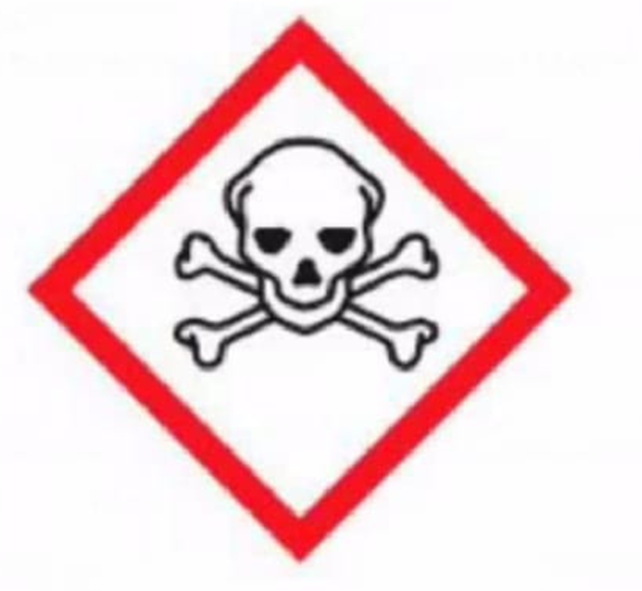
What is the meaning of this sign?
Irritant to skin, eyes, or respiratory tract
Health hazard
Acute toxicity; fatal
Explosive
The Correct Answer is C
A. Irritant to skin, eyes, or respiratory tract: The Globally Harmonized System (GHS) pictogram for an irritant is a diamond containing an exclamation mark (!). This symbol is used for less severe health hazards like skin or eye irritation.
B. Health hazard: While acute toxicity is a health hazard, the specific pictogram for a range of serious, but non-acute, long-term health issues (like carcinogenicity, mutagenicity, or respiratory sensitization) is a diamond containing a human silhouette with a starburst over the chest (often called the "man exploding" symbol).
C.Acute toxicity; fatal: The skull and crossbones symbol is an internationally recognized icon representing poison or danger of death. In the GHS, this specific pictogram is used for substances that are toxic or fatal even after only a short exposure to a small amount.
D. Explosive: The GHS pictogram for an explosive substance is a diamond containing a bomb undergoing an explosion
Nursing Test Bank
Naxlex Comprehensive Predictor Exams
Related Questions
Correct Answer is D
Explanation
A. Slime layer: The slime layer is a loosely attached glycocalyx that helps bacteria adhere to surfaces and form biofilms, but it offers less protection against phagocytosis compared to a capsule.
B. Fimbriae: Fimbriae are hair-like appendages used mainly for attachment to host tissues or surfaces. They do not provide significant protection from immune cells attempting to engulf the bacteria.
C. Cell membrane: The cell membrane controls transport of substances in and out of the cell, but it does not serve as a protective barrier against phagocytosis by immune cells.
D. Capsule: The capsule is a thick, organized glycocalyx that shields bacteria from phagocytosis by preventing immune cells from recognizing and engulfing them, making it a major virulence factor.
Correct Answer is D
Explanation
A. shape: Viruses are classified by their capsid shape, which may be helical, icosahedral, or complex. This structural feature is a key criterion in viral taxonomy.
B. type of nucleic acid: Viral classification depends on whether the genome is DNA or RNA, single-stranded or double-stranded, and positive- or negative-sense.
C. size: The physical size of viruses, ranging from about 20 nm to 300 nm, is one of the factors used in classification.
D. ribosome size: Viruses do not contain ribosomes, as they rely on the host cell’s protein synthesis machinery. Therefore, ribosome size is not a characteristic used in viral classification.
Whether you are a student looking to ace your exams or a practicing nurse seeking to enhance your expertise , our nursing education contents will empower you with the confidence and competence to make a difference in the lives of patients and become a respected leader in the healthcare field.
Visit Naxlex, invest in your future and unlock endless possibilities with our unparalleled nursing education contents today