
Which debridement method would be most appropriate for a patient with a heavily exudative infected wound?
Mechanical debridement
Autolytic debridement
Surgical debridement
Enzymatic debridement
The Correct Answer is C
A. Mechanical debridement: This involves using a wet-to-dry dressing or wound irrigation. It is non-selective (can damage healthy tissue) and not the most rapid method, especially for heavily infected wounds.
B. Autolytic debridement: This uses the body's own enzymes (via moisture-retentive dressings like hydrocolloids) to break down necrotic tissue. It is slow and generally contraindicated in heavily infected wounds because sealing the wound can create an anaerobic environment, potentially worsening the infection.
C. Surgical debridement: Surgical (sharp) debridement is the fastest and most effective method for removing large amounts of non-viable, infected, and exudative tissue. A heavily infected wound needs immediate reduction of the bioburden, which surgical debridement achieves quickly, moving the wound toward the healing phase.
D. Enzymatic debridement: This uses topical chemical enzymes (e.g., collagenase). It is slower than surgical debridement and often less effective at rapidly clearing the large amount of debris expected in a heavily exudative, infected wound.
Nursing Test Bank
Naxlex Comprehensive Predictor Exams
Related Questions
Correct Answer is B
Explanation
A. Sanguineous drainage: Sanguineous drainage is fresh, bright red blood.
B. Serosanguineous drainage: Serosanguineous drainage is a mixture of serous fluid (pale, watery) and sanguineous fluid (blood), resulting in a thin, watery, pale pink or light red color. This is a common, normal finding in the inflammatory and proliferative phases of healing.
C. Purulent drainage: Purulent drainage is thick, opaque, and colored (yellow, green, or brown) with a foul odor, indicative of infection.
D. Serous drainage: Serous drainage is clear, thin, and watery, like plasma. The presence of a pink tint indicates blood, classifying it as serosanguineous.
Correct Answer is A
Explanation
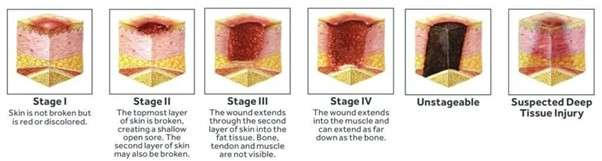
A. Full-thickness tissue loss extending to bone or tendon: A Stage 4 pressure injury is characterized by full-thickness tissue loss where fascia, muscle, tendon, ligament, cartilage, or bone are directly exposed or directly palpable. Undermining and tunneling are often extensive at this stage.
B. Intact skin with nonblanchable erythema: This describes a Stage 1 pressure injury.
C. Full-thickness skin loss with visible fat: This describes a Stage 3 pressure injury, which extends through the dermis and involves the subcutaneous fat but does not expose bone, tendon, or muscle.
D. Partial-thickness skin loss involving the dermis and epidermis: This describes a Stage 2 pressure injury, which involves only the partial loss of skin layers.
Whether you are a student looking to ace your exams or a practicing nurse seeking to enhance your expertise , our nursing education contents will empower you with the confidence and competence to make a difference in the lives of patients and become a respected leader in the healthcare field.
Visit Naxlex, invest in your future and unlock endless possibilities with our unparalleled nursing education contents today