
Which intervention is most important for the practical nurse (PN) to implement for a client who is receiving total parenteral nutrition (TPN)?
Collect fingerstick glucose levels
Implement bleeding precautions
Obtain daily weights
Check urine for albumin
The Correct Answer is A
a) Collect fingerstick glucose levels. Correct
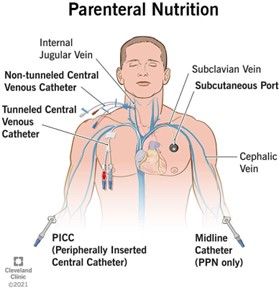
Collecting fingerstick glucose levels is the most important intervention for the PN to implement for a client who is receiving TPN. TPN is a method of feeding that bypasses the gastrointestinal tract and provides all the nutritional needs of the body through a vein. TPN contains a high concentration of glucose, which can cause hyperglycemia or fluctuations in blood sugar levels. Therefore, it is essential to monitor the client's glucose levels frequently and adjust the infusion rate or insulin administration accordingly.
b) Implement bleeding precautions.
Implementing bleeding precautions is not the most important intervention for the PN to implement for a client who is receiving TPN. Bleeding precautions are measures to prevent or minimize bleeding in clients who have a high risk of hemorrhage due to conditions such as thrombocytopenia, coagulopathy, or anticoagulant therapy. TPN does not directly increase the risk of bleeding, although it may affect the liver function and clotting factors in some cases². Therefore, bleeding precautions are not a priority for a client who is receiving TPN.
c) Obtain daily weights.
Obtaining daily weights is not the most important intervention for the PN to implement for a client who is receiving TPN. Obtaining daily weights is a way to monitor the client's fluid balance, nutritional status, and response to therapy. TPN can cause fluid overload, dehydration, or electrolyte imbalances in some cases²⁵. Therefore, obtaining daily weights is important, but not as important as monitoring glucose levels.
d) Check urine for albumin.
Checking urine for albumin is not the most important intervention for the PN to implement for a client who is receiving TPN. Checking urine for albumin is a way to detect proteinuria, which is an indicator of kidney damage or disease. TPN does not directly cause kidney problems, although it may affect the renal function and urine output in some cases². Therefore, checking urine for albumin is not a priority for a client who is receiving TPN.
 |
Nursing Test Bank
Naxlex Comprehensive Predictor Exams
Related Questions
Correct Answer is A
Explanation
Choice A reason: "Move objects away from the client." This instruction should be included in the teaching because it can prevent injury and protect the client from harm during a seizurE.
Choice B reason: "Restrain the client." This instruction should not be included in the teaching because it can cause injury and increase agitation and anxiety for the client during a seizurE.
Choice C reason: "Place the client on his back." This instruction should not be included in the teaching because it can increase the risk of aspiration and airway obstruction for the client during a seizurE.
Choice D reason: "Insert a padded tongue blade into the client's moutH." This instruction should not be included in the teaching because it can cause injury and choking for the client during a seizurE.
Correct Answer is B
Explanation
Choice A reason: Advances in surgical techniques and procedures have improved the quality of life and survival rates for many patients, but they are not the main factor for the increase in life expectancy in the twentieth century.
Choice B reason: Sanitation and other public health activities, such as vaccination, safe water supply, sewage disposal, and food safety, have reduced the incidence and mortality of infectious diseases, which were the leading causes of death in the past. These activities have had a significant impact on increasing life expectancy in the twentieth century.
Choice C reason: Technology increases in the field of medical laboratory research have enabled better diagnosis and treatment of diseases, but they are not the primary reason for the increase in life expectancy in the twentieth century.
Choice D reason: Use of antibiotics to fight infections has saved many lives and prevented complications from bacterial diseases, but they are not the most important factor for the increase in life expectancy in the twentieth century. Moreover, antibiotics were not widely available until after World War II, which means they did not contribute much to the increase in life expectancy before that perioD.
Whether you are a student looking to ace your exams or a practicing nurse seeking to enhance your expertise , our nursing education contents will empower you with the confidence and competence to make a difference in the lives of patients and become a respected leader in the healthcare field.
Visit Naxlex, invest in your future and unlock endless possibilities with our unparalleled nursing education contents today