
Which of the following is an example of a storage form of glucose in the human body?
Starch.
Glycogen.
Fructose.
Cellulose.
The Correct Answer is B
Glycogen is the storage form of glucose in the human body.
It is a polysaccharide that is stored primarily in the liver and muscle tissue and can be broken down into glucose when the body needs energy.
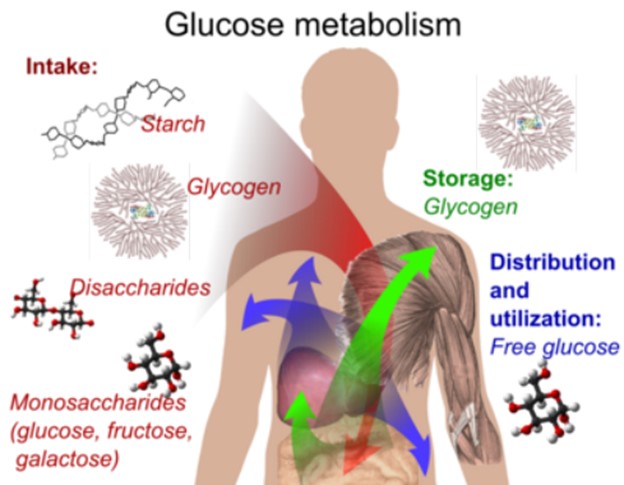
Choice A is incorrect because starch is a storage form of glucose in plants, not in the human body.
Choice C is incorrect because fructose is a simple sugar, not a storage form of glucose.
Choice D is incorrect because cellulose is a structural carbohydrate found in plant cell walls, not a storage form of glucose in the human body.
Nursing Test Bank
Naxlex Comprehensive Predictor Exams
Related Questions
Correct Answer is A
Explanation
Pattern recognition receptors (PRRs) are a class of receptors that can directly recognize the specific molecular structures on the surface of pathogens.
PRRs play a crucial role in the proper function of the innate immune system and are germline-encoded host sensors, which detect molecules typical for the pathogens.
Choice B is incorrect because cytokines are not receptors but rather signaling molecules that regulate immunity.
Choice C is incorrect because chemokines are not receptors but rather signaling molecules that attract immune cells to sites of infection.
Choice D is incorrect because T cells are not receptors but rather white blood cells that assist B cells or directly kill infected cells.
Correct Answer is B
Explanation
A catalyst provides a new reaction pathway in which a lower activation energy is offered.
This allows more reactant molecules to collide with enough energy to surmount the smaller energy barrier, increasing the rate of reaction 2.
Choice A, It increases the activation energy required for the reaction, is not the correct answer because it describes the opposite effect of a catalyst.
Choice C, It has no effect on the activation energy required for the reaction, is not the correct answer because a catalyst does have an effect on activation energy.
Choice D, It increases the rate of reaction but has no effect on the activation energy, is not the correct answer because a catalyst increases the rate of reaction by decreasing the activation energy.
Whether you are a student looking to ace your exams or a practicing nurse seeking to enhance your expertise , our nursing education contents will empower you with the confidence and competence to make a difference in the lives of patients and become a respected leader in the healthcare field.
Visit Naxlex, invest in your future and unlock endless possibilities with our unparalleled nursing education contents today