
What is the function of the neuromuscular junction?
To connect muscle fibers to motor neurons
To bind acetylcholine to nAChRs
To depolarize the muscle cell membrane
To activate voltage-gated sodium channels on the muscle membrane .
The Correct Answer is A
The neuromuscular junction is a type of synapse where neuronal signals from the brain or spinal cord interact with skeletal muscle fibers, causing them to contract.
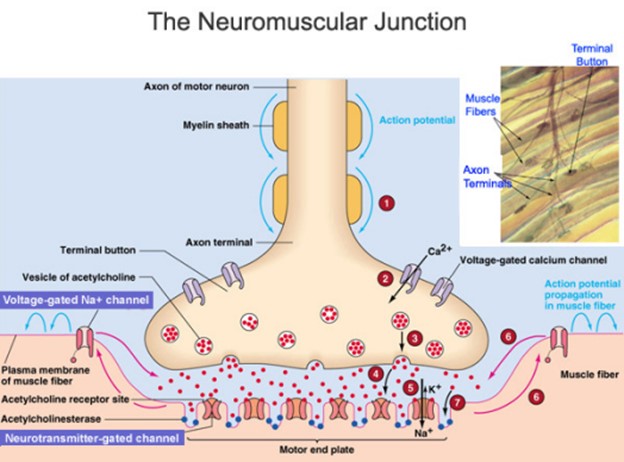
The activation of many muscle fibers together causes muscles to contract, which in turn can produce movement.
Choice B is incorrect because binding acetylcholine to nAChRs is a process that occurs at the neuromuscular junction, but it is not the function of the neuromuscular junction itself.
Choice C is incorrect because depolarizing the muscle cell membrane is a result of the function of the neuromuscular junction, but it is not the function itself.
Choice D is incorrect because activating voltage-gated sodium channels on the muscle membrane is a result of the function of the neuromuscular junction, but it is not the function itself.
Nursing Test Bank
Naxlex Comprehensive Predictor Exams
Related Questions
Correct Answer is A
Explanation
A control group is used in scientific studies to establish causality by isolating the effect of an independent variable.
The control group serves as a baseline or comparison group that does not receive the treatment or intervention being tested.

By comparing the results of the control group to the experimental group, researchers can determine if any observed changes are due to the independent variable or if they are due to chance or other factors.
Choice B is incorrect because a control group is not used to establish the effect of a dependent variable on an independent variable.
Choice C is incorrect because while a control group can help control for the impact of extraneous variables on the dependent variable, its primary purpose is to isolate the effect of the independent variable.
Choice D is incorrect because a control group is not used to control for the impact of extraneous variables on the independent variable.
Correct Answer is C
Explanation
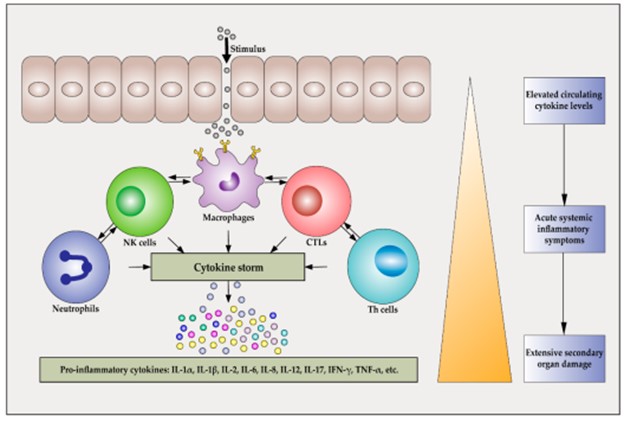
Inflammatory cytokines released during the early response to bacterial infection play a crucial role in initiating cell recruitment and local inflammation 1.
They induce the expression of adhesion molecules in endothelial cells and promote the recruitment of neutrophils to the site of inflammation 1.
Choice A is incorrect because while inflammatory cytokines may enhance phagocytosis, they do not directly disrupt the infection.
Choice B is incorrect because inflammatory cytokines do not directly attack invading pathogens.
Choice D is incorrect because inflammatory cytokines do not secrete antibodies to neutralize pathogens.
Whether you are a student looking to ace your exams or a practicing nurse seeking to enhance your expertise , our nursing education contents will empower you with the confidence and competence to make a difference in the lives of patients and become a respected leader in the healthcare field.
Visit Naxlex, invest in your future and unlock endless possibilities with our unparalleled nursing education contents today