
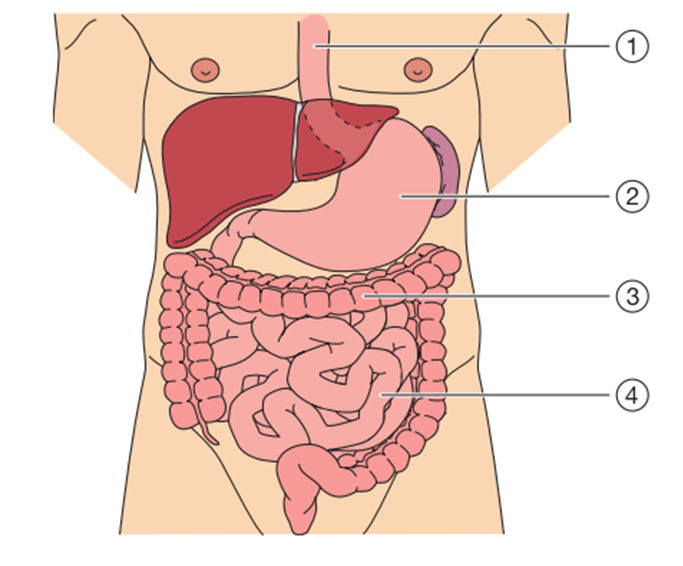
Which of the sites on the diagram below indicates the correct location for the tip of a small-bore nasally placed feeding tube?
1
2
3
4
The Correct Answer is B
Safe placement of a small-bore nasally placed feeding tube (Dobhoff tube or similar) is crucial for effective nutrition delivery and to prevent complications such as aspiration pneumonia.
Rationale for correct answer:
2. The stomach is the most common site for small-bore nasogastric feeding tube placement. It allows for bolus or continuous feeding, easy monitoring, and is the safest initial site. Placement is verified by X-ray before feeding begins.
Rationale for incorrect answers:
1. The esophagus is the passageway from the throat to the stomach. If a feeding tube tip remains here, formula could easily reflux into the airway and cause aspiration.
3. Feeding tubes are not advanced into the large intestine. The large bowel’s function is fluid absorption and stool formation, not nutrient absorption.
4. In some cases, feeding tubes are advanced past the stomach into the duodenum or jejunum, especially for patients at high risk of aspiration (e.g., impaired gastric emptying, severe reflux). While this is appropriate, it requires specialized placement.
Take home points:
- Small-bore nasogastric feeding tubes are most commonly placed in the stomach.
- Placement in the small intestine (jejunum/duodenum) is used for patients at high aspiration risk, but never in the esophagus or large intestine.
Nursing Test Bank
Naxlex Comprehensive Predictor Exams
Related Questions
Correct Answer is B
Explanation
Continuous enteral feedings increase aspiration risk and require careful positioning and securement. When delegating or observing AP care, the nurse must intervene immediately for actions that increase aspiration or dislodge the tube.
Rationale for correct answer:
2. Placing patient supine while giving a bath: Supine position during ongoing feedings greatly increases risk of reflux and aspiration. The head of bed should be elevated (usually 30–45°) during continuous enteral feeding.
Rationale for incorrect answers:
1. Fastening tube to the gown with new tape: Appropriate and good practice to prevent tube dislodgement as long as the tube is secured without tension and the tape is applied correctly.
3. Monitoring the patient’s weight as ordered: Appropriate nursing activity; weight monitoring is part of routine assessment for nutritional status and tube-feeding effectiveness.
4. Ambulating patient with enteral feedings still infusing: Often acceptable if the feeding is on a pump, tubing is secured, and patient stability/transfer protocols are followed.
Take home points:
- Never allow a patient to be supine during continuous enteral feeding - always keep HOB elevated (30-45°) to reduce aspiration risk.
- Secure the tube properly and monitor safety during ambulation; intervene immediately for positioning or securement practices that increase aspiration/dislodgement risk.
Correct Answer is B
Explanation
Appetite stimulation in hospitalized clients can be challenging due to illness, hospital routines, and unfamiliar foods. Nurses play a crucial role in promoting nutrition by addressing barriers such as pain, treatment schedules, and food preferences.
Rationale for correct answer:
2. Encouraging food from home when possible: Familiar foods can enhance appetite, provide comfort, and increase food intake.
Rationale for incorrect answers:
1. Administering pain medication after meals: Pain should be controlled before meals to improve comfort and willingness to eat. Giving it after meals does not promote appetite.
3. Scheduling his respiratory therapy before each meal: Treatments before meals may tire or stress the client, reducing appetite. They should ideally be scheduled after meals.
4. Reinforcing the importance of his eating exactly what is delivered to him: Strict enforcement can create resistance and does not address appetite stimulation. Flexibility is more effective.
Take home points:
- Appetite is best stimulated with comfort measures such as familiar, preferred foods.
- Nursing interventions should reduce barriers to eating (pain, fatigue, dislike of hospital food) rather than enforce strict compliance.
Whether you are a student looking to ace your exams or a practicing nurse seeking to enhance your expertise , our nursing education contents will empower you with the confidence and competence to make a difference in the lives of patients and become a respected leader in the healthcare field.
Visit Naxlex, invest in your future and unlock endless possibilities with our unparalleled nursing education contents today