
Which term best describes the pulling of your toes upward toward your shin?
Eversion.
Plantarflexion.
Dorsiflexion.
Inversion.
The Correct Answer is C
Dorsiflexion is the movement of the foot upwards towards the shin.
It involves the contraction of the muscles in the anterior part of the leg, such as the tibialis anterior.
Dorsiflexion is used when walking or running.
Choice A is incorrect because eversion is the movement of the foot outwards, away from the midline of the body.
Choice B is incorrect because plantarflexion is the movement of the foot downwards, away from the shin.
Choice D is incorrect because inversion is the movement of the foot inwards, towards the midline of the body.
Nursing Test Bank
Naxlex Comprehensive Predictor Exams
Related Questions
Correct Answer is ["thoracic costal facet"]
Explanation
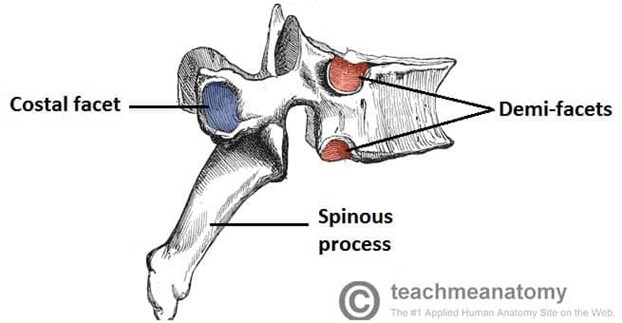
The thoracic costal facet is a feature found on the thoracic vertebrae, which are the bones that make up the mid-back region of the spine.
The costal facet is a small, flat surface located on the transverse process of the thoracic vertebrae, where it articulates with the head of the rib.
There are two costal facets on each thoracic vertebra, one on the transverse process and one on the body of the vertebra.
The costal facet is an important anatomical feature as it provides stability and support to the rib cage and facilitates the movements of the thoracic spine during respiration and other activities.
Injuries to the costal facet can result in rib fractures or dislocations, which can be very painful and require medical intervention.
Correct Answer is B
Explanation
The acromioclavicular joint is the articulation between the acromion of the scapula and the acromial end of the clavicle.
It is a plane synovial joint that allows movements of the shoulder girdle. Choice A is incorrect because the ulna and scapula do not form a joint.
The ulna is a bone of the forearm that articulates with the humerus and radius. Choice C is incorrect because none is not a valid option.
There is a specific joint between two bones that is called the acromioclavicular joint.
Choice D is incorrect because the humerus and scapula form a different joint, called the glenohumeral joint.
This is a ball-and-socket synovial joint that allows movements of the shoulder.
Whether you are a student looking to ace your exams or a practicing nurse seeking to enhance your expertise , our nursing education contents will empower you with the confidence and competence to make a difference in the lives of patients and become a respected leader in the healthcare field.
Visit Naxlex, invest in your future and unlock endless possibilities with our unparalleled nursing education contents today