
Which type of wound drainage is most likely indicative of an acute bacterial infection?
Purulent drainage
Serosanguineous drainage
Serous drainage
Sanguineous drainage.
The Correct Answer is A
A. Purulent drainage: Purulent drainage (often called pus) is a thick, opaque, yellow, green, or brown fluid that frequently has a foul odor. It is composed of dead white blood cells (leukocytes), bacteria, and tissue debris, and is the hallmark sign of an acute bacterial infection.
B. Serosanguineous drainage: Serosanguineous drainage is a thin, watery, pink-to-light red fluid, which is a mix of serous fluid and blood. It is a normal finding in the early stages of healing, indicating capillary damage but not necessarily infection.
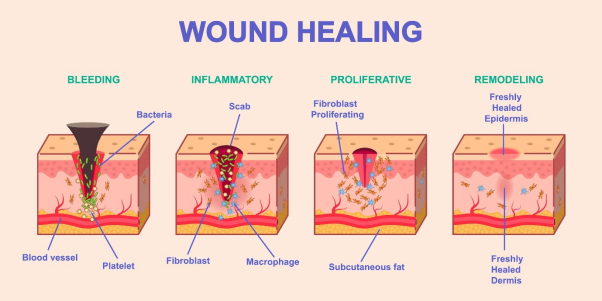
C. Serous drainage: Serous drainage is a clear, thin, watery fluid. It is considered a normal, healthy product of the inflammatory phase of wound healing.
D. Sanguineous drainage: Sanguineous drainage is fresh, bright red blood. It is expected immediately after an injury or surgery, or if a wound has been traumatized, but its presence alone does not indicate a bacterial infection.
Nursing Test Bank
Naxlex Comprehensive Predictor Exams
Related Questions
Correct Answer is A
Explanation
A. Faster healing with minimal scar formation.Primary intention occurs in clean, surgically incised wounds with minimal tissue loss, where the edges are closely approximated (e.g., with sutures). This method allows for rapid epithelialization and healing with a minimal formation of granulation tissue and resulting in a fine, linear scar.
B. Higher risk of infection.Wounds healing by primary intention generally have a lower risk of infection because the edges are closed, preventing microbial entry and reducing the exposed surface area compared to open wounds.
C. Increased granulation tissue formation.Secondary intentionhealing, which occurs in open, contaminated, or tissue-loss wounds (like large pressure injuries or burns), requires the formation of a large amount of granulation tissue to fill the wound bed before epithelialization can occur. Primary intention healing requires very little granulation tissue.
D. Enhanced epidermal migration.While epidermal migration (epithelialization) occurs in both, the overall process is much faster in primary intention because the epithelial cells only need to migrate across a very narrow gap. In secondary intention, the epithelium must migrate across a large surface area once the granulation tissue has filled the defect.
Correct Answer is B
Explanation
A. Check the patient's blood sugar levels: This is an important step in assessing a diabetic patient whose high blood sugar can impair healing, but it is not the most immediate priority for an actively infected wound.
B. Assess for signs of systemic infection: A foul odor (purulent drainage) indicates a localized infection. The priority is to assess if that infection is spreading systemically (sepsis) by checking for signs like fever, tachycardia, hypotension, and altered mental status. This assessment dictates the urgency of treatment (e.g., blood cultures, IV antibiotics).
C. Measure the wound dimensions: This is a routine, necessary step for wound documentation but is secondary to assessing the patient's immediate physiological status and the risk of life-threatening sepsis.
D. Apply a new dressing over the wound: This is an expected intervention but is secondary to a thorough assessment for systemic involvement, which guides immediate medical interventions.
Whether you are a student looking to ace your exams or a practicing nurse seeking to enhance your expertise , our nursing education contents will empower you with the confidence and competence to make a difference in the lives of patients and become a respected leader in the healthcare field.
Visit Naxlex, invest in your future and unlock endless possibilities with our unparalleled nursing education contents today