
Insulin Administration
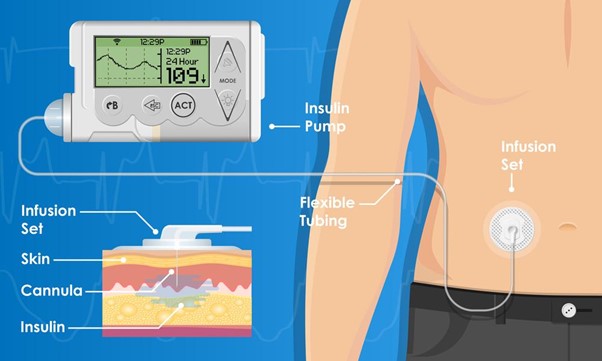
A. Subcutaneous Injection: Insulin is administered subcutaneously into the fatty tissue using insulin syringes, insulin pens, or insulin pumps.

B. Insulin Pump Therapy: Insulin pumps deliver a continuous infusion of rapid-acting insulin, mimicking the basal insulin secretion of the pancreas.
Nursing Test Bank
Test Bank #1: RN Pharmacology Exams
Test Bank #2: RN Medical-Surgical Exams
Test Bank #3: RN Fundamentals Exams
Test Bank #4: RN Maternal-Newborn Exams
Test Bank #5: RN Anatomy and Physiology Exams
Test Bank #6: RN Obstetrics and Pediatrics Exams
Test Bank #7: RN Fluid and Electrolytes Exams
Test Bank #9: RN Adult Health
Test Bank #10: RN Dosage Calculation
Test Bank #11: RN Community Health Exams
Test Bank #12: RN Psychology Exams
Test Bank #13: RN Nursing Care Of Children
Test Bank #14: RN Foundations of Nursing Exams
Naxlex Comprehensive Predictor Exams
Exam #1: RN Comprehensive predictor 2023 proctored exam
Exam #2: Ati rn vati comprehensive predictor proctored exam
Exam #3: Ati Rn Comprehensive Predictor Proctored Exam 2023
Exam #4: Rn Comprehensive Predictor 2023 Proctored Exam - St. Joseph
Exam #5: RN Comprehensive Predictor Proctored Exam (National U CA San Diego)
Exam #6: Ati rn comprehensive predictor 2023 retake proctored exam
Exam #7: RN Hesi Exit Proctored Exam
Exam #8: Hesi RN Exit proctored exam
Exam #9: Hesi rn exit proctored exam
Exam #10: Hesi Rn compass exit B proctored exam
Questions on Insulin Administration
Correct Answer is C
Explanation
<p>Insulin therapy may be considered for gestational diabetes if blood glucose levels are not well-controlled with diet and exercise, but it is not the first-line treatment.</p>
Correct Answer is A
Explanation
<p>Long-acting insulin has a slow and steady onset of action over a longer period compared to rapid-acting insulin.</p>
Correct Answer is C
Explanation
<p>Skipping meals can lead to unstable blood glucose levels and is not a recommended approach to managing insulin therapy.</p>
Correct Answer is C
Explanation
<p>Placing insulin pens in the freezer is not recommended as it can alter the medication's properties and affect its effectiveness.</p>
Correct Answer is D
Explanation
<p>Long-acting insulin provides a steady baseline level of insulin, mimicking the body's basal insulin secretion.</p>
Correct Answer is B
Explanation
<p>Administering long-acting insulin right after a meal would not match the onset and duration of action needed for glucose control.</p>
Correct Answer is A
Explanation
<p>Rubbing the gel between the palms and inhaling deeply will not have a significant impact on blood sugar levels.</p>
Correct Answer is B
Explanation
<p>Gently rolling the insulin vial between palms helps mix the insulin if it appears cloudy, but it should not be done with clear insulin.</p>
Correct Answer is B
Explanation
<p>Eating a meal or snack within 15 minutes of taking rapid-acting insulin helps prevent hypoglycemia and ensures that the insulin is working when glucose levels rise after eating.</p>
Correct Answer is C
Explanation
<p>Monitoring blood sugar levels every 4 hours is a routine practice but does not address the immediate need to treat hypoglycemia.</p>
Correct Answer is C
Explanation
<p>Intramuscular administration is not common for insulin therapy because absorption may be unpredictable and could lead to variability in blood glucose control.</p>
Correct Answer is C
Explanation
<p>Long-acting insulin is clear in appearance.</p>
Correct Answer is B
Explanation
<p>Leaving insulin in a parked car, even with cracked windows, exposes it to temperature fluctuations and extreme heat, which can impact its effectiveness.</p>
Correct Answer is B
Explanation
<p>Decreasing insulin doses may worsen hyperglycemia and is not appropriate without healthcare provider guidance.</p>
Correct Answer is A
Explanation
<p>Stopping insulin therapy abruptly can lead to hyperglycemia and potential complications. Insulin adjustments should be made under healthcare provider supervision.</p>
Correct Answer is D
Explanation
<p>Basal insulin is typically administered once or twice daily to mimic the body's basal insulin secretion and maintain stable blood glucose levels between meals and overnight.</p>
Correct Answer is A
Explanation
<p>Regular insulin is not commonly used for injection in routine insulin therapy.</p>
Correct Answer is B
Explanation
<p>Rotating injection sites helps prevent lipohypertrophy and ensures consistent absorption.</p>
Correct Answer is C
Explanation
<p>Prandial insulin is indeed a type of rapid-acting insulin used to cover meals and control post-meal blood sugar levels. This statement is correct.</p>
Correct Answer is B
Explanation
<p>Storing insulin in a hot environment can lead to degradation and loss of effectiveness.</p>
Correct Answer is C
Explanation
<p>Injecting Lantus at the same time each day helps maintain consistent blood sugar levels and optimize its effectiveness.</p>
Correct Answer is C
Explanation
<p>Injecting insulin lispro into the subcutaneous tissue is the correct route of administration for this rapid-acting insulin.</p>
Correct Answer is A
Explanation
<p>Pre-diabetes indicates higher-than-normal blood glucose levels, but insulin therapy is not usually required at this stage.</p>
Correct Answer is A
Explanation
<p>Long-acting insulin provides a steady baseline and is not intended for mealtime coverage.</p>
Correct Answer is A
Explanation
<p>Pinching the skin before inserting the needle can help ensure subcutaneous injection and prevent injecting into muscle. This statement is correct.</p>
Correct Answer is B
Explanation
<p>Pressing the needle against the skin and releasing quickly may result in the medication leaking out of the injection site.</p>