
naxlex image logo

Naxlex

  • Nursing School Content
  • TEAS Content
  • HESI Content
  • Register
  • Sign Up
How it Works
Naxlex
  • Medical Surgical
  • Genito-Urinary System Disorders
  • Introduction to chronic renal failure
Try Naxlex NCLEX-RN (14-day Free-Trial)

Introduction to chronic renal failure

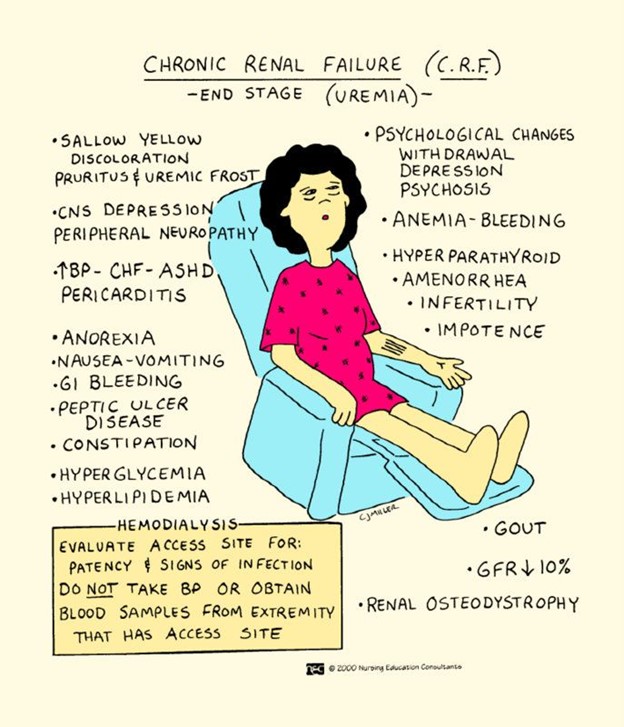
- Chronic renal failure (CRF) is the end result of a gradual, progressive loss of kidney function due to various causes such as:

  • chronic infections
  • high blood pressure
  • vascular diseases
  • obstructive processes
  • collagen diseases
  • nephrotoxic agents
  • endocrine diseases such as diabetes mellitus

- CRF can lead to serious complications, such as high blood pressure, anemia, weak bones, nerve damage, and heart disease.

- It is a systemic disease that affects all body systems and leads to uremia, a condition where the end products of protein metabolism accumulate in the blood.

- CRF is also referred to as chronic kidney disease (CKD) and has five stages based on the glomerular filtration rate (GFR), with stage 5 being the most severe and requiring renal replacement therapy.

- Early detection and treatment of CRF can help prevent or delay the progression of kidney disease and reduce the risk of kidney failure, which requires dialysis or a kidney transplant to sustain life.
Nursing Test Bank

Test Bank #1: RN Pharmacology Exams Test Bank #2: RN Medical-Surgical Exams Test Bank #3: RN Fundamentals Exams Test Bank #4: RN Maternal-Newborn Exams Test Bank #5: RN Anatomy and Physiology Exams Test Bank #6: RN Obstetrics and Pediatrics Exams Test Bank #7: RN Fluid and Electrolytes Exams Test Bank #9: RN Adult Health Test Bank #10: RN Dosage Calculation Test Bank #11: RN Community Health Exams Test Bank #12: RN Psychology Exams Test Bank #13: RN Nursing Care Of Children Test Bank #14: RN Foundations of Nursing Exams

Naxlex Comprehensive Predictor Exams

Exam #1: RN Comprehensive predictor 2023 proctored exam Exam #2: Ati rn vati comprehensive predictor proctored exam Exam #3: Ati Rn Comprehensive Predictor Proctored Exam 2023 Exam #4: Rn Comprehensive Predictor 2023 Proctored Exam - St. Joseph Exam #5: RN Comprehensive Predictor Proctored Exam (National U CA San Diego) Exam #6: Ati rn comprehensive predictor 2023 retake proctored exam Exam #7: RN Hesi Exit Proctored Exam Exam #8: Hesi RN Exit proctored exam Exam #9: Hesi rn exit proctored exam Exam #10: Hesi Rn compass exit B proctored exam

Questions on Introduction to chronic renal failure

Correct Answer is C

Explanation

Incorrect. Medication adherence is essential, but it does not eliminate the need for dietary restrictions in chronic renal failure. Dietary modifications are also a vital part of managing the condition effectively.

Correct Answer is D

Explanation

Correct. There are no special preparations needed for a GFR test. The test can be done at any time, regardless of food intake or hydration status.

Correct Answer is C

Explanation

Incorrect. The GFR test does not specifically measure the excretion of potassium and sodium in the urine; instead, it focuses on overall kidney function and filtration rate.

Correct Answer is A

Explanation

Incorrect. Potassium-sparing diuretics may not be the first for managing fluid overload and hypertension in chronic renal failure, especially if the client has elevated potassium levels. ACE inhibitors are a more suitable option in this scenario.QUESTIONS

Correct Answer is B

Explanation

Incorrect. Foods high in phosphorus should be restricted in chronic renal failure because the kidneys may have difficulty excreting excess phosphorus, leading to hyperphosphatemia, which can contribute to bone and mineral disorders.

Correct Answer is A

Explanation

Incorrect. Rapid weight loss over a few days is not indicative of fluid retention; rather, it may suggest dehydration or inadequate caloric intake.

Correct Answer is B

Explanation

Incorrect. A GFR value of 10 mL/min/1.73m² is far below the normal range and indicates significant kidney dysfunction, not normal kidney function.

Correct Answer is D

Explanation

Correct. Hypertension, or high blood pressure, is a significant risk factor for chronic renal failure. Long-term uncontrolled hypertension can damage the blood vessels in the kidneys, leading to chronic kidney disease.

Correct Answer is D

Explanation

Correct. Conditions such as hypertension and diabetes are well-established risk factors for chronic renal failure. These conditions can cause damage to the blood vessels and filtering units of the kidneys over time, leading to kidney dysfunction.

Correct Answer is C

Explanation

Incorrect. Assessing the client's daily protein intake is not the priority when the client presents with swelling in the ankles and legs. Fluid retention is a more immediate concern that requires assessment and intervention.

Correct Answer is D

Explanation

Correct. Conditions such as hypertension and diabetes are two of the leading causes of chronic renal failure. Uncontrolled high blood pressure and elevated blood sugar levels can damage the blood vessels and filtering units of the kidneys, leading to chronic kidney disease over time.

Correct Answer is A

Explanation

Incorrect. Fluid restrictions are typically necessary in chronic renal failure to prevent fluid overload and related complications.

Correct Answer is D

Explanation

Correct. Fatigue and decreased appetite are early clinical manifestations of kidney dysfunction in chronic renal failure. The kidneys play a vital role in filtering waste products and toxins from the blood, and when kidney function is compromised, it can lead to a buildup of waste products in the body, causing fatigue and decreased appetite.

Correct Answer is D

Explanation

Correct. Calcitriol is the active form of vitamin D and plays a crucial role in regulating calcium and phosphate levels in the body. It helps maintain bone health by promoting the absorption of calcium from the digestive tract and preventing bone demineralization.

Correct Answer is B

Explanation

Incorrect. Reassuring the client about the brief and tolerable nature of discomfort would be misleading, as the GFR test does not cause discomfort.QUESTIONS

Correct Answer is D

Explanation

Correct. Periorbital edema (swelling around the eyes) and edema in the ankles and feet are classic signs of fluid overload in chronic renal failure. The impaired kidney function in chronic renal failure leads to the retention of fluid and sodium in the body, resulting in edema.

Correct Answer is B

Explanation

Incorrect. Persistent pruritus in a client with chronic renal failure is not necessarily indicative of an allergic reaction to medications. It is more likely related to the buildup of waste products in the blood.

Correct Answer is D

Explanation

Correct. Constipation is a common side effect of calcium-based phosphate binders. Increasing fluid intake can help alleviate constipation and promote bowel regularity.Questions

Correct Answer is A

Explanation

Incorrect. Phosphate binders do not typically lower potassium levels, and monitoring potassium intake is not specifically related to their use.

Correct Answer is B

Explanation

Incorrect. Chronic renal failure can be caused by various factors, but diabetes is a significant and common cause of kidney disease, especially in individuals with uncontrolled diabetes.

Correct Answer is B

Explanation

Incorrect. Phosphate binders do not affect potassium excretion. They are specific to phosphate control in the body and do not impact potassium levels.

Correct Answer is A

Explanation

Incorrect. The GFR test does not specifically assess the excretion of potassium and sodium in the urine; instead, it focuses on overall kidney function and filtration rate.

Correct Answer is A

Explanation

Incorrect. Pain medication is not typically needed before starting a peritoneal dialysis exchange, as the procedure itself is not painful. Proper technique and sterile care are the main focus of peritoneal dialysis education.

Correct Answer is B

Explanation

Incorrect. A GFR value of 60 mL/min/1.73m² is not indicative of severely damaged kidneys. Severe kidney dysfunction would have a much lower GFR value.

Incorrect. Taking over-the-counter calcium supplements without proper evaluation of calcium levels can be dangerous and may contribute to other imbalances in chronic renal failure.

Incorrect. Educating the client about potassium-rich foods is important for managing potassium levels, but it is not the priority in this situation. Muscle cramps are more likely related to fluid and electrolyte imbalances rather than potassium intake.

Incorrect. High blood pressure is a well-established risk factor for chronic renal failure. Uncontrolled hypertension can damage the blood vessels in the kidneys, leading to kidney dysfunction over time.QUESTIONS

Incorrect. Promoting a high-potassium diet is not appropriate for individuals on hemodialysis, as it can lead to hyperkalemia. Clients on hemodialysis typically need to restrict potassium intake.

Incorrect. Poultry is a good protein source, but the type of protein is not the main concern for clients at risk for hyperkalemia; it is the overall potassium content of the diet that needs to be reduced.

Incorrect. Hyperkalemia is a complication of chronic renal failure but may not be an early clinical manifestation. It is more likely to occur as kidney function declines and potassium excretion becomes impaired.

Incorrect. Providing the client with an analgesic is not the priority when the client reports cloudy dialysate effluent; the focus is on identifying the cause of the cloudiness.

Correct. The prognosis for chronic renal failure can vary widely depending on factors such as the cause of kidney disease, the stage of kidney damage, and the client's response to treatment. Early intervention, such as controlling blood pressure and blood sugar levels, can help slow the progression

Correct. The GFR can be estimated using formulas that include the serum creatinine level, such as the Modification of Diet in Renal Disease (MDRD. formula or the Chronic Kidney Disease Epidemiology Collaboration (CKD-EPI) equation.

Incorrect. ESA therapy is not associated with an increased risk of bleeding or restrictions on engaging in strenuous activities. It is used to manage anemia and improve overall blood cell counts.

Incorrect. Kidney dysfunction in chronic renal failure does not typically lead to low levels of calcium in the bones. Instead, it can lead to abnormalities in phosphorus levels, which affect bone health.

Correct. Hyperphosphatemia, or high phosphorus levels, is common in chronic renal failure due to impaired kidney function. Elevated phosphorus levels can lead to the binding of calcium, resulting in decreased ionized calcium in the blood. This can cause neuromuscular irritability, difficulty concent

Incorrect. Family history of kidney disease is a non-modifiable risk factor. While individuals cannot change their family history, they can modify other lifestyle factors, such as smoking, to reduce their overall risk of kidney disease.

Incorrect. Antipyretics such as acetaminophen are generally safe when used appropriately and are not considered a risk factor for chronic renal failure.

Incorrect. Hypokalemia, or low potassium levels, can cause muscle weakness or cramps but is not typically associated with peripheral neuropathy.

Incorrect. While a GFR value of 50 mL/min/1.73m² indicates kidney dysfunction, it does not represent severe kidney damage. Severe kidney dysfunction would have a much lower GFR value.

Incorrect. Discontinuing peritoneal dialysis should be considered if there is clear evidence of infection or other serious complications, but it is not the initial intervention for cloudy drainage without further assessment.

Incorrect. While reducing protein intake can result in fewer waste products being generated, the primary reason for limiting protein intake in chronic renal failure is to reduce the strain on the kidneys, not solely to decrease waste production.QUESTIONS

Incorrect. Polyuria is not typically associated with fluid overload. Instead, it may be present in early stages of chronic renal failure due to the inability of the kidneys to concentrate urine properly.

Incorrect. Chronic renal failure is not typically associated with elevated platelet counts; in fact, it can lead to platelet dysfunction and an increased risk of bleeding.QUESTIONS

Incorrect. Caffeine-containing beverages can contribute to fluid overload and hypertension in chronic renal failure and are not a suitable intervention for addressing fatigue.

Incorrect.Physical activity is generally encouraged in clients with chronic renal failure, as it contributes to overall well-being. Hemodialysis may increase energy levels and improve the client's ability to engage in physical activity.

Correct. Monitoring the client's weight and fluid intake is the priority action when the client is experiencing anorexia and nausea. These symptoms may indicate fluid and electrolyte imbalances that need to be addressed promptly.
Try Naxlex NCLEX-RN
(14 Day Free-Trial)

Search Here

More on Nursing

  • Medico-Surgical Procedures
  • Immunological System
  • Blood and Cardiovascular Disorders
  • Digestive System Disorders
  • Perioperative Nursing
  • Endocrine Systems
  • Communicable Diseases
  • Introduction
  • Musculoskeletal System

Free Nursing Study Materials

Access to all study guides and practice questions for nursing for free.

  • Free Nursing Study Trials
  • Free Nursing Video tutorials
  • Free Nursing Practice Tests
  • Free Exam and Study Modes
  • Free Nursing Revision Quizlets
Join Us Today
naxlex-logo-footer

Designed to assess a student's preparedness for entering the health science fields.

Email Address: [email protected]

Phone No: +18175082244

Company

  • Contact us
  • How it Works
  • Blog

Resources

  • Privacy Policy
  • Terms of use
  • Help Center

© 2026 Naxlex.com