
Management and treatment
- The management and treatment of acute renal failure depend on the cause and severity of the condition, as well as the presence of complications and comorbidities.
- The general goals of management and treatment are to:
- Restore renal perfusion and function
- Correct or eliminate any reversible causes of kidney injury
- Provide supportive care to prevent or treat complications
- Preserve residual kidney function and prevent progression to chronic kidney disease
- The specific interventions may include:
- Fluid resuscitation: This involves administering intravenous (IV) fluids to restore fluid volume and blood pressure in patients with acute renal failure due to hypovolemia or hypotension. Isotonic crystalloids such as normal saline or lactated Ringer's solution are preferred over colloids as they have no clear renal or mortality benefit and may increase the risk of bleeding or infection. The amount and rate of fluid administration should be guided by the patient's hemodynamic status, urine output, serum creatinine, and BUN levels. Fluid overload should be avoided as it can worsen edema, pulmonary congestion, and heart failure.
- Diuretics: These are medications that increase urine output by inhibiting sodium and water reabsorption in the kidneys. Diuretics may be used to treat fluid overload in patients with acute renal failure who are oliguric or anuric. Loop diuretics such as furosemide (Lasix) or bumetanide (Bumex) are preferred over thiazide diuretics as they are more effective in patients with low GFR. Diuretics should be used with caution as they can cause dehydration, electrolyte imbalances, ototoxicity, or nephrotoxicity. The dose and frequency of diuretics should be adjusted according to the patient's response and laboratory values.
- Discontinuation of Nephrotoxic medications: These are medications that can cause or worsen kidney injury by affecting the blood flow to the kidneys or by directly damaging the kidney cells. Nephrotoxic medications should be discontinued or avoided in patients with acute renal failure whenever possible. Some examples of nephrotoxic medications include:
- nonsteroidal anti-inflammatory drugs (NSAIDs), aminoglycosides,
- amphotericin B,
- vancomycin,
- contrast media,
- cyclosporine,
- tacrolimus,
- cisplatin,
- and methotrexate.
- Drug dose adjustment: This involves modifying the dose or frequency of medications that are eliminated by the kidneys according to the patient's renal function. Drugs that are renally excreted may accumulate in patients with acute renal failure and cause toxicity or adverse effects. The degree of dose adjustment depends on the drug's pharmacokinetics, therapeutic index, and toxicity profile. Some examples of drugs that require dose adjustment in patients with acute renal failure include:
- digoxin,
- lithium,
- gabapentin,
- metformin,
- warfarin.
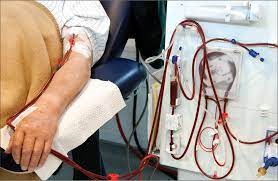
- Dialysis: This is a process that removes waste products and excess fluid from the blood using a machine (hemodialysis) or the abdomen (peritoneal dialysis). Dialysis may also be indicated in patients with acute renal failure who have chronic kidney disease, volume overload, or drug overdose. The timing and modality of dialysis should be individualized based on the patient's clinical condition, preferences, and availability of resources.
-
Dialysis may be indicated in patients with acute renal failure who have life-threatening complications such as:
- severe hyperkalemia,
- metabolic acidosis,
- uremic encephalopathy,
- pericarditis,
- pulmonary edema that is unresponsive to medical therapy.
- Renal replacement therapy: This is a term that encompasses dialysis and kidney transplantation as methods of replacing kidney function in patients with end-stage renal disease. Renal replacement therapy may be initiated in individuals with nephrotic syndrome who progress to end-stage renal disease (ESRD). ESRD refers to the advanced stage of kidney disease where the kidneys can no longer function adequately to sustain life, necessitating the need for renal replacement therapy.
Nursing Test Bank
Test Bank #1: RN Pharmacology Exams
Test Bank #2: RN Medical-Surgical Exams
Test Bank #3: RN Fundamentals Exams
Test Bank #4: RN Maternal-Newborn Exams
Test Bank #5: RN Anatomy and Physiology Exams
Test Bank #6: RN Obstetrics and Pediatrics Exams
Test Bank #7: RN Fluid and Electrolytes Exams
Test Bank #9: RN Adult Health
Test Bank #10: RN Dosage Calculation
Test Bank #11: RN Community Health Exams
Test Bank #12: RN Psychology Exams
Test Bank #13: RN Nursing Care Of Children
Test Bank #14: RN Foundations of Nursing Exams
Naxlex Comprehensive Predictor Exams
Exam #1: RN Comprehensive predictor 2023 proctored exam
Exam #2: Ati rn vati comprehensive predictor proctored exam
Exam #3: Ati Rn Comprehensive Predictor Proctored Exam 2023
Exam #4: Rn Comprehensive Predictor 2023 Proctored Exam - St. Joseph
Exam #5: RN Comprehensive Predictor Proctored Exam (National U CA San Diego)
Exam #6: Ati rn comprehensive predictor 2023 retake proctored exam
Exam #7: RN Hesi Exit Proctored Exam
Exam #8: Hesi RN Exit proctored exam
Exam #9: Hesi rn exit proctored exam
Exam #10: Hesi Rn compass exit B proctored exam
Questions on Management and treatment
Correct Answer is A
Explanation
Incorrect. Diabetes mellitus is a risk factor for chronic kidney disease, but it is not a specific risk factor for prerenal acute renal failure.
Correct Answer is B
Explanation
Incorrect. Deep breathing exercises are not specific interventions for correcting metabolic acidosis.
Correct Answer is C
Explanation
Incorrect. Adhesive tape can cause skin irritation and damage when removed, especially in clients at risk for impaired skin integrity.
Correct Answer is C
Explanation
Incorrect. While UTIs and kidney stones can cause kidney injury, they are not the exclusive causes of acute renal failure, which can have various underlying etiologies.
Correct Answer is B
Explanation
Incorrect. Renal ultrasound is an imaging test that provides information about the structure of the kidneys but does not directly measure GFR.
Correct Answer is A
Explanation
Incorrect. The timing of loop diuretic administration is determined by the healthcare provider's order and the client's specific needs. Taking diuretics at bedtime may result in increased nighttime urination and sleep disruption.QUESTIONS
Correct Answer is B
Explanation
Incorrect. Increased respiratory rate and depth are not typically associated with acute renal failure or its fluid and electrolyte imbalances.
Correct Answer is C
Explanation
Incorrect. Increasing the client'sfluid intake is not appropriate during a hypotensive episode, as it may not rapidly improve blood pressure and could lead to fluid overload.
Correct Answer is C
Explanation
Incorrect. Excessive thirst and dry mucous membranes are not specific to hyperkalemia and are not the most critical indicators of severe hyperkalemia.
Correct Answer is A
Explanation
Incorrect. Antihypertensive agents are prescribed to manage hypertension and do not treat anemia in clients with renal failure.QUESTIONS
Correct Answer is C
Explanation
Incorrect. Gentle stretching exercises may not be appropriate for a client experiencing muscle cramps, as stretching could exacerbate the discomfort.
Correct Answer is A
Explanation
Incorrect. Thiazide diuretics may cause electrolyte imbalances and metabolic disturbances, but they are not a common cause of prerenal acute renal failure.QUESTIONS
Correct Answer is B
Explanation
Incorrect. Encouraging the client to drink water freely would exacerbate fluid overload and impair the body's ability to eliminate excess fluids.
Correct Answer is C
Explanation
Incorrect. While the statement is partially true, it does not capture the acute and sudden nature of acute renal failure. The inability of the kidneys to filter waste products from the blood is one of the manifestations of AKI.
Correct Answer is A
Explanation
Incorrect. While ciprofloxacin and other antibiotics may have renal-related side effects, they are not a common cause of intrinsic acute renal failure.
Correct Answer is C
Explanation
Incorrect. Excessive fluid intake and fluid overload may contribute to fluid retention and edema in prerenal acute renal failure, but they are not the primary pathophysiological process in acute renal failure.
Correct Answer is A
Explanation
Incorrect. Promoting shallow breathing to retain carbon dioxide is not a recommended intervention for correcting metabolic acidosis. Respiratory acidosis and metabolic acidosis are different types of acid-base imbalances with distinct causes and treatments.
Correct Answer is C
Explanation
Incorrect. Excessive fluid intake may contribute to fluid overload and decreased urine output in prerenal acute renal failure, but it is not the primary pathophysiological process that leads to decreased urine output.
Correct Answer is C
Explanation
Incorrect. Decreased respiratory rate and shallow breathing are not directly associated with uremia.
Correct Answer is B
Explanation
Incorrect. Preventing infection and complications is important, but it is not the priority over assessing kidney function in acute renal failure.QUESTIONS
Correct Answer is B
Explanation
Incorrect. Removing jewelry and metallic objects is a standard precaution for all imaging procedures, but it is not specific to a CT scan with contrast dye.
Correct Answer is D
Explanation
Correct. A renal nuclear scan, also known as a renal scintigraphy, involves injecting a small amount of radioactive material intravenously. The radioactive material is taken up by the kidneys, and the scan creates images that assess kidney function and blood flow.QUESTIONS