
Transmission cycle/vector/reservoir
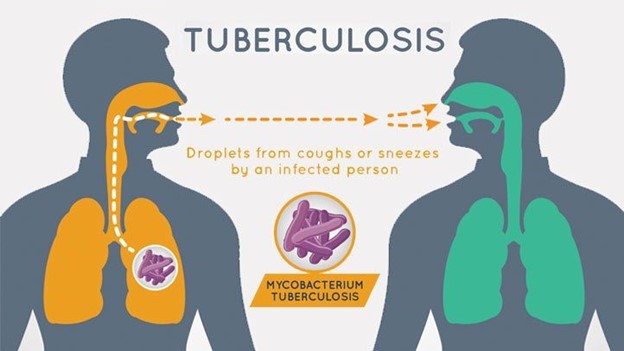
- The transmission cycle of TB involves three stages: exposure, infection, and disease.
- Exposure occurs when a person inhales M. tuberculosis from the respiratory droplets of an infectious source, such as a person with active pulmonary TB or a person with latent TB who is undergoing reactivation.
- Infection occurs when the inhaled bacteria reach the alveoli of the lungs and are engulfed by macrophages, which are immune cells that try to kill the bacteria. However, some bacteria survive and multiply inside the macrophages, forming granulomas, which are nodules of infected tissue surrounded by immune cells
Disease:
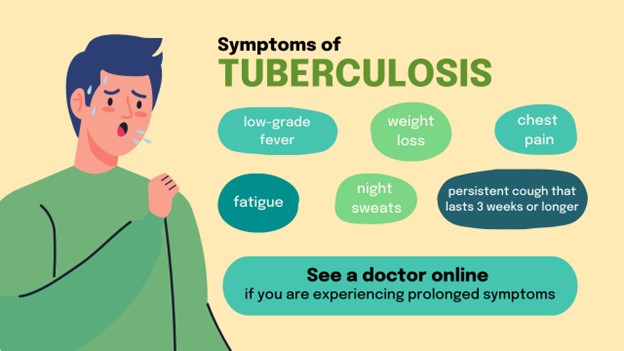
- Disease occurs when the granulomas break down and release the bacteria into the bloodstream or the airways, causing systemic or pulmonary symptoms.
- The symptoms of TB depend on the type and location of the infection, but they generally include fever, night sweats, weight loss, fatigue, cough, hemoptysis (coughing up blood), chest pain, and dyspnea (difficulty breathing).
- The most common type of TB is pulmonary TB, which affects the lungs and accounts for about 85% of all cases. Pulmonary TB can be classified into primary, secondary, or miliary TB .
- Primary TB occurs when a person is exposed to M. tuberculosis for the first time and develops a primary complex, which consists of a small lesion in the lung (Ghon focus) and enlarged lymph nodes in the hilum (Ghon complex). Primary TB is usually asymptomatic or mild, and it may heal spontaneously or progress to latent or active TB.
- Secondary TB occurs when a person with latent TB experiences reactivation of the bacteria due to a weakened immune system or other factors. Secondary TB usually affects the upper lobes of the lungs and causes cavitation, which is the formation of holes in the lung tissue due to necrosis. Secondary TB is more likely to cause severe symptoms and complications, such as bronchopleural fistula, pneumothorax, or pleural effusion.
- Miliary TB occurs when the bacteria spread through the bloodstream and cause multiple small lesions in various organs, such as the liver, spleen, bone marrow, and meninges. Miliary TB is a life-threatening condition that causes systemic symptoms, such as fever, chills, anorexia, hepatosplenomegaly (enlarged liver and spleen), and meningitis.
- Extrapulmonary TB occurs when the bacteria affect organs other than the lungs, such as the kidneys, bones, lymph nodes, and meninges. Extrapulmonary TB can cause various symptoms depending on the organ involved, such as hematuria (blood in urine), renal failure, osteomyelitis (bone infection), arthritis (joint inflammation), lymphadenitis (swollen lymph nodes), and meningitis. Extrapulmonary TB can also occur in conjunction with pulmonary TB or as a result of military dissemination.
Nursing Test Bank
Naxlex Comprehensive Predictor Exams
Questions on Transmission cycle/vector/reservoir