
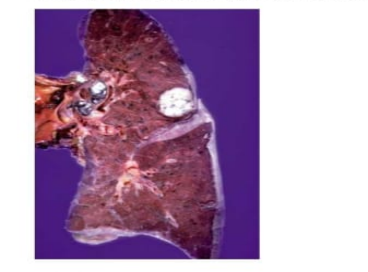
A 65-year-old man from Asia suffers a massive stroke and expires. The lungs are examined at autopsy (image shown). This pulmonary lesion is associated with which of the following infectious diseases?
Aspergillosis
Histoplasmosis
Legionella
Pneumocystis
Tuberculosis
The Correct Answer is E
A. Aspergillosis: Aspergillosis is a fungal infection that can produce invasive pulmonary disease or aspergillomas in pre-existing cavities. It does not produce a Ghon focus or the peripheral, well-circumscribed nodule typical of primary tuberculosis.
B. Histoplasmosis: Histoplasmosis, caused by Histoplasma capsulatum, can produce granulomatous lesions in the lungs, sometimes resembling a Ghon focus. However, the classic Ghon focus is specifically associated with Mycobacterium tuberculosis infection.
C. Legionella: Legionella pneumophila causes Legionnaires’ disease, a severe bacterial pneumonia with systemic symptoms. It does not form localized Ghon foci or granulomatous lesions in the lungs.
D. Pneumocystis: Pneumocystis jirovecii causes diffuse interstitial pneumonia, especially in immunocompromised individuals. It does not form well-circumscribed peripheral nodules or granulomas.
E. Tuberculosis: A Ghon focus, localized, well-circumscribed, pale-white nodule, is the hallmark lesion of primary tuberculosis, consisting of a caseous necrosis in the lung periphery, often with involvement of regional hilar lymph nodes. This lesion represents the initial site of infection by Mycobacterium tuberculosis, making tuberculosis the correct association.
Nursing Test Bank
Naxlex Comprehensive Predictor Exams
Related Questions
Correct Answer is B
Explanation
A. Brain:Emboli originating in the brain would not travel systemically to the spleen. Instead, brain emboli cause localized cerebral infarctions or strokes.
B. Heart:Thromboemboli from the heart, particularly after a myocardial infarction, can arise from mural thrombi in the left ventricle. These emboli are released into the systemic arterial circulation and can lodge in end organs like the spleen, kidneys, or extremities, producing the characteristic wedge-shaped splenic infarcts seen in this patient.
C. Lungs:Pulmonary emboli originate from venous thrombi and lodge in the pulmonary arteries. They do not enter systemic circulation due to the filtering effect of the pulmonary capillary bed, so the spleen is not affected by emboli from the lungs.
D. Liver:The liver receives blood primarily via the portal vein, and thrombi here generally do not embolize to the systemic circulation. Hepatic thrombi do not cause splenic infarcts.
E. Spleen:While the infarcts are located in the spleen, they are the result of emboli lodging in splenic arteries rather than arising within the spleen itself. Therefore, the source of the thromboemboli is systemic, most commonly the heart.
Correct Answer is B
Explanation
A. Bronchial asthma:Asthma is characterized by episodic wheezing, reversible airway obstruction, and airway hyperresponsiveness. It usually presents with intermittent symptoms rather than a chronic productive cough and persistent hypoxia with CO₂ retention, making it less consistent with this patient’s history.
B. Chronic bronchitis:Chronic bronchitis, a form of chronic obstructive pulmonary disease (COPD), is defined by a productive cough lasting at least three months per year for two consecutive years. Heavy smoking is the primary risk factor. The patient’s chronic cough, sputum production, frequent infections, hypoxia, and CO₂ retention are classic features of chronic bronchitis, reflecting chronic airway inflammation and airflow obstruction.
C. Diffuse alveolar damage (ARDS):ARDS presents acutely with severe hypoxemia and bilateral pulmonary infiltrates following trauma, sepsis, or inhalation injury. It does not produce a 3-year history of chronic cough or sputum production and is not a chronic condition.
D. Goodpasture syndrome:Goodpasture syndrome is an autoimmune disorder targeting the lungs and kidneys, causing hemoptysis and rapidly progressive glomerulonephritis. It does not typically present with chronic productive cough or CO₂ retention from chronic airway disease.
E. Usual interstitial pneumonia:Usual interstitial pneumonia, seen in idiopathic pulmonary fibrosis, causes progressive dyspnea and dry cough, not productive cough. It also leads to restrictive lung disease rather than the obstructive pattern and CO₂ retention seen in chronic bronchitis.
Whether you are a student looking to ace your exams or a practicing nurse seeking to enhance your expertise , our nursing education contents will empower you with the confidence and competence to make a difference in the lives of patients and become a respected leader in the healthcare field.
Visit Naxlex, invest in your future and unlock endless possibilities with our unparalleled nursing education contents today