
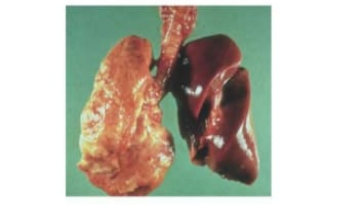
A neonate is rushed to the hospital in acute respiratory distress and expires. The lungs are examined at autopsy (shown). This pulmonary condition is termed:
Atelectasis
Bronchiectasis
Emphysema
Pneumonia
Pulmonary aplasia
The Correct Answer is A
A. Atelectasis: Atelectasis refers to collapse of lung tissue, leading to reduced lung volume and impaired gas exchange. The dark red/purple, shrunken, and “liver-like” appearance of the lungs at autopsy is characteristic of atelectasis, reflecting the absence of aeration and congestion of the collapsed alveoli.
B. Bronchiectasis: Bronchiectasis involves permanent dilation of the bronchi due to chronic infection or obstruction. It does not produce uniformly shrunken, liver-like lungs; instead, the bronchi are enlarged and filled with mucus.
C. Emphysema: Emphysema is an obstructive lung disease with alveolar wall destruction, producing hyperinflated, spongy lungs rather than shrunken, firm lungs.
D. Pneumonia: Pneumonia results in consolidation of lung parenchyma due to infection, appearing firm and often red or gray, but it is typically patchy or lobar rather than uniformly shrunken and liver-like.
E. Pulmonary aplasia: Pulmonary aplasia is the congenital absence of one lung, which is a structural anomaly. It does not describe postnatal collapse of previously formed lung tissue as seen in atelectasis.
Nursing Test Bank
Naxlex Comprehensive Predictor Exams
Related Questions
Correct Answer is D
Explanation
A. Bronchial asthma:Asthma involves reversible airway obstruction due to bronchospasm and inflammation. While it can cause wheezing and shortness of breath, it does not typically result in sudden hoarseness or loss of voice.
B. Chronic bronchitis:Chronic bronchitis is a long-standing productive cough with mucus hypersecretion. It can cause throat irritation but does not usually produce acute hoarseness or aphonia.
C. Goodpasture syndrome:Goodpasture syndrome is an autoimmune disorder affecting the kidneys and lungs, causing hematuria and pulmonary hemorrhage. It does not involve the larynx or vocal cords and would not produce hoarseness or voice loss.
D. Laryngeal cancer:Laryngeal cancer, particularly in chronic smokers, commonly presents with progressive hoarseness due to involvement of the vocal cords. Tumor growth can eventually obstruct the vocal cords, leading to aphonia. These symptoms align with the patient’s history of hoarseness progressing to inability to speak.
E. Pulmonary thromboembolism:Pulmonary embolism causes sudden dyspnea, chest pain, and hypoxia, but it does not directly affect the larynx or vocal cords and would not account for hoarseness or voice loss.
Correct Answer is B
Explanation
A. Acute left-sided heart failure:Left-sided heart failure typically presents with pulmonary congestion, dyspnea, orthopnea, and pulmonary rales. While it can eventually lead to right-sided symptoms, this patient’s presentation is dominated by right-sided signs—jugular venous distention, peripheral edema, hepatomegaly—without primary pulmonary edema, making left-sided failure less likely.
B. Cor pulmonale:Cor pulmonale is right ventricular enlargement and dysfunction caused by chronic pulmonary hypertension, often secondary to chronic lung diseases such as COPD. Features include peripheral edema, cyanosis, elevated jugular venous pressure, loud P2 due to pulmonary hypertension, hepatomegaly, and echocardiographic evidence of right ventricular dilation and hypertrophy. The patient’s history of severe COPD and chronic hypoxia strongly supports this diagnosis.
C. Pulmonary embolism:Pulmonary embolism can cause acute right heart strain and dyspnea, but it usually presents suddenly with chest pain, hemoptysis, and often without chronic signs such as peripheral edema or hepatomegaly. Echocardiography may show right ventricular dilation acutely, but chronic hypertrophy is not typical in isolated PE.
D. Dilated cardiomyopathy:Dilated cardiomyopathy affects both ventricles with progressive systolic dysfunction, leading to biventricular heart failure. While it can cause right-sided symptoms, the patient’s chronic COPD history and predominance of right-sided findings point to cor pulmonale rather than primary dilated cardiomyopathy.
Whether you are a student looking to ace your exams or a practicing nurse seeking to enhance your expertise , our nursing education contents will empower you with the confidence and competence to make a difference in the lives of patients and become a respected leader in the healthcare field.
Visit Naxlex, invest in your future and unlock endless possibilities with our unparalleled nursing education contents today