
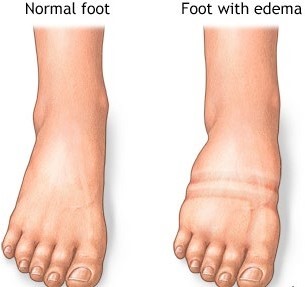
A client is prescribed a diuretic for swelling of the lower extremities. The nurse should teach the client about the effect of the medication on the client's urinary output.
The client's urinary output will be increased.
The client's urine will be a medium-amber color.
The client's urine will have a strong ammonia odor.
The client's urinary output will be decreased.
The Correct Answer is A
A diuretic is a medication that increases the production of urine by the kidneys. This can help reduce swelling (edema) by removing excess fluid from the body. If a client is prescribed a diuretic for swelling of the lower extremities, the nurse should teach the client that the medication will increase their urinary output. This means that the client will need to urinate more frequently and may produce more urine than usual. The color and odor of the urine may also change, but these changes are not directly related to the effect of the medication on urinary output.
Nursing Test Bank
Naxlex Comprehensive Predictor Exams
Related Questions
Correct Answer is B
Explanation
The most appropriate statement by the nurse would be to explain the procedure to the client and reassure them that it should not be painful. This can help alleviate the client's anxiety and make them feel more comfortable and informed about the assessment.
Correct Answer is D
Explanation
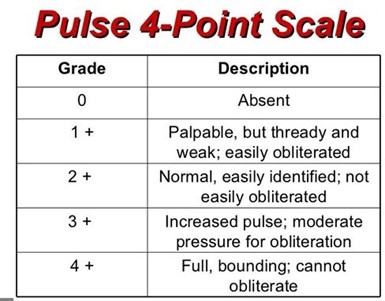
The number "+3" in this documentation represents the pulse amplitude. Pulse amplitude refers to the strength or force of the pulse and is typically measured on a scale of 0 to 4+. A "+3" pulse is considered to be full or strong, indicating good blood flow to the area being palpated.
Whether you are a student looking to ace your exams or a practicing nurse seeking to enhance your expertise , our nursing education contents will empower you with the confidence and competence to make a difference in the lives of patients and become a respected leader in the healthcare field.
Visit Naxlex, invest in your future and unlock endless possibilities with our unparalleled nursing education contents today