
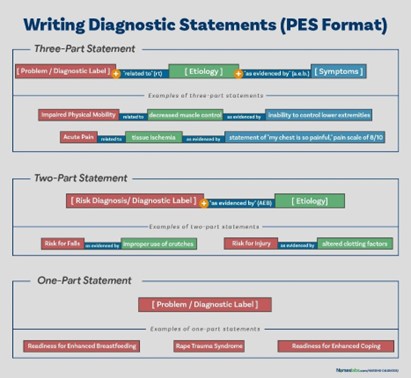
The nurse is using the PED model to write a nursing diagnosis. Which nursing diagnoses demonstrate that the nurse used this model appropriately? Select all that apply.
Ineffective Breathing Pattern as evidenced by cyanotic lips.
Risk for infection related to recent surgery.
Nutrition less than adequate related to anxiety as evidenced by weight loss of ten pounds.
Ineffective coping related to depression as evidenced by a suicide attempt.
Noncompliance (DASH diet) related to denial of having the disease.
Correct Answer : A,C,D
The PED model is a framework for writing nursing diagnoses that stands for Problem, Etiology, and Defining Characteristics. A nursing diagnosis written using the PED model includes a statement of the client's problem (P), the cause or contributing factors of the problem (E), and the observable signs and symptoms that indicate the presence of the problem (D). In this case, options a), c), and d) are examples of nursing diagnoses that demonstrate appropriate use of the PED model. Each of these diagnoses includes a statement of the client's problem, the cause or contributing factors, and the defining characteristics that indicate the presence of the problem.
Nursing Test Bank
Naxlex Comprehensive Predictor Exams
Related Questions
Correct Answer is A
Explanation
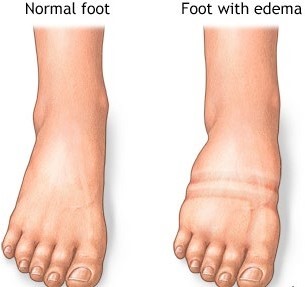
A diuretic is a medication that increases the production of urine by the kidneys. This can help reduce swelling (edema) by removing excess fluid from the body. If a client is prescribed a diuretic for swelling of the lower extremities, the nurse should teach the client that the medication will increase their urinary output. This means that the client will need to urinate more frequently and may produce more urine than usual. The color and odor of the urine may also change, but these changes are not directly related to the effect of the medication on urinary output.
Correct Answer is B
Explanation
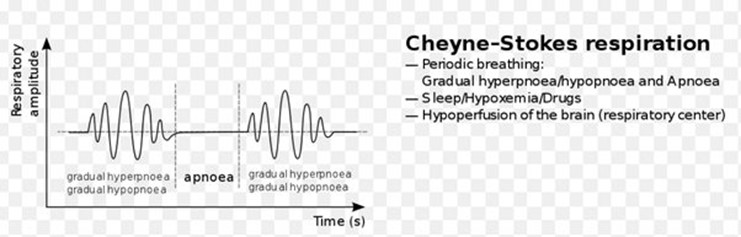
Cheyne-Stokes respiration is an abnormal pattern of breathing characterized by progressively deeper, and sometimes faster, breathing followed by a gradual decrease that results in a temporary stop in breathing called apnea. The pattern repeats, with each cycle usually taking 30 seconds to 2 minutes ². It is marked by rhythmic waxing and waning of respirations from very deep to very shallow breathing and temporary apnea ¹.
Whether you are a student looking to ace your exams or a practicing nurse seeking to enhance your expertise , our nursing education contents will empower you with the confidence and competence to make a difference in the lives of patients and become a respected leader in the healthcare field.
Visit Naxlex, invest in your future and unlock endless possibilities with our unparalleled nursing education contents today