
A nurse in an urgent care clinic is collecting data from a client who reports having diarrhea for the past 3 days. Which of the following findings indicates hypokalemia?
Pitting edema
Diplopia
Muscle weakness
Hyperactive bowel sounds
The Correct Answer is C
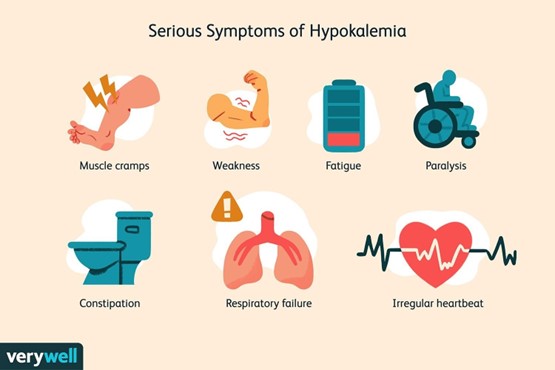
A nurse collecting data from a client who reports having diarrhea for the past 3 days should identify that muscle weakness is a symptom of hypokalemia. Hypokalemia is a condition in which the blood potassium level is low and can be caused by excessive fluid loss through diarrhea. Potassium helps regulate muscle contractions, so when blood potassium levels are low, muscles may produce weaker contractions which result in muscle weakness.
The other options are not typical symptoms of hypokalemia.
a) Pitting edema is not a typical symptom of hypokalemia.
b) Diplopia is not a typical symptom of hypokalemia.
d) Hyperactive bowel sounds are not a typical symptom of hypokalemia.
Nursing Test Bank
Naxlex Comprehensive Predictor Exams
Related Questions
Correct Answer is B
Explanation
The instruction that the nurse should include is "You can take a shower 1 day after your procedure." According to the Cleveland Clinic, the morning after the procedure, the client may take the dressing off the catheter insertion site. The easiest way to do this is when showering, get the tape and dressing wet and remove it.
Option a is incorrect because there is no information suggesting that a client must wait 3 days before resuming a regular diet after a cardiac catheterization.
Option c is incorrect because according to the Cleveland Clinic, clients should gradually increase their activities until they reach their normal activity level within one week after the procedure.
Option d is incorrect because there is no information suggesting that a client must wait 1 week before returning to school after cardiac catheterization.
Correct Answer is C
Explanation
Answer: (C) The client is not grimacing
Rationale:
A) The client's blood pressure has been reduced:
While morphine can lower blood pressure due to its vasodilatory effects, a reduction in blood pressure is not necessarily a primary indicator of a therapeutic response to pain relief. It is more important to assess pain relief directly through the client's subjective experience and behavior rather than focusing on vital signs alone.
B) The client exhibits diaphoresis:
Diaphoresis, or sweating, can occur as a side effect of morphine administration but does not indicate that the medication is effectively relieving pain. In fact, diaphoresis might signal an adverse reaction or discomfort rather than a therapeutic effect.
C) The client is not grimacing:
The absence of grimacing suggests that the client's pain has decreased, which is a direct indicator of a therapeutic response to morphine. Observing a reduction in pain-related behaviors, such as grimacing, is a key assessment for determining the effectiveness of pain management in postoperative clients.
D) The client has an elevated heart rate:
An elevated heart rate may be a sign of unresolved pain or a side effect of morphine but is not a clear indicator of pain relief. Effective pain management with morphine typically results in a decrease in sympathetic nervous system responses, such as a high heart rate, rather than an increase.
Whether you are a student looking to ace your exams or a practicing nurse seeking to enhance your expertise , our nursing education contents will empower you with the confidence and competence to make a difference in the lives of patients and become a respected leader in the healthcare field.
Visit Naxlex, invest in your future and unlock endless possibilities with our unparalleled nursing education contents today