
A nurse is assessing a child who is in a sickle cell crisis. Which of the following findings should the nurse expect?
Constipation
Pain
High fever
Bradycardia
The Correct Answer is B
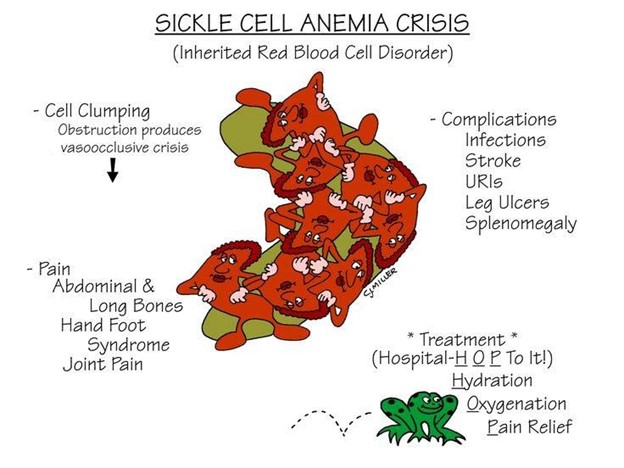
During a sickle cell crisis, the child experiences severe pain due to the sickled red blood cells blocking blood flow in the vessels, leading to tissue ischemia and infarction. Pain is the hallmark symptom of sickle cell crisis and can occur in various parts of the body, such as the abdomen, chest, back, joints, and extremities.
A. Constipation is not a common symptom of sickle cell crisis. It may be associated with other conditions but is not directly related to sickle cell crisis.
C. High fever is not a typical finding in sickle cell crisis. Fever may occur due to infections, which individuals with sickle cell disease are at increased risk of developing, but it is not a direct symptom of the crisis itself.
D. Bradycardia (slow heart rate) is not commonly associated with sickle cell crisis. Tachycardia (rapid heart rate) may occur in response to pain, but bradycardia is not a typical finding.
Nursing Test Bank
Naxlex Comprehensive Predictor Exams
Related Questions
Correct Answer is C
Explanation
Infants with gastroesophageal reflux should be placed in an infant seat or an upright position after feedings to help prevent regurgitation and aspiration of stomach contents into the airway. Placing the infant in an upright position facilitates gravity-assisted movement of stomach contents down and away from the esophagus, reducing the likelihood of reflux. It is essential to ensure that the infant seat is appropriate for the child's age and size and that the infant is safely secured within it.
The other options are not recommended for infants with gastroesophageal reflux:
When caring for an infant with gastroesophageal reflux (GER), the nurse should place the infant in an infant seat or an upright position following feedings. Placing the infant in an upright position helps to reduce the risk of reflux and regurgitation. Gravity can assist in keeping the stomach contents from flowing back into the esophagus, reducing the potential for discomfort and reflux symptoms.
The other options are not recommended for an infant with GER:
A. Placing the infant in a prone position (lying on the stomach) after feedings can increase the risk of choking and aspiration. It is essential to avoid this position, especially after feeding, to reduce the risk of reflux and its complications.
B. Placing the infant on his left side is not the preferred position for GER management. While the left side is often recommended for sleeping to reduce the risk of sudden infant death syndrome (SIDS), it is not specifically indicated for GER management after feedings.
D. Placing the infant on his right side is also not the preferred position for GER management after feedings. The right side does not provide the benefits of an upright position in reducing the risk of reflux and regurgitation.
Correct Answer is A
Explanation
A. "I will keep my baby in an upright position after feedings."
Gastroesophageal reflux (GER) is a condition where the stomach contents flow back into the esophagus, which can cause spitting up or regurgitation in infants. Keeping the baby in an upright position after feedings can help reduce the likelihood of reflux episodes. By holding the baby in an upright position for about 30 minutes after feeding, gravity can aid in keeping the stomach contents from flowing back into the esophagus.
The other statements are incorrect or do not address the management of gastroesophageal reflux:
B. "My baby's formula can be thickened with oatmeal." - Thickening formula with oatmeal is not a standard recommendation for managing GER in infants. In some cases, thickening formulas may be recommended, but it should be done under the guidance of a healthcare provider.
C. "I should position my baby side-lying during sleep." A side-lying position is not recommended for sleep in infants, as it increases the risk of sudden infant death syndrome (SIDS). The safe sleep position for infants is on their back.
D. "I will have to feed my baby formula rather than breast milk." - The type of feeding (formula or breast milk) does not directly impact the occurrence of gastroesophageal reflux. Both breast milk and formula can cause reflux in some infants. It is essential to discuss feeding options with a healthcare provider to determine the best approach for the individual infant's needs.
Whether you are a student looking to ace your exams or a practicing nurse seeking to enhance your expertise , our nursing education contents will empower you with the confidence and competence to make a difference in the lives of patients and become a respected leader in the healthcare field.
Visit Naxlex, invest in your future and unlock endless possibilities with our unparalleled nursing education contents today