
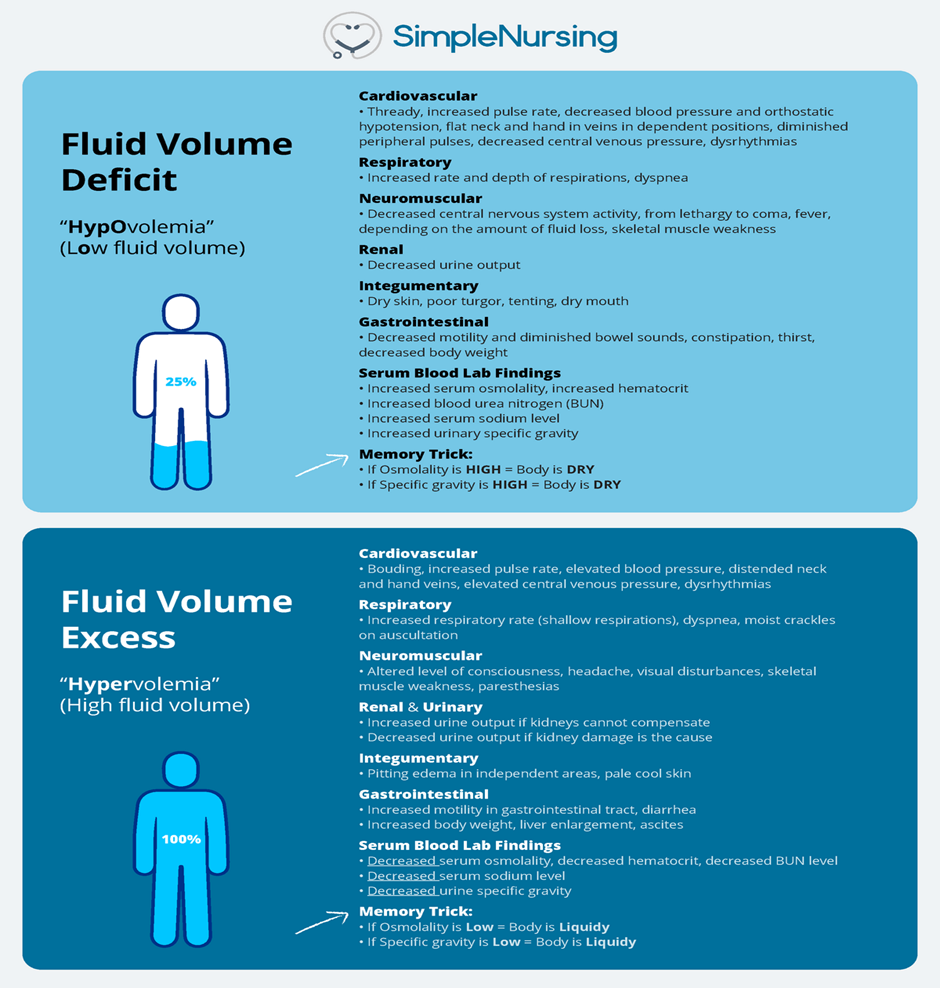
A nurse is assessing a client who is receiving intravenous therapy. The nurse should identify which of the following findings as a manifestation of fluid volume excess?
Bilateral muscle weakness
Thready pulse
Decreased bowel sounds
Distended neck veins
The Correct Answer is D
Choice A Reason:
Bilateral muscle weakness is not typically associated specifically with fluid volume excess. Muscle weakness can result from various causes, such as electrolyte imbalances or certain medical conditions, but it's not a primary manifestation of fluid volume excess.
Choice B Reason:
Thready pulse is not correct. A thready pulse refers to a weak and barely palpable pulse. This is more commonly associated with conditions like shock or reduced cardiac output rather than fluid volume excess.
Choice C Reason:
Decreased bowel sounds is not correct. Reduced or absent bowel sounds may indicate gastrointestinal issues, but they are not a direct manifestation of fluid volume excess. Increased bowel sounds might be more associated with certain types of gastrointestinal disturbances or fluid imbalances, but decreased sounds are not a typical sign of fluid volume excess.
Choice D Reason:
Distended neck veins is correct. In a client experiencing fluid volume excess, distended neck veins can often be observed due to increased venous pressure. This occurs as a result of the body retaining more fluid than it can handle, leading to an increase in blood volume and pressure within the vascular system. This can cause the jugular veins in the neck to appear distended or prominent.
Nursing Test Bank
Naxlex Comprehensive Predictor Exams
Related Questions
Correct Answer is D
Explanation
Choice A Reason:
Hct 44% is incorrect. A hematocrit (Hct) level of 44% falls within the normal range for most adults. It represents the proportion of red blood cells in the blood and is not typically concerning unless it significantly deviates from the normal range, indicating anemia or polycythemia.
Choice B Reason:
WBC count 5,000/mm3 is incorrect. A white blood cell (WBC) count of 5,000/mm3 falls within the normal range for adults, reflecting a normal immune response. There's usually no cause for immediate concern unless there are specific clinical symptoms or significant deviations from the normal range.
Choice C Reason:
Potassium 4.2 mEq/L is incorrect. A potassium level of 4.2 mEq/L is within the normal range for serum potassium levels. It's crucial to monitor potassium levels, especially with medications that can affect electrolyte balance, but this value falls within the typical range and may not prompt immediate action unless there are notable fluctuations or clinical symptoms related to potassium imbalance.
While the majority of the laboratory values provided fall within the normal range, the value that the nurse should consider reporting to the provider, particularly when a client is taking amitriptyline, is:
Choice D Reason:
Total bilirubin 1.5 mg/dL is correct. Elevated levels of total bilirubin might indicate potential liver function impairment. Amitriptyline, an antidepressant, can affect liver enzymes in some individuals, causing hepatic changes. Therefore, it's crucial to monitor liver function tests, including total bilirubin, during amitriptyline therapy. An increase in bilirubin levels could signal hepatotoxicity or liver dysfunction related to the medication.
Correct Answer is D
Explanation
Choice A Reason:
"I will check the client's INR before administering the heparin." is incorrect. Checking the client's INR (International Normalized Ratio) is essential, but it's more applicable for monitoring anticoagulants like warfarin, not heparin. Heparin's effect is typically monitored via activated partial thromboplastin time (aPTT) or anti-Xa levels, not INR.
Choice B Reason:
"I will aspirate before administering the heparin." Is incorrect. Aspirating before administering heparin injections is not necessary because the medication is given subcutaneously or intravenously and not into a blood vessel.
Choice C Reason:
"I will massage the site after injecting the heparin." Is incorrect. Massaging the site after injecting heparin could increase the risk of bruising or hematoma formation at the injection site. It's generally advised to avoid massaging the area after a heparin injection to prevent tissue trauma.
Choice D Reason:
"I will apply pressure for 1 minute after the injection." Is correct. Applying pressure to the injection site for about a minute after administering heparin helps reduce the risk of bleeding or hematoma formation, especially with subcutaneous injections. This practice aids in minimizing bleeding at the injection site.
Whether you are a student looking to ace your exams or a practicing nurse seeking to enhance your expertise , our nursing education contents will empower you with the confidence and competence to make a difference in the lives of patients and become a respected leader in the healthcare field.
Visit Naxlex, invest in your future and unlock endless possibilities with our unparalleled nursing education contents today