
A nurse is assessing a client's IV infusion site and notes that the site is cool and edematous. Which of the following actions should the nurse take?
Apply a warm, moist compress.
Slow the IV solution rate.
Initiate a new IV distal to the initial site.
Maintain the extremity below the level of the heart
The Correct Answer is A
A. Apply a warm, moist compress.
Explanation:
A cool and edematous IV infusion site could indicate infiltration of the IV site, which occurs when the IV fluid leaks into the surrounding tissue instead of entering the bloodstream. Applying a warm, moist compress to the site can help improve blood circulation and reduce the discomfort associated with infiltration. This action can also help reduce tissue damage.
B. Slow the IV solution rate: Slowing the IV solution rate might not be effective in resolving the infiltration. It's important to address the infiltration itself rather than just adjusting the rate of infusion.
C. Initiate a new IV distal to the initial site: While starting a new IV site might be necessary if the current site cannot be salvaged, it's not the initial action to take. Applying warm, moist compresses and assessing the severity of the infiltration are appropriate steps before considering a new IV site.
D. Maintain the extremity below the level of the heart: Elevating the extremity could help reduce swelling in some cases, but it's not the primary action to take when dealing with IV infiltration.
Remember, prompt assessment and appropriate interventions are essential to prevent complications associated with IV infiltration.
Nursing Test Bank
Naxlex Comprehensive Predictor Exams
Related Questions
Correct Answer is D
Explanation
A. Pallor:
Incorrect Explanation: While pallor (pale skin) can be a sign of an allergic reaction, it is not a specific indication of an allergic reaction to penicillin.
Explanation: Pallor can occur for various reasons, including shock or vasovagal responses, and it is not unique to allergic reactions.
B. Dyspepsia:
Incorrect Explanation: Dyspepsia (indigestion or upset stomach) is not a typical sign of an allergic reaction.
Explanation: Allergic reactions are more commonly associated with skin, respiratory, and cardiovascular symptoms, rather than gastrointestinal symptoms like dyspepsia.
C. Bradycardia:
Incorrect Explanation: Bradycardia (slow heart rate) is not a typical indicator of an allergic reaction.
Explanation: Allergic reactions generally do not directly cause bradycardia. Rapid heart rate (tachycardia) can be a symptom of an allergic reaction in some cases.
D. Urticaria:
Correct Answer: Urticaria (hives) is a common and characteristic sign of an allergic reaction, including to penicillin.
Explanation: Urticaria presents as raised, itchy, and often red welts on the skin. It is a classic manifestation of an allergic response and can occur rapidly after exposure to an allergen, including medications like penicillin.
Correct Answer is A
Explanation
A. Drowsiness:
Correct Answer: This adverse effect is important for the client to monitor for when taking paroxetine.
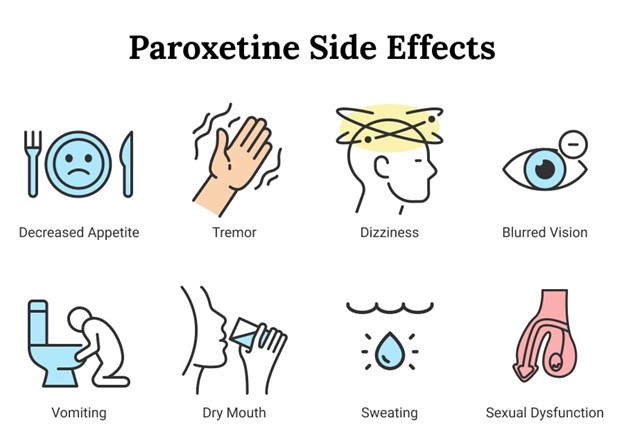
Explanation: Paroxetine is an antidepressant medication classified as a selective serotonin reuptake inhibitor (SSRI). Drowsiness or sedation can be a common side effect of paroxetine and other SSRIs. The client should be advised to monitor their response to the medication and report excessive drowsiness to their healthcare provider.
B. Peripheral edema:
Incorrect Explanation: Peripheral edema is not a typical adverse effect of paroxetine.
Explanation: Peripheral edema is not a common side effect associated with paroxetine use. It's important to monitor for adverse effects, but this specific symptom is not usually associated with this medication.
C. Tinnitus:
Incorrect Explanation: Tinnitus (ringing in the ears) is not commonly associated with paroxetine use.
Explanation: Tinnitus is not a typical side effect of paroxetine. It's important for the client to report any new or unusual symptoms, but tinnitus is not one of the more common adverse effects of this medication.
D. Alopecia:
Incorrect Explanation: Alopecia (hair loss) is not commonly associated with paroxetine use.
Explanation: Alopecia is not a typical side effect of paroxetine. While hair loss can occur with certain medications, it is not a common concern with paroxetine.
Whether you are a student looking to ace your exams or a practicing nurse seeking to enhance your expertise , our nursing education contents will empower you with the confidence and competence to make a difference in the lives of patients and become a respected leader in the healthcare field.
Visit Naxlex, invest in your future and unlock endless possibilities with our unparalleled nursing education contents today