
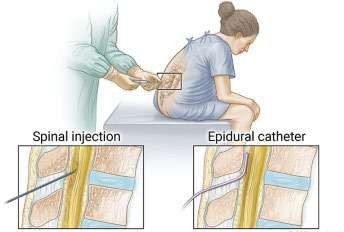
A nurse is caring for a client who is in labor and just received epidural anaesthesia. The client’s blood pressure is 90/50 mm Hg. Which of the following actions should the nurse take?
Turn the client onto their side
Initiate an amnioinfusion for the client
Administer naloxone to the client
Monitor the client’s blood pressure every 15 min
The Correct Answer is A
A common side effect of epidural anaesthesia is a drop in blood pressure. Turning the client onto their side can help improve blood flow to the uterus and baby and may help raise the mother’s blood pressure.
Nursing Test Bank
Naxlex Comprehensive Predictor Exams
Related Questions
Correct Answer is B
Explanation
Rationale for A: Monitoring the rectal temperature is important, but every 4 hours may not be frequent enough to assess for signs of infection or other complications in a newborn with myelomeningocele.
Rationale for B: Administering broad-spectrum antibiotics is crucial to prevent infection, especially in cases of myelomeningocele where the protective covering of the spinal cord is compromised.
Rationale for C: Cleansing the site with povidone-iodine is not recommended as it can be irritating and potentially harmful to the delicate tissue surrounding the defect.
Rationale for D: Surgical closure is typically performed as soon as possible after birth, often within 24 hours, rather than delaying it for 72 hours.
Correct Answer is A
Explanation
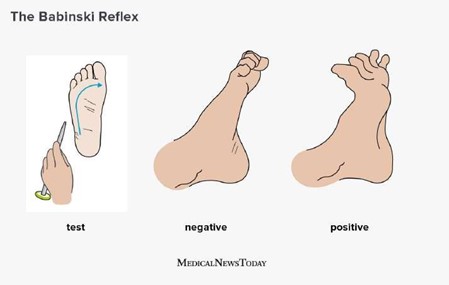
The Babinski reflex is a normal reflex present in newborns and infants up to about 2 years old. It is elicited by stroking the lateral aspect of the sole of the foot from the heel towards the toes. A positive Babinski reflex is characterized by dorsiflexion (upward movement) of the big toe and fanning out of the other toes. This is also known as an extensor response.
Therefore, option a, eversion of the great toe, is the expected finding for a positive Babinski reflex. Options b, c, and d are not consistent with a positive Babinski reflex.
Whether you are a student looking to ace your exams or a practicing nurse seeking to enhance your expertise , our nursing education contents will empower you with the confidence and competence to make a difference in the lives of patients and become a respected leader in the healthcare field.
Visit Naxlex, invest in your future and unlock endless possibilities with our unparalleled nursing education contents today