
A nurse is caring for a newly admitted older adult client.
Nurses' Notes
Day 1, 12:00:
Transferred to the medical-surgical unit from the emergency department (ED) for continued care following a closed reduction and immobilization of a fracture of the right arm. Accompanied by an adult child.
Client in visibly soiled night clothes with multiple stains, including what appears to be dried blood. Hair, teeth, and fingernails unclean. Strong body odor noted. Bruising of various stages noted around upper arms, back, shoulders, and neck area.
The client is soft-spoken, speaks almost in a whisper, and does not make eye contact with the nurse.
The client looks at their child before answering the nurse's questions and, when asked how the injury occurred, mumbles "I don't know. Ask them." The client's child states, "He gets confused sometimes. I can answer your questions."
Which of the following interventions should the nurse recommend to include in the client's plan of care?
Select all that apply.
Tell the client's child that they will be reported for maltreatment of the client.
Ask the client's child to provide details regarding the client's fractured arm.
Discuss respite care options with the client's child.
Speak to the client privately.
Provide legal advice to the client regarding the power of attorney.
Correct Answer : B,C,D
It is not appropriate for the nurse to threaten the client's child with reporting for maltreatment without further assessment and evidence.
Asking the client's child to provide details regarding the client's fractured arm will provide additional information about the client's injury and help the nurse assess the potential for abuse or neglect.
Discussing respite care options with the client's child may help alleviate any caregiver stress or burden, and ensure the client's continued care and safety.
Speaking to the client privately will help establish trust and rapport, and allow the client to disclose any
concerns or issues that they may not feel comfortable sharing in front of their child.
Providing legal advice regarding power of attorney is not within the scope of nursing practice and should be referred to a legal professional. Additionally, the client's capacity to make decisions and appoint a power of attorney should be assessed before providing such advice.
Nursing Test Bank
Naxlex Comprehensive Predictor Exams
Related Questions
Correct Answer is A
Explanation
This statement should be included in the change-of-shift report because it provides vital information about the patient’s condition and any changes that have occurred to the patient during the shift.
Statement B is wrong because it does not provide relevant information about the patient’s current condition or changes that have occurred during the shift. Statement C is wrong because it does not provide relevant information about the patient’s medical condition. Statement D is wrong because it does not provide new information about changes that have occurred during the shift.
Change-of-shift reports are key to inpatient care because they provide vital information about and responsibility for the patient from the off-going provider to the on-coming provider.
Correct Answer is C
Explanation
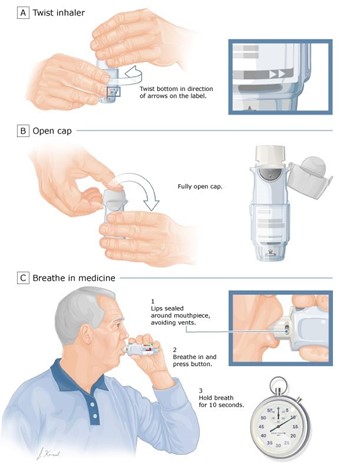
Albuterol is a bronchodilator medication that is commonly delivered through a metered-dose inhaler (MDI) to treat asthma and other respiratory conditions. Proper inhaler technique is crucial for the effective delivery of the medication to the lungs.
Option (a) is incorrect because the client should actually tilt their head back slightly and breathe out fully before inhaling the medication.
Option (b) is incorrect because the client should take a slow, deep breath while depressing the canister once.
Option (d) is incorrect because the client should hold their breath for 10 seconds after inhaling the medication to allow it to reach the lungs.
Therefore, the correct instruction for the nurse to include in the teaching is to instruct the client to close their mouth around the mouthpiece of the inhaler to ensure that the medication is delivered directly to the lungs.
Whether you are a student looking to ace your exams or a practicing nurse seeking to enhance your expertise , our nursing education contents will empower you with the confidence and competence to make a difference in the lives of patients and become a respected leader in the healthcare field.
Visit Naxlex, invest in your future and unlock endless possibilities with our unparalleled nursing education contents today