
A nurse is collecting data from a group of clients. Which of the following images indicates a client the nurse should identify as exhibiting clubbing of the fingers?
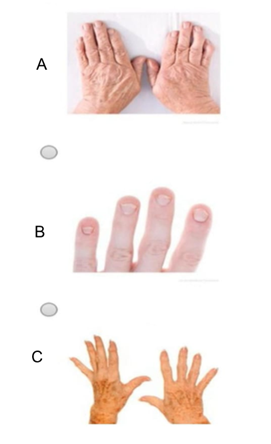
A
B
C
The Correct Answer is B
A. This image shows Heberden's and Bouchard's nodes, which are bony enlargements of the finger joints typically associated with Osteoarthritis.
B. This image clearly shows the loss of the normal angle between the nail and the nail bed (Lovibond angle). The fingertips appear enlarged and "drumstick-like," and the nails have a distinct downward, convex curvature.
C. This image displays Ulnar Drift (the fingers slanting toward the pinky side) and joint swelling, which are classic manifestations of Rheumatoid Arthritis. It also shows age-related lentigines (liver spots) on the skin.
Nursing Test Bank
Naxlex Comprehensive Predictor Exams
Related Questions
Correct Answer is D
Explanation
A. "We will wrap our baby in a blanket under the car seat straps when it is cold out.": Placing a blanket under the straps can prevent proper restraint and reduce the effectiveness of the harness, increasing the risk of injury during a crash. Blankets should go over the secured straps instead.
B. "We will make sure to activate the air bag when we place the car seat in the front passenger seat.": Airbags can cause serious injury or death to infants in the event of a collision. Infants should always ride in the back seat, away from active airbags.
C. "We will switch our baby's car seat to forward facing when they turn one.": Current safety guidelines recommend keeping infants in a rear-facing car seat until at least 2 years of age or until they reach the maximum height and weight allowed by the car seat manufacturer.
D. "We will check the temperature of the car seat surface before placing our baby in the seat when it is hot out.": Checking the car seat’s surface temperature helps prevent burns from hot straps or seat material. This demonstrates understanding of infant safety measures during car seat use.
Correct Answer is D
Explanation
A. “I am so relieved the baby looks like my mother.”: Feeling relief or comfort when noticing family resemblance in the newborn is a common emotional response. It generally reflects normal adjustment and bonding with the baby and does not indicate emotional distress requiring further evaluation.
B. “My appetite has really increased.”: Increased appetite postpartum can be a normal physiological response, especially with breastfeeding, as the body requires additional calories. It does not usually indicate a mental health concern or a need for further evaluation.
C. “My labor was so long. I'm glad it's over.”: Expressing relief or fatigue after a prolonged labor is a typical postpartum response. It shows processing of the birth experience and adjustment to recovery and newborn care, which does not warrant immediate concern.
D. “I really wish I had a girl instead.”: Expressing regret or disappointment regarding the baby’s sex may indicate difficulty bonding, gender preference stress, or emerging postpartum mood disturbances. This statement warrants further assessment for postpartum depression, anxiety, or adjustment issues to ensure maternal-infant wellbeing.
Whether you are a student looking to ace your exams or a practicing nurse seeking to enhance your expertise , our nursing education contents will empower you with the confidence and competence to make a difference in the lives of patients and become a respected leader in the healthcare field.
Visit Naxlex, invest in your future and unlock endless possibilities with our unparalleled nursing education contents today