
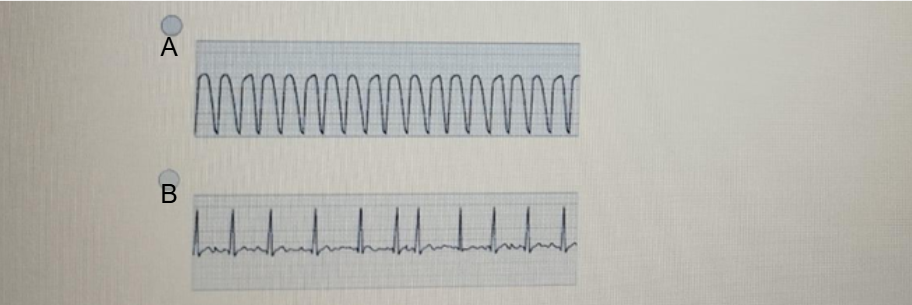
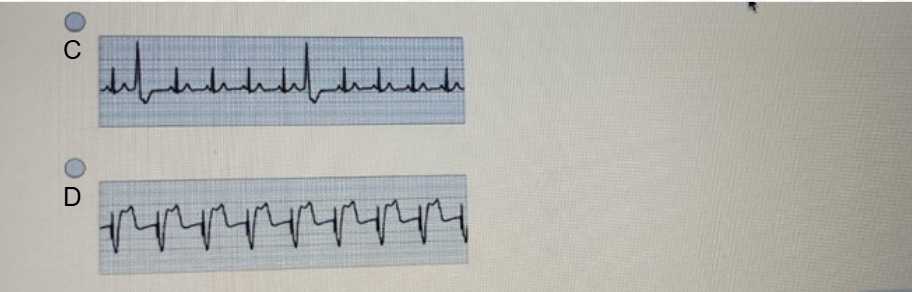
A nurse is monitoring a client's heart rhythm following insertion of a permanent pacemaker. Which of the following images should the nurse expect?
A
B
C
D
The Correct Answer is C
Rationale:
A. Ventricular Tachycardia (VTach): Regular, very fast rhythm (150–250 bpm), Wide QRS complexes, No visible P waves. Interpretation: Life-threatening rhythm, not expected after pacemaker. Immediate intervention is needed.
B. Atrial Fibrillation (AFib): Irregularly irregular rhythm, No distinct P waves, Narrow QRS complexes. AFib can exist with or without a pacemaker, but not expected immediately post-insertion unless patient has pre-existing AFib.
C. Rhythm: Ventricular paced rhythm (normal post-pacemaker). Regular rhythm -60 bpm, Narrow QRS complexes following sharp pacing spikes, Pacing spikes appear just before QRS complexes. Expected ECG after permanent pacemaker insertion — it shows effective ventricular capture.
D. Irregular rhythm, Alternating normal and wide QRS complexes, Wide QRS possibly not preceded by pacing spike, not expected right after pacemaker insertion. Suggests poor pacer function or ventricular ectopy.
Nursing Test Bank
Naxlex Comprehensive Predictor Exams
Related Questions
Correct Answer is C
Explanation
Rationale:
A. Bounding radial pulse: A bounding radial pulse is not an indication of the effectiveness of bumetanide. It may suggest fluid overload or increased blood pressure, which is contrary to the goal of diuretic therapy in heart failure.
B. Alert and oriented to time, place, and person: While this indicates the client is neurologically stable, it does not specifically reflect the effectiveness of bumetanide, which is focused on reducing fluid overload and improving lung and cardiac function.
C. Lung sounds clear on auscultation: Clear lung sounds indicate that fluid buildup in the lungs, which is common in heart failure, has improved. Bumetanide is a diuretic that reduces fluid overload, and clear lung sounds are a key sign that the medication is effectively treating the client's condition.
D. Bowel sounds present in four quadrants on auscultation: While normal bowel sounds are important, they are not directly related to the effectiveness of bumetanide. Bumetanide’s primary effect is on fluid balance and lung function, not gastrointestinal function.
Correct Answer is C
Explanation
Rationale:
A. "Make sure family members wear masks whenever they are in the same room as you."
Masks are mainly recommended for the client with tuberculosis, not family members unless they are at high risk. The focus should be on good hygiene and cough etiquette.
B. "Return to work after two consecutive sputum cultures are negative." While negative sputum cultures are important, returning to work depends on completing the full treatment regimen and clinical improvement. Full treatment is essential for transmission control.
C. "Before coughing or sneezing, cover your mouth and nose with a tissue." This is the correct advice to prevent the spread of tuberculosis. Covering the mouth and nose with a tissue when coughing or sneezing helps contain respiratory droplets and protect others.
D. "Wear a high-filtration mask at home when family members are nearby." Wearing a high-filtration mask is generally necessary for healthcare settings. At home, focus should be on cough etiquette, good ventilation, and completing prescribed treatment.
Whether you are a student looking to ace your exams or a practicing nurse seeking to enhance your expertise , our nursing education contents will empower you with the confidence and competence to make a difference in the lives of patients and become a respected leader in the healthcare field.
Visit Naxlex, invest in your future and unlock endless possibilities with our unparalleled nursing education contents today