
A nurse is preparing to obtain a client's vital signs. Which of the following actions should the nurse take when washing their hands?
Rinse their forearms with running water before applying soap.
Hold their hands above elbow level while washing and rinsing.
Generate a lather by rubbing their hands together vigorously for 5 seconds.
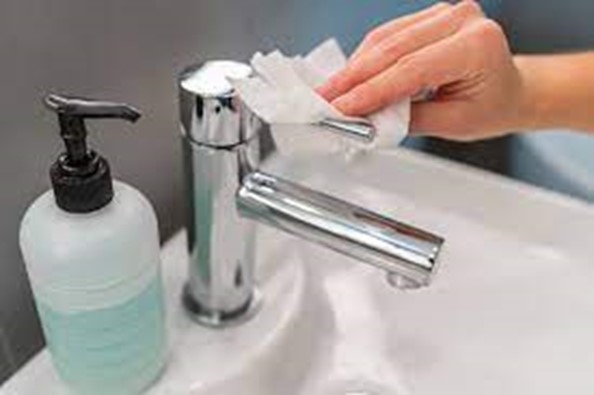
Turn off the faucet with a clean paper towel after drying hands.
The Correct Answer is D
The correct answer is choice D.
Choice A rationale:
Rinsing forearms with running water before applying soap is not a recommended step in the handwashing procedure. The primary step is to wet the hands, apply soap, and create a lather.
Choice B rationale:
Holding hands above elbow level while washing and rinsing is not a standard practice for handwashing. The hands should be washed thoroughly, and the focus is on scrubbing the hands, not their positioning.
Choice C rationale:
Generating a lather by rubbing hands together vigorously for 5 seconds is insufficient for effective handwashing. Proper handwashing involves rubbing hands together for at least 20 seconds to ensure thorough cleaning.
Choice D rationale:
The correct answer. After washing and drying hands, turning off the faucet with a clean paper towel is recommended to avoid recontaminating the clean hands. Touching the faucet directly with clean hands could potentially transfer pathogens back onto the hands.
Nursing Test Bank
Naxlex Comprehensive Predictor Exams
Related Questions
Correct Answer is ["B","C","D"]
Explanation
The correct answer is choice b. Wash hands after removing gloves, c. Use antimicrobial hand gel after refilling a client’s water pitcher, and d. Clean the stethoscope with an antimicrobial wipe after obtaining vital signs.
Choice A rationale:
Placing immunocompromised clients in the same room can increase the risk of cross-infection among them. It is better to isolate them or place them in rooms with clients who have similar infection risks.
Choice B rationale:
Washing hands after removing gloves is crucial to prevent the spread of pathogens that might have contaminated the gloves during patient care.
Choice C rationale:
Using antimicrobial hand gel after refilling a client’s water pitcher helps to maintain hand hygiene and prevent the transmission of infections.
Choice D rationale:
Cleaning the stethoscope with an antimicrobial wipe after obtaining vital signs is essential to prevent the transfer of pathogens between patients.
Correct Answer is D
Explanation
The correct answer is **d. Attach a humidifier to the base of the flow meter**.
Choice A rationale:
Keeping the side holes of the mask closed would restrict airflow and prevent the client from receiving the prescribed oxygen concentration. This action would be unsafe and should not be taken.
Choice B rationale:
Ensuring the reservoir bag is inflated on expiration is not necessary for a simple face mask. The reservoir bag is typically used with other oxygen delivery devices, such as a non-rebreather mask, to provide a higher concentration of oxygen. This action is not appropriate for the given scenario.
Choice C rationale:
Applying petroleum jelly to the client's nostrils is not a recommended action. Petroleum jelly can potentially cause irritation and dryness, which could lead to discomfort for the client. This action is not necessary for the safe administration of oxygen.
Choice D rationale:
Attaching a humidifier to the base of the flow meter is the appropriate action to ensure client safety. Humidifying the oxygen can help prevent drying of the client's airway and make the oxygen more comfortable to breathe. This is a recommended step when administering high-flow oxygen via a simple face mask.
Whether you are a student looking to ace your exams or a practicing nurse seeking to enhance your expertise , our nursing education contents will empower you with the confidence and competence to make a difference in the lives of patients and become a respected leader in the healthcare field.
Visit Naxlex, invest in your future and unlock endless possibilities with our unparalleled nursing education contents today