
A nurse is providing teaching to a client who is 2 days postpartum and wants to continue using her diaphragm for contraception.
Which of the following instructions should the nurse include?
You should use an oil-based vaginal lubricant when inserting your diaphragm.
You should store your diaphragm in sterile water after each use.
You should keep the diaphragm in place for at least 4 hours after intercourse.
You should have your provider refit you for any diaphragm.
The Correct Answer is D
The nurse should instruct the client to have her provider refit her for a diaphragm.
After childbirth, a woman’s body undergoes changes that may affect the fit of her diaphragm.
It is recommended that a woman be refited for a diaphragm around 6 weeks postpartum, when the uterus and cervix have returned to normal size.
Choice A is incorrect because oil-based lubricants can damage the diaphragm and reduce its effectiveness.
Water-based lubricants should be used instead.
Choice B is incorrect because storing a diaphragm in sterile water is not necessary.
The diaphragm should be washed with mild soap and water after each use and air-dried before being stored in its case.
Choice C is incorrect because the diaphragm should be kept in place for at least 6 hours after intercourse, not 4 hours.
Nursing Test Bank
Naxlex Comprehensive Predictor Exams
Related Questions
Correct Answer is D
Explanation
A third-degree perineal laceration is a tear that extends through the vaginal tissue, perineal skin, and perineal muscles and involves the anal sphincter.
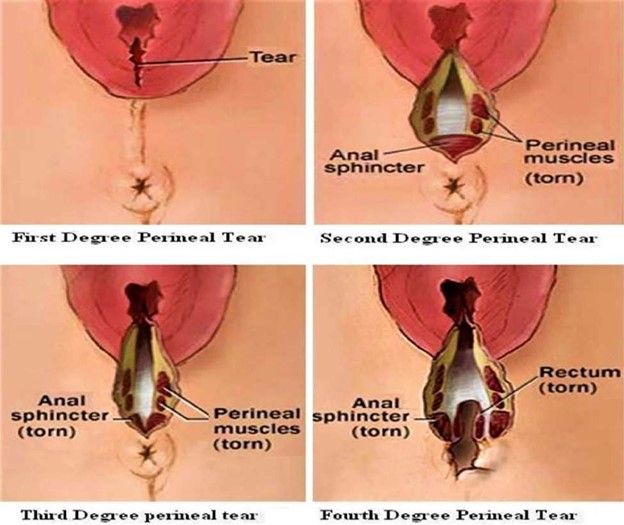
This type of laceration requires careful repair and management to prevent complications such as infection, fecal incontinence, and pain.
Choice A is incorrect because abdominal distention is not a contraindication to the use of a suppository.
Choice B is incorrect because afterpains are common postpartum uterine contractions and are not a contraindication to the use of a suppository.
Choice C is incorrect because vaginal candidiasis is a fungal infection and is not a contraindication to the use of a suppository.
Correct Answer is ["B","C","D","E"]
Explanation
Applying counterpressure to the sacral area can help alleviate back pain during labor.
Ambulating the client in the hallway can help with pain management and facilitate labor progress.
Administering nitrous oxide mixed with oxygen can provide pain relief during labor.
Having the client sit upright can help with pain management and facilitate labor progress.
Choice A is incorrect because performing Leopold maneuvers is a technique used to assess fetal position and presentation and is not a pain management technique.
Whether you are a student looking to ace your exams or a practicing nurse seeking to enhance your expertise , our nursing education contents will empower you with the confidence and competence to make a difference in the lives of patients and become a respected leader in the healthcare field.
Visit Naxlex, invest in your future and unlock endless possibilities with our unparalleled nursing education contents today