
A nurse is reinforcing teaching with a client who has streptococcal pharyngitis. Which of the following actions is appropriate for the nurse to include in the plan of care?
Place the client in a negative airflow room.
Implement droplet precautions.
Place the client on a fluid restriction.
Obtain a throat culture after the initial dose of antibiotics.
The Correct Answer is B
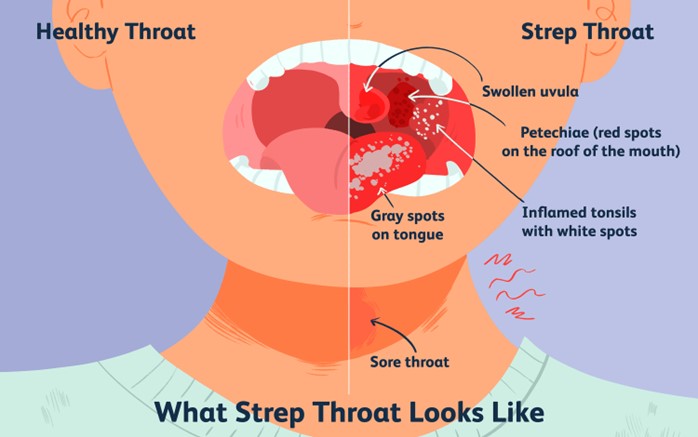
Choice A reason: This is not an appropriate action for this client because placing them in a negative airflow room is indicated for clients who have airborne infections, such as tuberculosis or measles, that can spread through small particles that remain suspended in air. Streptococcal pharyngitis, also known as strep throat, is caused by bacteria that spread through large respiratory droplets that fall within 3 feet from source.
Choice B reason: This is an appropriate action for this client because implementing droplet precautions can prevent transmission of streptococcal pharyngitis to others by contact with respiratory secretions or contaminated objects. The nurse should wear a surgical mask when entering the client's room and instruct visitors to do so as well. The nurse should also place a mask on the client when transporting them outside their room.
Choice C reason: This is not an appropriate action for this client because placing them on a fluid restriction can cause dehydration and impair mucosal healing. The nurse should encourage the client to drink plenty of fluids, such as water, tea, or broth, to soothe the throat and prevent dryness.
Choice D reason: This is not an appropriate action for this client because obtaining a throat culture after the initial dose of antibiotics can affect the accuracy of the test results and delay diagnosis and treatment. The nurse should obtain a throat culture before starting antibiotics to confirm the presence of streptococcal bacteria and guide antibiotic therapy.
Nursing Test Bank
Naxlex Comprehensive Predictor Exams
Related Questions
Correct Answer is A
Explanation
Choice A reason: This is an indication that the client needs further testing because a palpable area of induration, greater than 10 mm (0.4 in) in diameter, is considered a positive result for the tuberculin skin test, which means that the client has been exposed to Mycobacterium tuberculosis and may have latent or active tuberculosis infection. The nurse should refer the client for chest x-ray and sputum culture and sensitivity tests to confirm the diagnosis and rule out other conditions.
Choice B reason: This is not an indication that the client needs further testing because an area of ecchymosis, greater than 12 mm (0.5 in) in diameter, is not considered a positive result for the tuberculin skin test, which means that the client has not been exposed to Mycobacterium tuberculosis and does not have latent or active tuberculosis infection. The nurse should document the finding and monitor the site for any signs of infection or inflammation.
Choice C reason: This is not an indication that the client needs further testing because tenderness at the injection site is not considered a positive result for the tuberculin skin test, which means that the client has not been exposed to Mycobacterium tuberculosis and does not have latent or active tuberculosis infection. The nurse should document the finding and provide comfort measures as needed.
Choice D reason: This is not an indication that the client needs further testing because a nonpalpable area of redness, less than 5 mm (0.2 in) in diameter, is considered a negative result for the tuberculin skin test, which means that the client has not been exposed to Mycobacterium tuberculosis and does not have latent or active tuberculosis infection. The nurse should document the finding and educate the client about tuberculosis prevention and screening recommendations.
Correct Answer is A
Explanation
Choice A reason: This is the correct answer because a client who had abdominal surgery 2 days ago and the incision line is separating has a potential complication of wound dehiscence or separation of the surgical incision that can lead to evisceration or protrusion of the internal organs. This is a medical emergency that requires immediate intervention and notification of the provider.
Choice B reason: This is not a priority client to attend to because a client who fell 12 hours ago and reports pain as 4 on a scale of 0 to 10 has a stable condition that can be managed with analgesics, ice packs, or elevation as prescribed. The nurse should assess the client's pain level, location, and quality and provide comfort measures as needed.
Choice C reason: This is not a priority client to attend to because a client who has a chronic tracheostomy and is intermittently coughing up clear sputum has an expected finding that indicates normal secretion clearance and respiratory function. The nurse should monitor the client's oxygen saturation, respiratory rate, and breath sounds and provide tracheostomy care as prescribed.
Choice D reason: This is not a priority client to attend to because a client who has Clostridium difficile and has liquid stools has an expected finding that indicates infection of the colon by bacteria that produce toxins that cause inflammation, diarrhea, and abdominal pain. The nurse should implement contact precautions, collect stool samples for testing, and administer antibiotics as prescribed.

Whether you are a student looking to ace your exams or a practicing nurse seeking to enhance your expertise , our nursing education contents will empower you with the confidence and competence to make a difference in the lives of patients and become a respected leader in the healthcare field.
Visit Naxlex, invest in your future and unlock endless possibilities with our unparalleled nursing education contents today