
A nurse is reinforcing teaching with a client who is about to undergo a thoracentesis. Which of the
following statements by the client indicates an understanding of the information?
I will have general anesthesia during the procedure.
I will lie flat for 6 hours following the procedure.
I will have a chest x-ray following the procedure
I will breathe deeply through my nose during the procedure
The Correct Answer is C
c. "I will have a chest x-ray following the procedure."
Explanation:
The statement that indicates an understanding of the information provided is "I will have a chest x-ray following the procedure."
Explanation for the other options:
a. "I will have general anesthesia during the procedure":
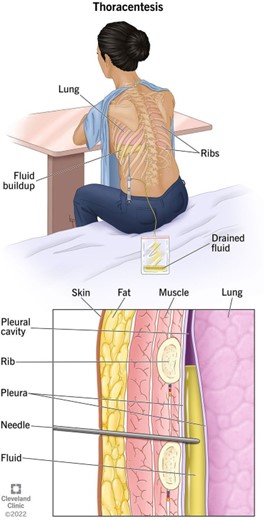
This statement is incorrect. Thoracentesis is typically performed using local anesthesia, which numbs the area where the needle will be inserted. General anesthesia, which induces a state of unconsciousness, is not usually required for this procedure.
b. "I will lie flat for 6 hours following the procedure":
This statement is incorrect. While the client may be advised to lie still for a short period after the thoracentesis, it is not necessary for them to lie flat for a full 6 hours. The specific post-procedure instructions may vary depending on the client's condition and the healthcare provider's preferences.
d. "I will breathe deeply through my nose during the procedure":
This statement is incorrect. During a thoracentesis, the client is typically asked to sit upright and lean forward to allow beter access to the space between the lungs and chest wall. They may be instructed to take slow, deep breaths and hold their breath for short periods as needed during the procedure to help maintain proper positioning and reduce the risk of complications.
In summary, the statement that demonstrates an understanding of the thoracentesis procedure is "I will have a chest x-ray following the procedure." This indicates the client's awareness of the need for a post- procedure chest x-ray to evaluate the results and ensure the absence of any complications.
Nursing Test Bank
Naxlex Comprehensive Predictor Exams
Related Questions
Correct Answer is D
No explanation
Correct Answer is B
Explanation
B. The school-age sister views death as being a type of temporary sleep:
This response aligns with developmental stages. School-age children (around ages 5-9) often have a more concrete understanding of death but may still see it as reversible or temporary, such as a long sleep. This is a normal way children in this age group might conceptualize death before they fully understand its permanence. It's common for them to express the idea that the person who has died will wake up or return in some way, as their cognitive understanding is still developing.
Whether you are a student looking to ace your exams or a practicing nurse seeking to enhance your expertise , our nursing education contents will empower you with the confidence and competence to make a difference in the lives of patients and become a respected leader in the healthcare field.
Visit Naxlex, invest in your future and unlock endless possibilities with our unparalleled nursing education contents today