
A nurse overhears two assistive personnel discussing a client's medical history in the hallway. Which of the following actions should the nurse take first?
Report the incident to the charge nurse.
Participate in an in-service about client confidentiality.
Tell the staff members to stop their discussion.
Speak to the staff members in private about client confidentiality.
The Correct Answer is C
a. While reporting the incident is important, the priority is to stop the confidentiality breach immediately to protect the client's privacy.
b. Participating in training is important for long-term education, but it does not address the immediate issue of the confidentiality breach.
c. Tell the staff members to stop their discussion: This action stops the breach immediately and protects the client's confidential information, which is the first and most crucial step.
d. Speak to the staff members in private about client confidentiality: While this is a good follow-up action to educate and prevent future breaches, the immediate need is to stop the ongoing discussion
Nursing Test Bank
Naxlex Comprehensive Predictor Exams
Related Questions
Correct Answer is D
Explanation
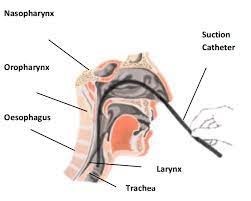
Waiting 1 minute between suctioning attempts allows the client to recover and ensures that the procedure is not overly invasive. It also helps to prevent the client from becoming hypoxic.
The distance that the nasopharyngeal catheter should be inserted varies from person to person and therefore 10 cm is not standard.
During nasopharyngeal suctioning, the nurse should apply suction intermittently while withdrawing the catheter, not during insertion. Applying suction during insertion can cause tissue damage and increase the risk of trauma.
The nurse should also apply intermittent suction for no longer than 15 seconds to prevent hypoxia and damage to the mucosal lining. Suctioning for an extended period can cause discomfort and harm to the client.
Correct Answer is B
Explanation
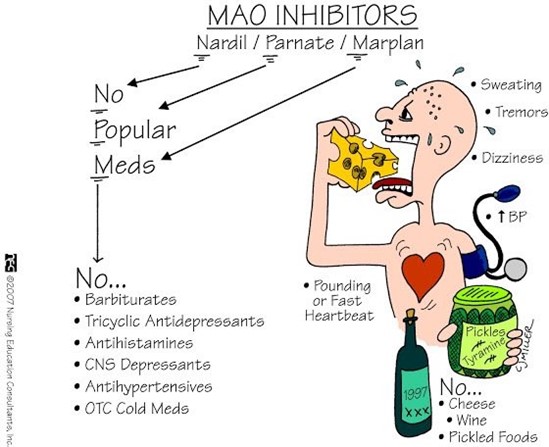
Tranylcypromine is a monoamine oxidase inhibitor (MAOI) medication used to treat depression. MAOIs inhibit the activity of the enzyme monoamine oxidase, which helps regulate the breakdown of certain neurotransmitters, including tyramine. Tyramine is typically broken down by monoamine oxidase, but when taking an MAOI, the enzyme's inhibition can lead to an excessive accumulation of tyramine in the body.
Tyramine-rich foods, such as aged cheeses, cured meats, and certain fermented or pickled foods, contain high levels of tyramine. Ingesting these foods while taking an MAOI can lead to a sudden release of stored norepinephrine, causing a hypertensive crisis.
Hypertension is a potentially serious adverse effect of MAOI therapy combined with tyramine-rich food ingestion. Symptoms of a hypertensive crisis can include severe headache, palpitations, chest pain, sweating, blurred vision, and in severe cases, it can lead to stroke or other cardiovascular complications.
Hematuria refers to the presence of blood in the urine and is not a known adverse effect of tranylcypromine or related to tyramine-rich food ingestion.
Tinnitus refers to the perception of ringing or noise in the ears and is not a known adverse effect of tranylcypromine or related to tyramine-rich food ingestion.
Hyperglycemia, or high blood sugar levels, is not a known adverse effect of tranylcypromine or related to tyramine-rich food ingestion. However, it's important to note that tranylcypromine may interact with certain diabetes medications, so it's essential to consider the client's overall medical history and potential drug interactions.
Whether you are a student looking to ace your exams or a practicing nurse seeking to enhance your expertise , our nursing education contents will empower you with the confidence and competence to make a difference in the lives of patients and become a respected leader in the healthcare field.
Visit Naxlex, invest in your future and unlock endless possibilities with our unparalleled nursing education contents today