
Based on this strip, which is the interpretation of this rhythm?
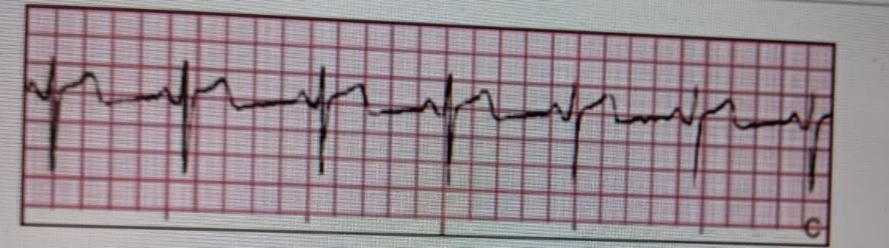
First degree AV heart block.
Junctional escape rhythm.
Sinus bradycardia.
Normal sinus rhythm.
The Correct Answer is A
A. First degree AV heart block: The rhythm is regular, P waves are present and consistent, and each P wave is followed by a QRS. The defining feature is the consistently prolonged PR interval (greater than 0.20 seconds), which indicates a delay in conduction through the AV node.
B. Junctional escape rhythm: A junctional escape rhythm originates in the AV node, typically has a slower rate (40-60 bpm), and P waves are either absent, inverted, or occur after the QRS complex. This strip has P waves preceding each QRS and a normal rate.
C. Sinus bradycardia: Sinus bradycardia has a heart rate less than 60 bpm. This strip shows a rate of approximately 75 bpm.
D. Normal sinus rhythm: While many parameters (rate, regularity, P wave presence, QRS width) might suggest a sinus rhythm, a normal sinus rhythm requires a PR interval within the normal range (0.12-0.20 seconds). This strip has a prolonged PR interval.
Nursing Test Bank
Naxlex Comprehensive Predictor Exams
Related Questions
Correct Answer is ["A","B","E"]
Explanation
- Agitation: Agitation may indicate hypoxia or reduced cerebral perfusion due to cardiac compromise. In a patient with chest pain and borderline hypoxia, it can be an early warning sign of clinical deterioration that requires follow-up.
- Chest pain described as pressure tightness unrelieved by rest: Unrelieved chest pain lasting longer than 20 minutes is strongly suggestive of myocardial infarction rather than stable angina. Immediate cardiac workup and intervention are needed to prevent myocardial damage.
- Pain rated 7/10: A moderate to severe pain rating in the chest warrants urgent evaluation, especially when consistent with cardiac characteristics like tightness and pressure. High pain intensity is often correlated with worsening ischemia.
Correct Answer is D
Explanation
A. Contact the client's healthcare power of attorney: This is appropriate if the client is unable to make decisions or if end-of-life care planning is being addressed. However, the client is alert enough to report syncopal episodes, and the priority is stabilizing his condition.
B. Call for immediate help from the rapid response team (RRT): The rapid response team is called for acute, life-threatening changes in clinical. Although the client is tachycardic, there is no indication of immediate decompensation requiring emergency intervention.
C. Report the client’s falls and bruises to adult protective services: The presence of bruises alone is not sufficient to trigger a report without further assessment. These bruises may be related to the syncopal events. The nurse must first assess and stabilize the client.
D. Monitor the client’s blood pressure and oxygen saturation: With atrial fibrillation and a rapid ventricular response, the client is at risk for hemodynamic instability. Monitoring vital signs helps determine whether the high heart rate is compromising perfusion or oxygenation, guiding the urgency of treatment and further evaluation.
Whether you are a student looking to ace your exams or a practicing nurse seeking to enhance your expertise , our nursing education contents will empower you with the confidence and competence to make a difference in the lives of patients and become a respected leader in the healthcare field.
Visit Naxlex, invest in your future and unlock endless possibilities with our unparalleled nursing education contents today