
. Correctly label the parts of centrifuged blood.
- A. dropdown
- B. dropdown
- C. dropdown
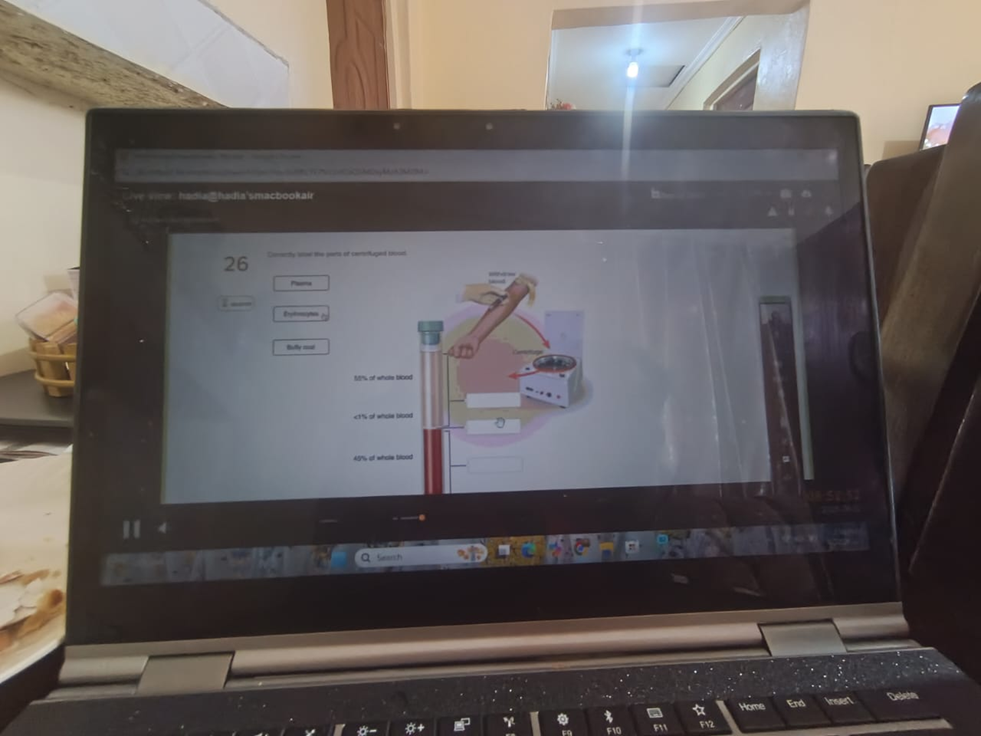
The Correct Answer is {"dropdown-group-1":"B","dropdown-group-2":"A","dropdown-group-3":"C"}
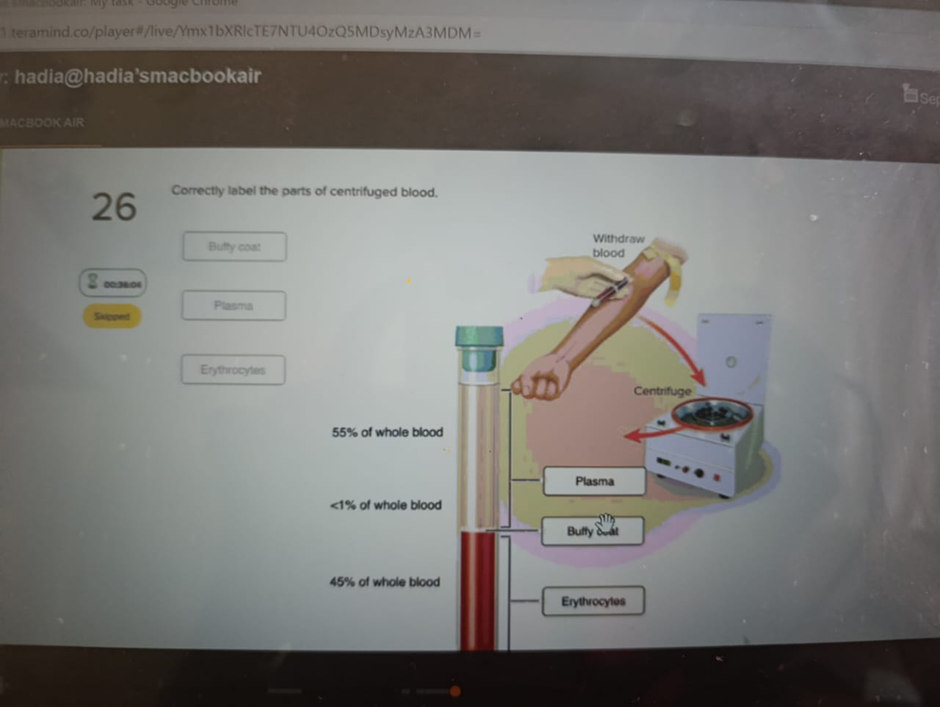
A. Plasma: The pale, straw-colored fluid at the top after centrifugation; it contains water, dissolved proteins (albumin, clotting factors), nutrients, hormones and electrolytes and is about ~55% of whole blood.
B. Buffy coat: The thin, whitish layer that sits between the top plasma and the bottom red cell layer after centrifugation; it contains leukocytes (WBCs) and platelets and makes up <1% of whole blood.
C. Erythrocytes: The dense red layer that settles at the bottom (the hematocrit); composed of red blood cells containing hemoglobin, typically about ~45% of whole blood and responsible for O₂/CO₂ transport.
Nursing Test Bank
Naxlex Comprehensive Predictor Exams
Related Questions
Correct Answer is E
Explanation
A. It acts on the hypothalamus to decrease appetite: Appetite regulation is linked to hormones like leptin and ghrelin, not ADH.
B. It causes the release of hormones from the adrenal cortex: ACTH from the anterior pituitary does this, not ADH.
C. It causes smooth muscle contraction in the female reproductive tract: Oxytocin is responsible for uterine contractions, not ADH.
D. It causes vasodilation: ADH (vasopressin) actually causes vasoconstriction, not vasodilation.
E. It increases water retention from renal tubules: ADH acts on the collecting ducts of the kidney to promote water reabsorption, reducing urine output and conserving body water.
Correct Answer is {"dropdown-group-1":"B"}
Explanation
A. Gated channels: Some signaling molecules influence ion channels, but hormones do not act only on gated channels - many act via receptors that trigger intracellular cascades.
B. Receptors: Hormones (like neurotransmitters) act only on cells that have specific receptors to which the hormone binds (membrane receptors for peptide hormones or intracellular receptors for lipophilic hormones). This is the correct answer.
C. Enzymes: Hormones can modulate enzymes inside cells, but they require receptors to target cells first; enzymes are not the general targeting mechanism.
D. Cofactors: Cofactors assist enzymatic reactions but are not the specific binding target that determines hormone action on particular cells.
E. Metabolic pathways: Hormones influence metabolic pathways, but they act via receptors on/inside target cells - metabolic pathways are downstream, not the specific binding site.
Whether you are a student looking to ace your exams or a practicing nurse seeking to enhance your expertise , our nursing education contents will empower you with the confidence and competence to make a difference in the lives of patients and become a respected leader in the healthcare field.
Visit Naxlex, invest in your future and unlock endless possibilities with our unparalleled nursing education contents today