
During a head and neck assessment, the nurse notes asymmetrical pupils. What is the next step in assessing the client's neurological status?
Palpate the thyroid gland for enlargement.
Measure the client's blood pressure.
Perform a vision acuity test.
Check cranial nerve function including pupil reaction to light.
The Correct Answer is D
Choice A reason: Palpation of the thyroid gland is an assessment technique directed at evaluating the endocrine system, specifically looking for thyromegaly, nodules, or tenderness. It has no diagnostic relevance to the assessment of pupillary asymmetry or acute neurological dysfunction, making it an inappropriate next step in this specific context.
Choice B reason: While assessing vital signs is a fundamental component of a comprehensive nursing assessment, blood pressure measurement provides data on cardiovascular hemodynamics. It does not provide direct evidence regarding the etiology of anisocoria or focal neurological deficits related to cranial nerve integrity or intracranial pressure status.
Choice C reason: Vision acuity testing utilizing a Snellen chart evaluates the integrity of the optic nerve (cranial nerve 2). While vision changes can be secondary to neurological issues, it does not provide the immediate clinical data required to evaluate the pupillary reflex arc and direct brainstem function.
Choice D reason: Pupillary asymmetry, or anisocoria, requires immediate evaluation of cranial nerve 3 (oculomotor nerve) integrity. Assessing the pupillary response to light, including both direct and consensual reactions, is critical to differentiate between physiological anisocoria and pathological causes such as uncal herniation, intracranial hemorrhage, or other oculomotor nerve compressions.
Nursing Test Bank
Naxlex Comprehensive Predictor Exams
Related Questions
Correct Answer is A
Explanation
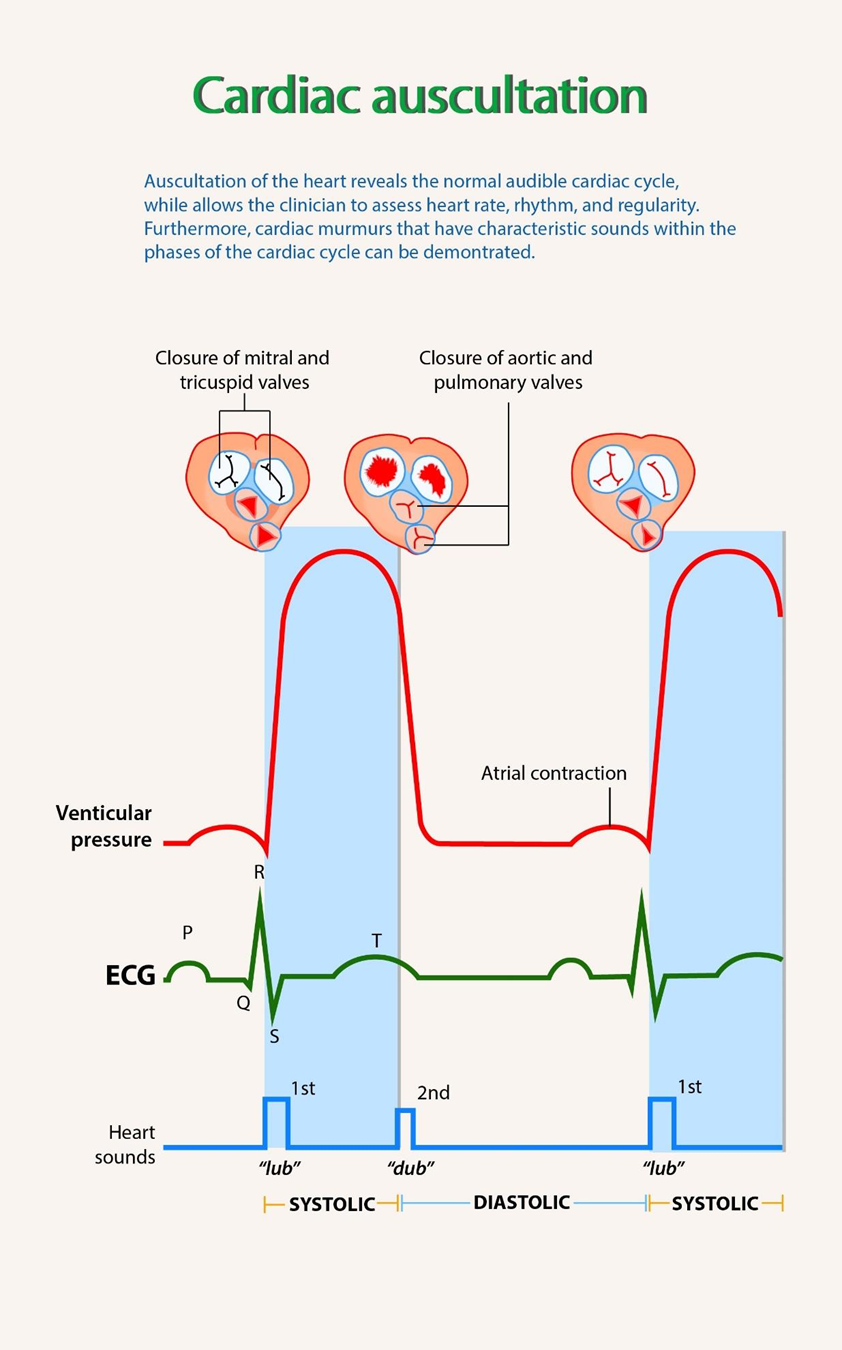
Choice A reason: The S1 heart sound represents the closure of the atrioventricular valves, and S2 represents the closure of the semilunar valves. The interval between S1 and S2 corresponds to ventricular systole. Any audible turbulence or vibration detected during this specific cardiac phase is classified as a systolic murmur, often resulting from increased blood flow or valvular pathology.
Choice B reason: While S1 and S2 are considered expected heart sounds, turbulence audible during the systolic phase is considered an adventitious sound. An expected or normal heart examination typically involves clear, crisp valvular closures without audible swishing or blowing sounds, which indicate abnormal blood flow patterns.
Choice C reason: The third heart sound is a low-frequency sound occurring during the rapid filling phase of early diastole, immediately following S2. It is produced by the vibration of the ventricular walls as blood rushes into the ventricles. It is not associated with the systolic interval between S1 and S2.
Choice D reason: The fourth heart sound is a low-pitched sound heard in late diastole, just before S1. It is generated by the atrial contraction forcing blood into a stiff, non-compliant ventricle. Like the S3, this sound occurs during diastole and is not related to the turbulence occurring during the systolic interval.
Correct Answer is D
Explanation
Choice A reason: Pain during range of motion exercises, particularly following prolonged inactivity or rest, is a common clinical finding in patients with muscle atrophy due to joint stiffness and the physiological changes in periarticular connective tissue. It does not typically indicate an acute or unexpected complication requiring immediate clinical intervention.
Choice B reason: Slightly reduced range of motion that is bilateral and symmetric is often expected in patients with chronic muscle atrophy or underlying neuromuscular conditions. Symmetry suggests a systemic or chronic progression rather than an acute, unexpected localized injury or sudden neurological deficit that would demand emergency attention.
Choice C reason: Observing full range of motion with gravity eliminated is a standard clinical finding for patients with significant muscle weakness or atrophy. This technique allows for the evaluation of muscle function in a gravity-reduced plane, which is expected in atrophy cases and does not represent an unexpected complication.
Choice D reason: Grade 0 strength, characterized by a complete absence of visible or palpable muscle contraction, is a critical and unexpected finding when observed unilaterally. This indicates a potential acute neurological event, such as peripheral nerve injury, spinal cord compression, or acute ischemic insult, which deviates significantly from expected atrophy patterns.
Whether you are a student looking to ace your exams or a practicing nurse seeking to enhance your expertise , our nursing education contents will empower you with the confidence and competence to make a difference in the lives of patients and become a respected leader in the healthcare field.
Visit Naxlex, invest in your future and unlock endless possibilities with our unparalleled nursing education contents today