
Which type of muscle is primarily responsible for involuntary contractions in the gastrointestinal system?
Skeletal muscle
Cardiac muscle
Striated muscle
Smooth muscle
The Correct Answer is D
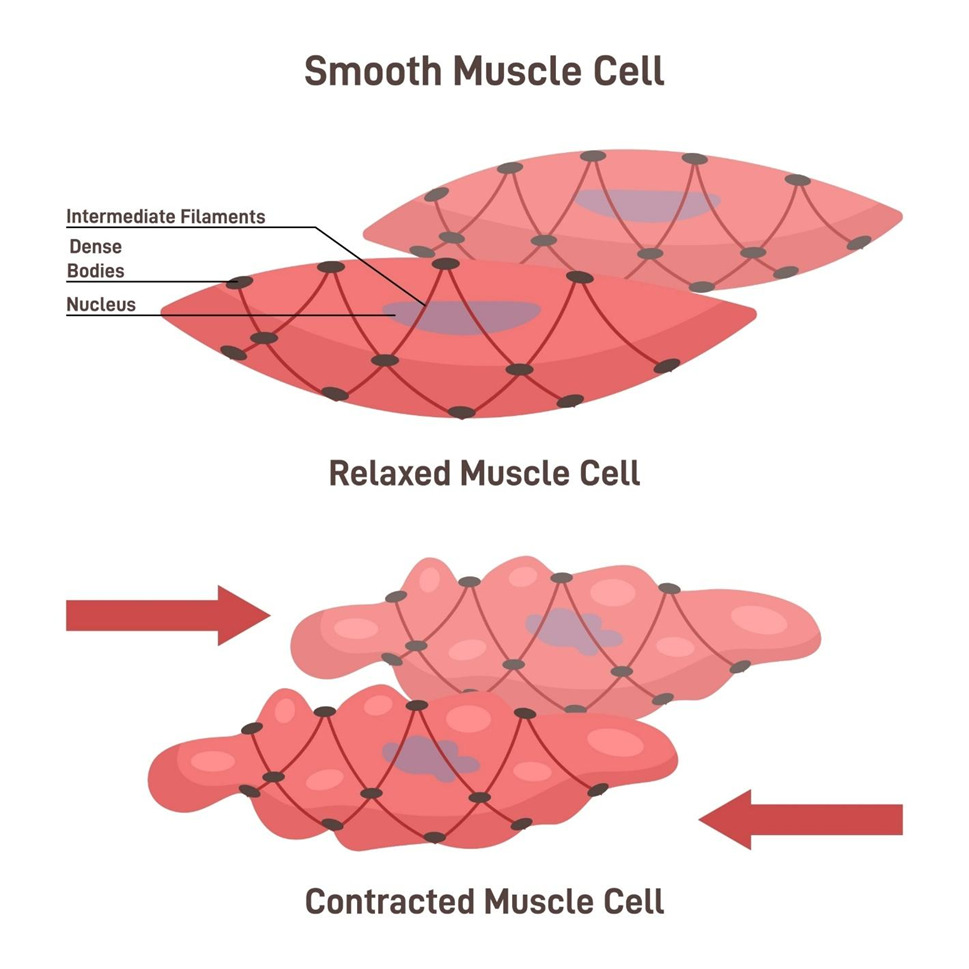
Choice A reason: Skeletal muscle is responsible for voluntary body movements and is attached to the skeleton via tendons. It is innervated by the somatic nervous system, which allows for conscious control of contractions, making it entirely inappropriate for the involuntary, peristaltic functions required by the gastrointestinal tract.
Choice B reason: Cardiac muscle is a specialized type of involuntary, striated muscle found exclusively in the heart. While it functions involuntarily, it possesses unique structural properties, such as intercalated discs, specifically designed to synchronize the contraction of the myocardium, and it does not exist within the gastrointestinal system.
Choice C reason: Striated muscle is a classification that includes both skeletal and cardiac muscle, characterized by a microscopic pattern of alternating light and dark bands. The gastrointestinal tract relies on non-striated, involuntary muscle tissue, meaning the classification of striated muscle does not apply to the majority of the digestive tract.
Choice D reason: Smooth muscle is non-striated, involuntary muscle found in the walls of hollow organs, including the esophagus, stomach, and intestines. Its structural properties allow it to undergo slow, sustained contractions, which are essential for generating the rhythmic peristaltic waves required to move food through the gastrointestinal tract.
Nursing Test Bank
Naxlex Comprehensive Predictor Exams
Related Questions
Correct Answer is D
Explanation
Choice A reason: Rales, also known as crackles, are adventitious (abnormal) lung sounds that indicate fluid in the small airways, such as in pneumonia or congestive heart failure. They are characterized by discontinuous, popping sounds rather than the soft, low-pitched, rustling sound of normal healthy lung ventilation.
Choice B reason: Tracheal breath sounds are very loud, high-pitched, and harsh, heard directly over the trachea. They are distinctly different from the soft, low-pitched sounds of normal peripheral lung tissue. These sounds are not indicative of normal peripheral respiratory gas exchange but reflect air moving through the main airway.
Choice C reason: Bronchial breath sounds are loud, high-pitched, and hollow, heard over the large airways such as the manubrium. They have a distinct pause between inspiration and expiration and are much more intense than the gentle, soft sounds heard throughout the majority of the peripheral lung fields.
Choice D reason: Vesicular breath sounds are the normal, soft, low-pitched sounds heard over most of the peripheral lung fields. The sound is often described as a soft, gentle rustling, similar to wind blowing through trees, produced by air moving into the smaller bronchioles and alveoli during inhalation.
Correct Answer is B
Explanation
Choice A reason: While the cuff must be placed above the antecubital space, a fixed 5 cm distance is not the universal standard for all arm lengths. The priority is to ensure the bladder of the cuff is centered over the brachial artery and does not interfere with the placement of the stethoscope or sensor.
Choice B reason: The artery indicator (often an arrow on the cuff) must be correctly aligned with the anatomical path of the brachial artery. Misalignment can lead to inaccurate pressure readings, as the sensor or stethoscope will not be directly over the point of pulse detection, resulting in an erroneous systolic or diastolic value.
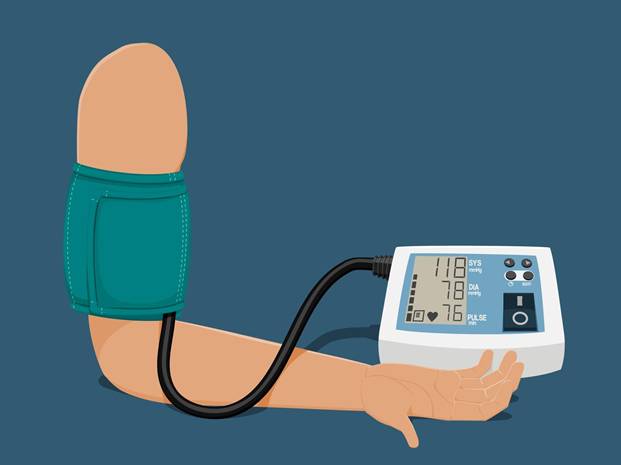
Choice C reason: Elevating the arm above the level of the heart will produce a falsely low blood pressure reading due to the effects of gravity on venous return and hydrostatic pressure. The arm must be supported and positioned at the level of the heart to ensure an accurate measurement that reflects central arterial pressure.
Choice D reason: Selecting a cuff that covers only 50% of the upper arm is incorrect; a cuff that is too small (narrow) will lead to a falsely high blood pressure reading. The standard requirement is for the cuff bladder to cover at least 80% of the arm circumference and 40% of the arm length.
Whether you are a student looking to ace your exams or a practicing nurse seeking to enhance your expertise , our nursing education contents will empower you with the confidence and competence to make a difference in the lives of patients and become a respected leader in the healthcare field.
Visit Naxlex, invest in your future and unlock endless possibilities with our unparalleled nursing education contents today