
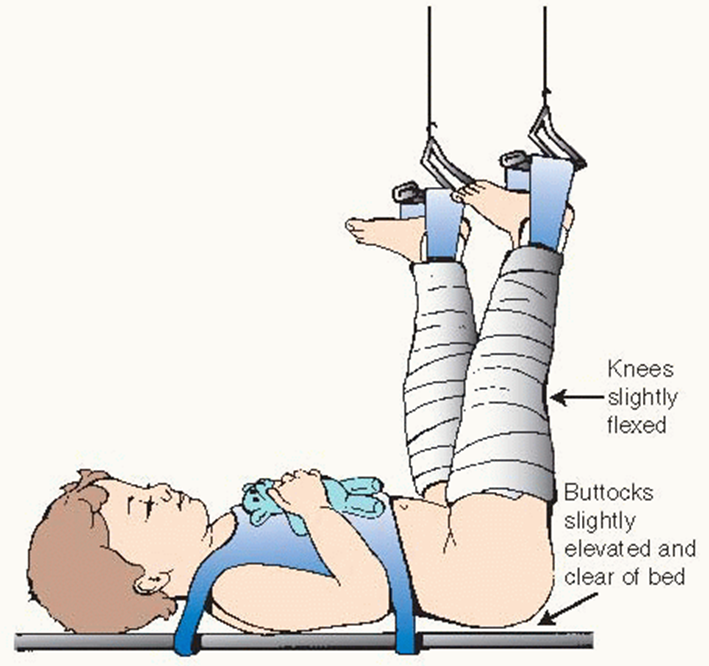
A nurse is caring for a toddler who has a fractured right femur and is in Bryant traction. When determining that the traction is appropriately assembled, the nurse should observe which of the following?
Weights are attached to a pin that is inserted into the femur.
Skin straps maintain the leg in an extended position.
A padded sling is under the knee of the affected leg.
The buttocks is elevated slightly off of the bed.
The Correct Answer is D
Choice A reason: This is not a correct description of Bryant traction. This type of traction does not involve pins or wires inserted into the bone. It is a skin traction that uses adhesive straps or bandages attached to the skin of the lower legs.
Choice B reason: This is not a correct description of Bryant traction. This type of traction does not maintain the leg in an extended position. It flexes the hip and knee at a 90-degree angle and suspends the leg in the air.
Choice C reason: This is not a correct description of Bryant traction. This type of traction does not use a sling under the knee of the affected leg. It uses a spreader bar to keep the legs apart and prevent rotation.
Choice D reason: This is a correct description of Bryant traction. This type of traction elevates the buttocks slightly off of the bed to provide countertraction and alignment of the fractured bone.
Nursing Test Bank
Naxlex Comprehensive Predictor Exams
Related Questions
Correct Answer is A
Explanation
Choice A reason: The American format for writing dates is month/day/year, so 2/20/2024 is the correct way to write the date February 20, 2024.
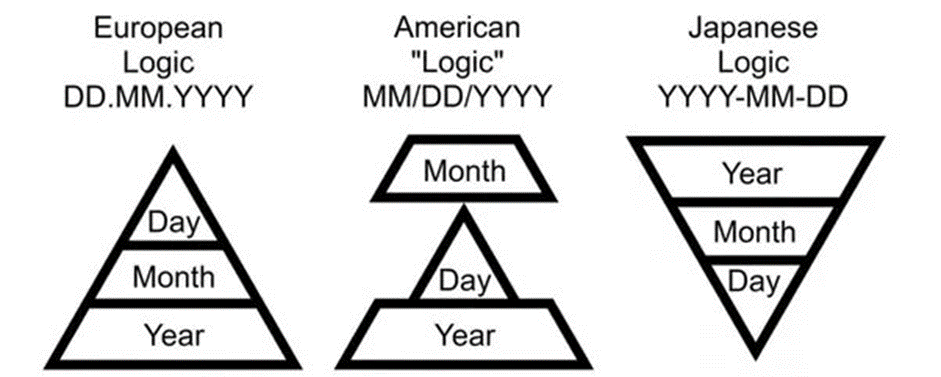
Choice B reason: The European format for writing dates is day/month/year, so 20/2/2024 is not the correct way to write the date in the American format.
Choice C reason: The ISO format for writing dates is year/month/day, so 2024/2/20 is not the correct way to write the date in the American format.
Choice D reason: This is an invalid format for writing dates, as there is no month with 20 days.
Correct Answer is C
Explanation
Choice A reason: Continuing to monitor the client is not the best action, as it does not address the low urine output of the child. The child has a urine output of 20 mL/hr, which is below the expected range of 30 to 40 mL/hr for a 3-year-old child. Low urine output can indicate dehydration, kidney injury, or urinary tract obstruction, which require prompt intervention.
Choice B reason: Performing a bladder scan at the bedside is not the most appropriate action, as it is not the first-line diagnostic tool for low urine output. A bladder scan is a noninvasive ultrasound device that measures the amount of urine in the bladder. It can help detect urinary retention, which is the inability to empty the bladder completely. However, urinary retention is unlikely in a 3-year-old child, and a bladder scan may not be accurate or reliable in children.
Choice C reason: Providing oral rehydration fluids is the best action, as it can help restore the fluid and electrolyte balance of the child. Oral rehydration fluids are solutions that contain water, sugar, and salt in specific proportions that match the body's needs. They can prevent or treat dehydration, which is a common cause of low urine output in children. The nurse should offer the child oral rehydration fluids every 15 to 20 minutes, and monitor the urine output, vital signs, and hydration status.
Choice D reason: Notifying the provider is not the first action, as it is not the most urgent or effective intervention for low urine output. The nurse should notify the provider after providing oral rehydration fluids and assessing the child's response. The nurse should also report any signs or symptoms of dehydration, such as dry mucous membranes, sunken eyes, poor skin turgor, or lethargy. The provider may order further tests or treatments, such as blood tests, urine tests, or intravenous fluids.
Whether you are a student looking to ace your exams or a practicing nurse seeking to enhance your expertise , our nursing education contents will empower you with the confidence and competence to make a difference in the lives of patients and become a respected leader in the healthcare field.
Visit Naxlex, invest in your future and unlock endless possibilities with our unparalleled nursing education contents today