
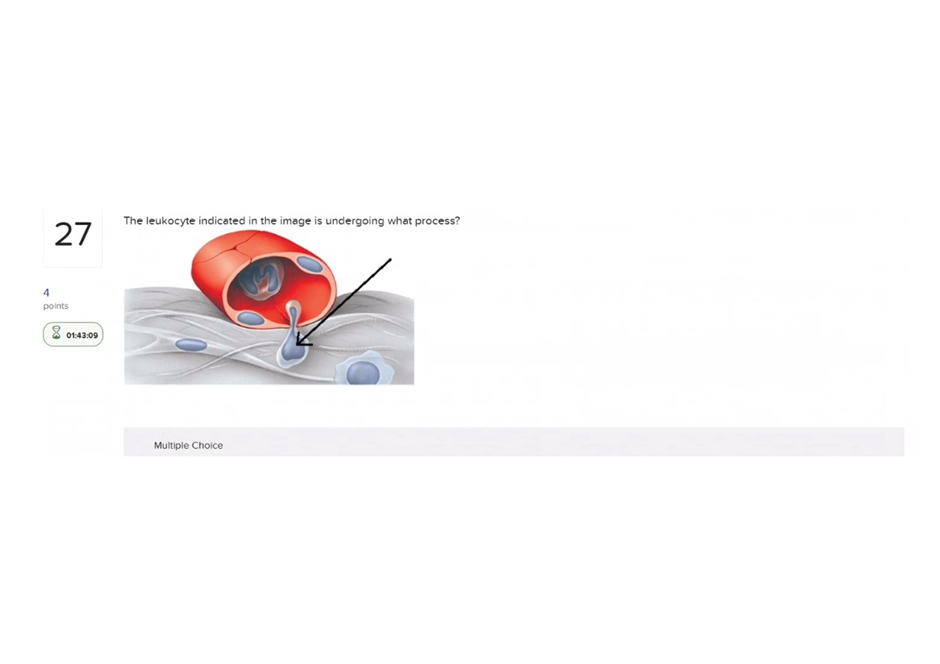
The leukocyte indicated in the image is undergoing what process?
Diapedesis
Phagocytosis
Chemotaxis
Margination
The Correct Answer is A
A. Diapedesis (transmigration): the cell is shown squeezing through the vessel wall (leaving the bloodstream), which is diapedesis (also called extravasation).
B. Phagocytosis: phagocytosis is ingestion of particles/pathogens by a phagocyte; the image shows movement out of a vessel, not engulfment of material.
C. Chemotaxis: Incorrect (related but not the pictured action) -chemotaxis is directed movement toward chemical signals; a leukocyte may chemotax once in the tissue, but the image specifically shows the mechanical passage through the endothelium (diapedesis).
D. Margination/Rolling: margination/rolling are earlier steps along the endothelium where leukocytes slow and adhere; the image shows a cell already squeezing through the wall, which is the next step (diapedesis).
Nursing Test Bank
Naxlex Comprehensive Predictor Exams
Related Questions
Correct Answer is D
Explanation
A. The presence of antibodies triggers the production of antigens: antibodies are produced in response to antigens, not the other way around.
B. Antibodies can be foreign cells, proteins, or other large molecules. Antigens are large proteins made by B cells: this reverses definitions: antigens are foreign molecules/cells that stimulate immune response; antibodies are proteins produced (by B cells) that bind antigens.
C. Antigens function to destroy or neutralize antibodies: antigens elicit antibody production; they do not act to destroy antibodies.
D. The presence of an antigen triggers the production of antibodies: antigens (foreign proteins, polysaccharides, cells) stimulate B cells to differentiate into plasma cells that produce specific antibodies.
Correct Answer is ["A","C"]
Explanation
A. heart: Has atrioventricular (mitral/tricuspid) and semilunar (aortic/pulmonic) valves.
B. arteries: Systemic arteries generally lack valves (the aortic/pulmonic “valves” are cardiac valves at the heart outflow, not within the arterial tree).
C. veins: Especially in limbs; valves prevent backflow and aid venous return.
D. capillaries: Capillaries are single-layer vessels without valves.
Whether you are a student looking to ace your exams or a practicing nurse seeking to enhance your expertise , our nursing education contents will empower you with the confidence and competence to make a difference in the lives of patients and become a respected leader in the healthcare field.
Visit Naxlex, invest in your future and unlock endless possibilities with our unparalleled nursing education contents today