
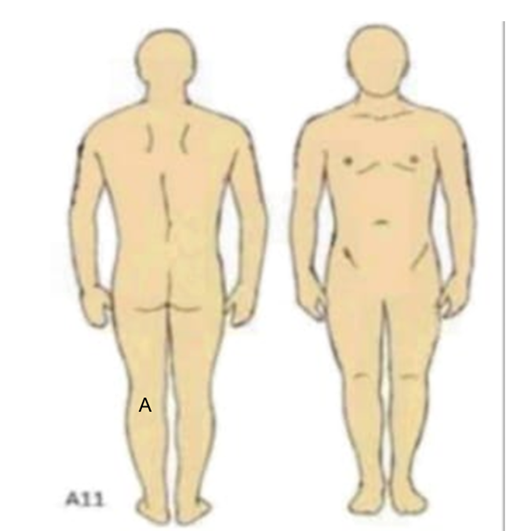
The nurse applies a blood pressure cuff around a client's left thigh. To measure the client's blood pressure, where should the diaphragm of the stethoscope be placed? (Mark the location on one of the images.)
The Correct Answer is "{\"xRanges\":[24.75253686935637,42.04549690532573],\"yRanges\":[62.826215561361366,80.16865945855535]}"
To measure blood pressure from the left thigh, the diaphragm of the stethoscope should be placed over the popliteal artery, which is located behind the knee. This placement allows you to auscultate the Korotkoff sounds accurately when measuring thigh blood pressure.
Nursing Test Bank
Naxlex Comprehensive Predictor Exams
Related Questions
Correct Answer is D
Explanation
A. Palpate flank area: Flank assessment may help detect kidney tenderness or infection but is not the primary focus for routine suprapubic catheter care unless complications are suspected.
B. Assess perineal area: The suprapubic catheter bypasses the perineal route, so routine perineal assessment is less critical for catheter management, though general hygiene remains important.
C. Measure abdominal girth: Abdominal girth measurement is useful for detecting ascites or abdominal distention but is not directly relevant to monitoring a suprapubic catheter.
D. Observe insertion site: Regular inspection of the catheter insertion site is essential to detect signs of infection, leakage, irritation, or improper placement. This assessment helps ensure catheter function and prevents complications, making it the priority during home visits.
Correct Answer is {"A":{"answers":"B"},"B":{"answers":"A"},"C":{"answers":"A,B"},"D":{"answers":"B"},"E":{"answers":"A"}}
Explanation
• Refrain from sharing towels and razors with others: Prevents transmission of bacteria that can enter through minor skin breaks and cause cellulitis. Maintaining personal hygiene items reduces the risk of reinfection or spreading pathogens to others.
• Complete full course of antibiotic therapy: Promotes healing by ensuring that the bacterial infection is fully eradicated. Stopping antibiotics prematurely can lead to treatment failure, recurrence, or development of resistant organisms.
• Wash hands before and after touching open wounds including bug bites: Prevents future cellulitis by reducing the likelihood of introducing bacteria to compromised skin. Proper hand hygiene is a key preventive measure for both the client and caregivers.
• Shower daily with antibacterial soap: Helps prevent future cellulitis by reducing bacterial load on the skin. Regular cleansing is particularly important in clients with diabetes or peripheral vascular disease, who are more prone to skin infections.
• Eat foods which contain protein and vitamin C: Promotes healing by supporting tissue repair and immune function. Adequate nutrition enhances wound healing, reduces recovery time, and strengthens defenses against infection.
Whether you are a student looking to ace your exams or a practicing nurse seeking to enhance your expertise , our nursing education contents will empower you with the confidence and competence to make a difference in the lives of patients and become a respected leader in the healthcare field.
Visit Naxlex, invest in your future and unlock endless possibilities with our unparalleled nursing education contents today